

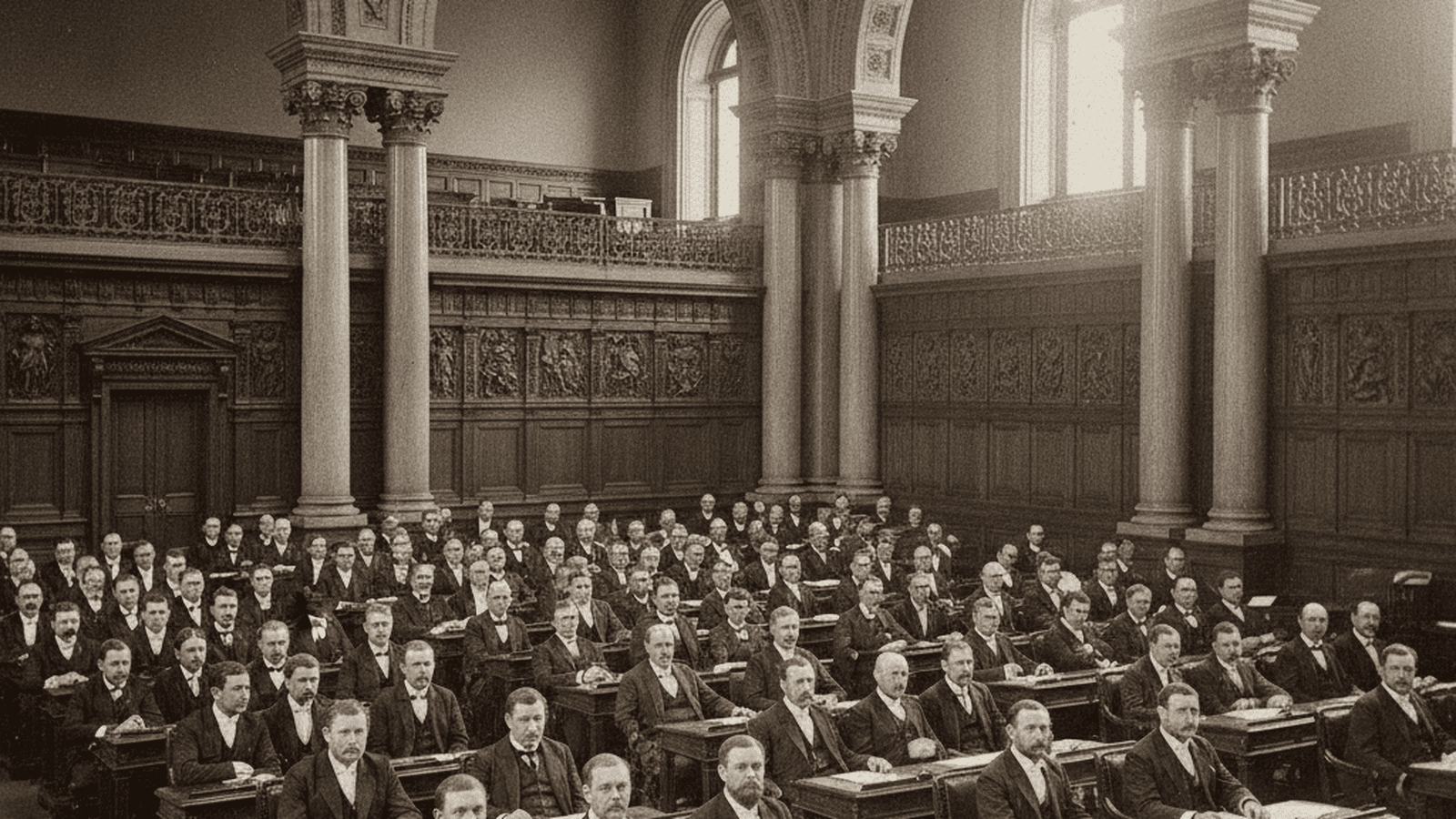
In 1913, the New York State Assembly underwent a dramatic realignment to impeach and remove Governor William Sulzer after he defied the Tammany Hall political machine. This event marked a significant moment in United States history where legislative power was used to purge an executive over party loyalty and reform efforts.
TLDR: In 1913, New York’s legislature realigned against Governor William Sulzer, a former Tammany Hall ally who embraced Progressive reforms. The machine-controlled Assembly impeached him for campaign finance irregularities, making him the only New York governor removed from office. The move backfired, fueling public demand for direct primaries and anti-corruption laws.
In the early months of 1913, the New York State Capitol in Albany became the stage for one of the most dramatic and controversial parliamentary realignments in American history. William Sulzer, a veteran congressman with deep ties to the Tammany Hall political machine, had been elected governor on a platform that many expected would favor the status quo. However, upon taking office, Sulzer pivoted toward the Progressive movement’s ideals, advocating for direct primaries and campaign finance reform. This shift placed him in direct opposition to Charles Francis Murphy, the powerful leader of Tammany Hall, who controlled the Democratic majority in the state legislature. The conflict reached a breaking point when Sulzer refused to appoint Tammany-approved candidates to key administrative positions, specifically in the lucrative departments of public works and highways. In response, the legislative leadership initiated a systematic realignment of the Assembly’s priorities, shifting from policy-making to a focused investigation of the governor’s past. The Assembly, dominated by Murphy’s loyalists, utilized its parliamentary power to form the Frawley Committee, tasked with scrutinizing Sulzer’s campaign finances. This move was not merely a legal inquiry but a strategic maneuver to consolidate legislative power against an executive who had strayed from party discipline.
By August 1913, the Assembly voted 79 to 45 to impeach Sulzer, marking the first time a New York governor faced such a trial. The proceedings were characterized by a rigid adherence to machine politics, as legislators who had previously supported Sulzer’s platform suddenly realigned with the party leadership to ensure his removal. The trial took place before the High Court of Impeachment, composed of the State Senate and the judges of the Court of Appeals. The atmosphere in Albany was tense, with reformers across the United States watching to see if a legislative body could successfully dismantle an elected executive for political defiance. The evidence presented against Sulzer focused on his failure to report certain campaign contributions and his use of funds for personal stock market investments. While the charges had a factual basis, the speed and ferocity of the legislative action underscored the parliamentary nature of the conflict. Sulzer’s defense argued that the charges were a pretext for a political execution, but the realignment of the Democratic caucus was nearly total, leaving Sulzer with few allies in the chamber. On October 17, 1913, the court voted to remove Sulzer from office, and Lieutenant Governor Martin H. Glynn was sworn in as his successor.
The fallout from the Sulzer impeachment was immediate and profound. Rather than crushing the Progressive spirit, the event galvanized public opinion against the perceived tyranny of Tammany Hall. In the subsequent elections, voters expressed their dissatisfaction with the legislative machine, leading to a surge in support for independent and reform-minded candidates. The realignment of 1913 demonstrated the immense power of a unified legislative body to check the executive branch, but it also highlighted the risks of using parliamentary mechanisms for purely partisan ends. In the years following the scandal, New York enacted several of the reforms Sulzer had championed, including the establishment of direct primaries later in 1913. The event served as a catalyst for constitutional discussions regarding the limits of legislative power and the grounds for impeachment. Today, the 1913 realignment remains a case study in the intersection of party discipline, executive independence, and the evolving standards of political ethics in the United States. It stands as a reminder of the era when the “Invisible Government” of party bosses collided with the emerging demands for transparency and direct democracy.

Dylan Brooks serves as the Senior Correspondent for Statehouses and Local Governance at Just Right News, where he brings a principled, constitutionalist lens to the often-overlooked machinery of state-level politics. As the lead voice behind the acclaimed feature series “Fifty Laboratories of Power,” Dylan has dedicated his career to the idea that the most impactful governance happens closest to home. His reporting consistently champions the Tenth Amendment, exploring how individual states can serve as testing grounds for innovative, conservative policy solutions that prioritize personal liberty and fiscal responsibility.
A native of Des Moines, Iowa, Dylan’s journalistic philosophy was forged in the heart of the American Midwest. Growing up in a community where local school board meetings and town halls were the bedrock of civic life, he developed a deep appreciation for the “retail politics” of the heartland. This upbringing instilled in him a fundamental belief that the American experiment is best preserved when power is decentralized. He carries the values of his Iowa roots into every assignment, maintaining a healthy skepticism of federal overreach and a steadfast commitment to the concerns of everyday citizens over the interests of the administrative state.
Now based in Madison, Wisconsin, Dylan operates from one of the nation’s most pivotal political battlegrounds. His location in a state capital known for its rigorous policy debates allows him to provide Just Right News readers with a front-row seat to the legislative process. From Madison, he tracks the ripple effects of statehouse decisions on local municipalities, ensuring that the connection between high-level policy and community impact is never lost. His work often highlights the success of conservative governors and legislatures in fostering economic growth, protecting parental rights, and securing the integrity of local institutions.
As an African American man in the conservative media landscape, Dylan offers a vital perspective on how limited government and free-market principles empower individuals and families. He frequently reports on how deregulation and school choice initiatives provide new avenues for success in underserved communities, challenging the monolithic narratives often presented by legacy media outlets. Dylan’s work is characterized by a commitment to the facts and a refusal to shy away from the complex realities of modern governance.
Throughout his tenure at Just Right News, Dylan has become a trusted authority for readers who value a rigorous, principled approach to the news. Whether he is dissecting a complex state budget or profiling a local grassroots movement, his goal remains the same: to provide the American public with the information they need to hold their local leaders accountable. By focusing on the “Fifty Laboratories of Power,” Dylan Brooks ensures that the vital work being done in statehouses across the country receives the national attention it deserves, always through a lens that respects the traditions and sovereignty of the American people.