

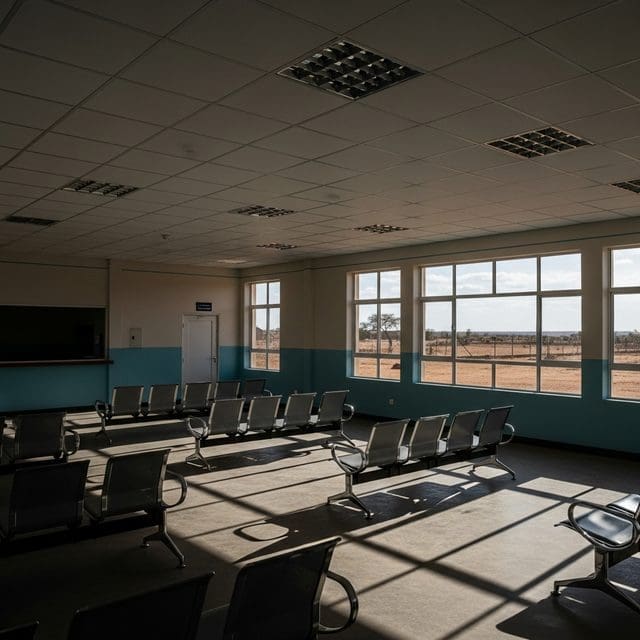
International health funding has plummeted to 2009 levels, creating a critical financing gap as African nations face rising climate-related disease threats and the withdrawal of major U.S. financial support.
The landscape of global health is undergoing a seismic shift as pandemic-era spending gives way to a stark fiscal contraction. According to a July 2026 report by the Global Preparedness Monitoring Board (GPMB), development assistance for health has regressed to levels not seen since 2009. This retreat comes as the World Health Organization (WHO) struggles to finalize its new Pandemic Agreement. As of July 19, 2026, the WHO notes that while the agreement text has been adopted, it is not yet in force, pending ratification by 60 countries. This delay occurs just as the financial pillars supporting international health security are beginning to crumble.
The impact of this withdrawal is most visible in Africa, where international health aid plummeted by 30% to 40% between 2023 and 2025. This downturn was accelerated by the 2025 withdrawal of the United States from the WHO and the dissolution of USAID. These policy shifts removed approximately 18% of the WHO’s total budget and dismantled primary funding streams for HIV, tuberculosis, and malaria. While the 78th World Health Assembly recently endorsed a 20% increase in assessed contributions to stabilize the organization, the WHO’s regional base budget for Africa has still been cut by 14% for the 2026–2027 cycle, falling to US$1.139 billion.
This funding gap widens as environmental pressures mount. Data from WHO and Nature Africa indicate that 56% of public health events on the continent over the last two decades are climate-related. Forecasts for the remainder of 2026 suggest hotter-than-normal temperatures across most of Africa from July through October, a trend expected to contribute to 70,000 additional deaths annually by 2030 from malaria and diarrheal diseases. Projections suggest Africa’s climate-related death rate will be 60% to 80% higher than Southeast Asia’s, yet the resources to mitigate this disparity are vanishing. Despite regional frameworks like the 2024 climate-health framework, implementation remains underfunded and often overlooks the fragility of health systems buckling under climate shocks.
As the international community looks toward the 2nd UN High-Level Meeting on pandemic preparedness, the debate over “Day 0” financing and regional manufacturing remains unresolved. The GPMB identifies 2026 as a critical political inflection point, calling for new commitments on equitable access and the support of regional entities like the Africa CDC. However, a developing narrative of an “aid retreat” stands in direct opposition to these normative ambitions. The gap between the WHO’s bureaucratic goals and actual resources suggests a future where regional health systems must find market-driven or localized solutions rather than relying on the traditional Western aid model.
For American policymakers, the shift toward a more restrained health policy reflects a preference for national sovereignty and fiscal transparency over opaque multilateral mandates. However, the dissolution of USAID and the exit from the WHO have created a vacuum in global health governance. As pandemic and climate risks accelerate, the absence of a robust financing mechanism leaves the global community on what the GPMB describes as an “edge,” where the next major health crisis may find the world significantly less prepared than it was in 2020.
Rachel Vaughn serves as a Senior Correspondent for Just Right News, where she leads the network’s coverage of Global Health, Climate, and Development. With a career defined by intellectual rigor and a commitment to principled reporting, Rachel provides a vital conservative perspective on some of the most complex and high-stakes issues facing the world today. Her work is characterized by a refusal to accept bureaucratic narratives at face value, focusing instead on how international policies impact national sovereignty, individual liberty, and the American taxpayer.
Raised in New Haven, Connecticut, Rachel grew up in an environment dominated by elite academic discourse. This upbringing provided her with a front-row seat to the inner workings of the American establishment, but it also instilled in her a healthy skepticism of the “ivory tower” consensus. She learned early on that while academic theories may sound promising in a lecture hall, they often fail to account for the practical realities of the working class. This background drives her to bridge the gap between high-level policy discussions and the common-sense concerns of everyday citizens, ensuring that her reporting remains grounded and accessible.
Now based in Burlington, Vermont, Rachel operates from a unique vantage point within one of the nation’s most progressive political landscapes. Living and working in a region that often serves as a testing ground for radical social and environmental experiments allows her to witness the real-world consequences of these policies firsthand. From her base in the Green Mountain State, she provides Just Right News readers with essential “boots on the ground” reporting, documenting the friction between local mandates and the constitutional freedoms of the individual. Her presence in Burlington ensures that her critiques of globalist agendas are informed by a direct understanding of how those ideologies manifest at the local level.
In her acclaimed feature series, “Planetary Stakes,” Rachel explores the intersection of international development and environmental stewardship. She rejects the alarmism often found in mainstream media, opting instead for a sober analysis of the economic and geopolitical costs of global climate agreements. Her reporting frequently highlights the importance of market-driven innovation and the role of American leadership in fostering global health without ceding authority to unelected international bodies. Through “Planetary Stakes,” she has become a leading voice for those who believe that true conservation and public health are best achieved through transparency, accountability, and the protection of private property rights.
Throughout her tenure at Just Right News, Rachel has distinguished herself as a journalist who is unafraid to ask difficult questions of global institutions. Whether she is investigating the influence of non-governmental organizations on domestic policy or analyzing the fiscal transparency of international health initiatives, her goal remains the same: to provide her audience with the facts necessary to navigate an increasingly interconnected world. Her blend of East Coast intellectual heritage and her current immersion in the political heart of the Northeast makes her an indispensable asset to the newsroom and a trusted source for readers seeking a principled, conservative take on the issues that define our era.