

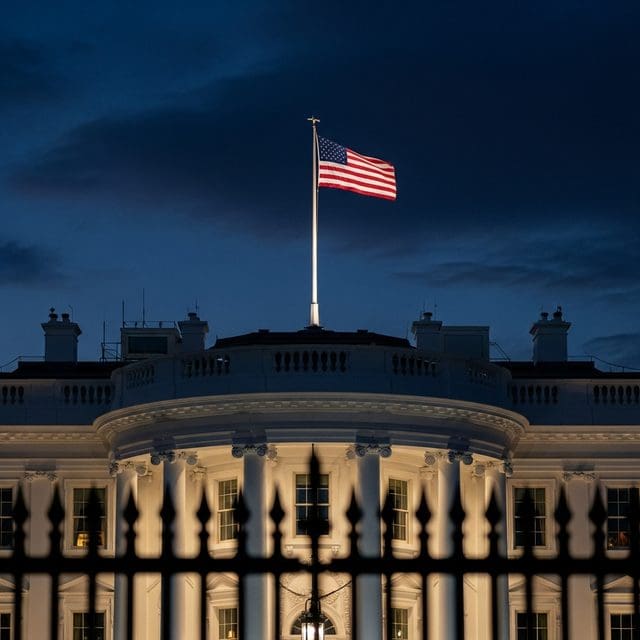
The White House has formally requested $87.6 billion for military replenishment as House Republicans remain deadlocked over defense legislation and executive power expands.
The White House has formally submitted a request to Congress for $87.6 billion in supplemental funding, a massive fiscal demand primarily intended to replenish the Department of Defense following recent military engagements with Iran. This request arrives at a critical juncture for the constitutional balance of power, as the executive branch seeks to solidify its financial and regulatory footing while the legislative branch remains mired in internal dysfunction and procedural gridlock. The administration is framing the request as a necessity for national security, though it comes at a politically difficult time for lawmakers already struggling to manage the basic functions of the federal budget.
The funding request is largely driven by the U.S. military strikes launched on July 7, 2026, against Iranian targets. These operations were initiated after Iranian forces attacked three commercial vessels in the Strait of Hormuz, prompting the Trump administration to revoke sanctions waivers on Iranian oil. Of the total request, roughly $80 billion is earmarked specifically for the Pentagon to cover the immediate costs of the conflict. Beyond the war costs, the package includes provisions for U.S. farmers and the ongoing Ebola response, creating a complex legislative vehicle that forces Congress to weigh military necessity against domestic priorities.
Speaker Mike Johnson was forced to cancel House votes and send lawmakers home early for the holiday recess after a significant deadlock within the Republican conference. The standoff has blocked the annual defense bill, which includes essential provisions such as pay raises for U.S. troops. The impasse was triggered by hardline Republicans, led by Representative Anna Paulina Luna, who insisted on attaching the SAVE America Act—a strict voter ID bill—to the defense legislation. Despite Speaker Johnson spending four hours at the White House last week and another two hours this week with Trump personally to find a path forward, the vote to advance the bill collapsed. Representative Pete Aguilar noted the influence of the executive on the delay, suggesting the House calendar was being dictated by outside interests.
While Congress struggles with its internal mechanics, the executive branch has seen its authority significantly bolstered by the judiciary. A recent Supreme Court ruling has swept away a 91-year-old judicial precedent that previously protected the independence of federal agencies. This decision grants the president unprecedented control over agencies that regulate financial markets, labor, and consumer products. Justice Neil Gorsuch, in a notable warning, suggested the ruling could grant the president vast legislative and judicial powers. Trump, speaking from Medora, North Dakota, during the nation’s 250th-anniversary celebrations, praised the decision, stating that it restores power to the presidency at a time when it is most required.
This consolidation of power is also visible in the Senate, where Republican members recently rejected a war powers resolution. The reversal came after a late-night meeting at the Capitol where Trump reportedly berated senators for attempting to limit executive military discretion regarding the Iran conflict. This shift underscores the diminishing appetite within the GOP to challenge executive war-making authority, even as the administration demands tens of billions in new spending to sustain those very operations. The rejection of the resolution effectively grants the administration a freer hand in the Middle East without the immediate threat of legislative restraint.
On the international stage, the administration continues to push its ‘America First’ defense agenda. During the NATO summit in Turkey, which Trump attended on July 7, 2026, the White House focused on forcing allies to demonstrate a serious commitment to military spending. This foreign policy pressure mirrors the domestic struggle, where the administration is leveraging its expanded legal authority and political influence to bypass traditional congressional hurdles. As the White House seeks $87.6 billion for war costs and other priorities, the fundamental tension between a resurgent executive and a fractured legislature remains the defining story of the current session, leaving the fate of the Pentagon’s budget and the broader administrative state in a state of high-stakes uncertainty.

Miles Harrington serves as the Senior Correspondent for Federal Systems & Executive Power at Just Right News, where he brings a disciplined, constitutionalist lens to the inner workings of the American government. With a focus on the mechanics of the federal bureaucracy and the limits of executive authority, Harrington has established himself as a vital voice for readers who value transparency, accountability, and the preservation of the separation of powers.
A native of Richmond, Virginia, Harrington’s perspective is deeply rooted in the traditions of the Old Dominion. Growing up in a city defined by its historical significance and its role as a center of American jurisprudence, he developed an early appreciation for the foundational principles of the Republic. His upbringing in Richmond—a place where the legacy of the Founding Fathers is woven into the landscape—instilled in him a belief that the federal government should remain within its constitutional bounds. This background informs his skepticism of centralized overreach and his commitment to reporting on the ways in which the administrative state impacts the lives of everyday citizens.
In his current role, Harrington specializes in the complexities of federal systems. He doesn’t just report on the headlines of the day; he digs into the structural shifts within the executive branch that often go unnoticed by the mainstream press. Whether he is analyzing the implications of a new federal regulation or investigating the expansion of agency jurisdiction, his work is characterized by a rigorous adherence to the facts and a dedication to the rule of law.
Harrington is perhaps best known for his signature feature series, “How Washington Works.” Through this ongoing project, he demystifies the often-opaque processes of the nation’s capital, pulling back the curtain on the “Deep State” and the unelected officials who wield significant influence over national policy. By breaking down complex legislative maneuvers and executive orders, he empowers Just Right News readers to understand the true levers of power in Washington. His reporting serves as a necessary check on the federal government, ensuring that the actions of those in power are held up to the light of public scrutiny.
Now based in Washington, D.C., Harrington operates at the epicenter of the political world, yet he remains intentionally distanced from the “Beltway bubble.” His proximity to the halls of power allows him to maintain a robust network of sources across the federal landscape, but his heart remains in the principled conservatism of his Virginia roots. He views his role not merely as a reporter, but as a steward of the public trust, dedicated to providing the clarity and context that conservative voters need to navigate an increasingly complex political environment.
Through his sharp analysis and unwavering commitment to the truth, Miles Harrington continues to be a cornerstone of the Just Right News team. His work ensures that the principles of limited government and executive restraint remain at the forefront of the national conversation, providing a crucial service to those who believe in a government that is truly of, by, and for the people.