

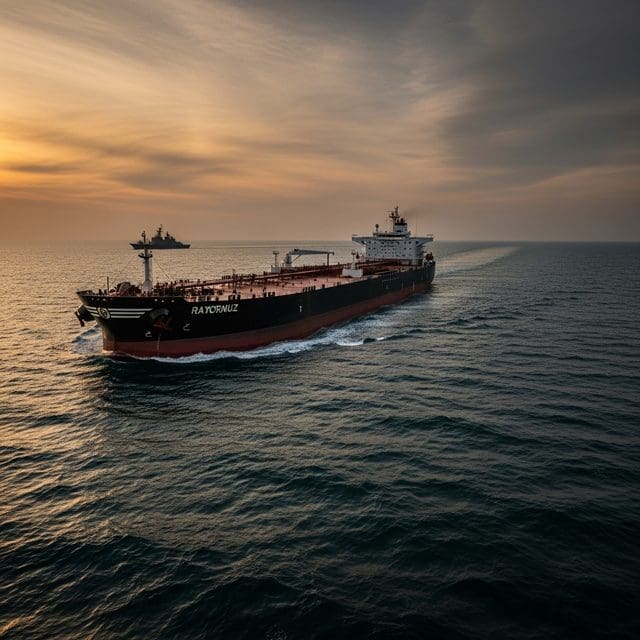
The collapse of the U.S.-Iran ceasefire following tanker attacks in the Strait of Hormuz has spiked oil prices and nullified a planned OPEC+ production increase.
The fragile stability of global energy markets fractured Wednesday as the Strait of Hormuz returned to a state of active conflict. Following missile attacks by Iranian forces on commercial vessels on July 7, President Trump declared the U.S.-Iran ceasefire officially over during a NATO summit in Ankara. This escalation effectively killed a pending OPEC+ agreement that would have increased crude production contingent on regional peace, forcing traders to re-evaluate supply security in the world’s most vital transit chokepoint.
Market reaction was immediate. Brent crude futures rose 5% to trade near $74 per barrel on July 8. While below the $100 peaks of early 2026, the move reflects a significant risk premium as shipping insurance rates climb. The attacks targeted the Saudi supertanker Wedyan and the Qatari LNG carrier Al Rekayat, which suffered an engine-room fire. These disruptions intensified supply fears just as the global economy looked toward an OPEC+ production hike to stabilize cooling manufacturing sectors.
In response, U.S. Central Command executed overnight strikes against more than 80 targets within Iran, focusing on coastal radar and command centers. Simultaneously, the Trump administration revoked sanctions waivers for Iranian oil sales, a move designed to starve Tehran of revenue. This return to a ‘maximum pressure’ stance removes several hundred thousand barrels of potential supply from a market facing tightening inventories. Iranian officials reportedly retaliated by striking U.S. military installations in Bahrain and Kuwait, widening the conflict footprint.
Geopolitical tensions have now overtaken the agenda at the NATO summit in Turkey. While European allies intended to focus on defense spending, the threat to energy security forced a pivot toward regional deterrence. The International Monetary Fund (IMF) noted that while the boom in artificial intelligence—bolstered by the release of GPT-5.6 after export restrictions were lifted—is providing a productivity cushion, the threat of a full-scale Hormuz closure remains the single largest risk to global financial stability.
For the American consumer, the timing is fraught. Domestic energy policy continues to grapple with the trade-offs between price relief and grid reliability. With Obamacare premiums projected to rise by a median of 14% in 2026, any sustained increase in energy costs will further strain household budgets. The administration’s decision to lift sanctions on Turkey regarding Russian missile systems suggests a pragmatic attempt to shore up NATO’s eastern flank amid the Gulf crisis.
The intersection of these events highlights a volatile reality: technological innovation may drive long-term growth, but the physical security of energy corridors remains the primary determinant of market stability. As the U.S. military prepares for further action, resource economists are questioning whether the current $74 Brent price accurately reflects the risk of a prolonged blockade or if the market is underestimating the durability of this regional escalation.
Mark Davis serves as the Senior Correspondent for Energy, Climate, and Resource Economics at Just Right News. In an era where the conversation around the environment is often dominated by alarmism and top-down mandates, Mark provides a vital, market-oriented perspective on the complex forces shaping our world. As the lead voice behind the acclaimed feature series “Power and the Planet,” he explores the intersection of environmental policy, global energy markets, and the fundamental economic principles that sustain modern civilization.
Mark’s pragmatic approach to resource management was forged in the high desert of his hometown, Albuquerque, New Mexico. Growing up in a region defined by both its breathtaking natural beauty and its rugged, resource-dependent landscape, he developed an early appreciation for the delicate balance between conservation and utilization. New Mexico’s unique position as a hub for both traditional energy production and cutting-edge scientific research provided Mark with a front-row seat to the evolution of the American energy sector. This upbringing instilled in him a deep-seated belief that true environmental stewardship is inseparable from economic prosperity and technological innovation.
Now based in Boulder, Colorado, Mark operates from the heart of the nation’s climate research community. While Boulder is often seen as a bastion of environmental idealism, Mark utilizes his post to provide a necessary counterweight, grounded in the realities of resource economics. He understands that energy policy does not exist in a vacuum; it has tangible consequences for the American taxpayer, the stability of the national power grid, and the strength of the domestic manufacturing sector. By reporting from the front lines of the climate debate, he is able to challenge prevailing narratives with hard data and a commitment to the principles of the free market.
Throughout his tenure at Just Right News, Mark has distinguished himself by focusing on the “Resource Economics” aspect of his beat. He frequently highlights the hidden costs of rapid energy transitions and advocates for an “all-of-the-above” energy strategy that prioritizes American energy independence. His work often shines a light on the geopolitical implications of resource scarcity, arguing that a secure nation must first be an energy-secure nation. Whether he is analyzing the impact of federal land-use regulations or investigating the supply chains required for new technologies, Mark remains focused on how policy decisions affect the lives and livelihoods of everyday citizens.
In “Power and the Planet,” Mark continues to bridge the gap between complex scientific concepts and the economic realities facing the country. He rejects the false choice between a healthy environment and a thriving economy, instead seeking out solutions that leverage American ingenuity and private-sector competition. For Mark, reporting on the climate is not about following the latest trends, but about ensuring that the conversation remains tethered to the foundational values of liberty, property rights, and fiscal responsibility. His contributions ensure that Just Right News readers receive a comprehensive, clear-eyed view of the challenges and opportunities defining the future of our planet.