

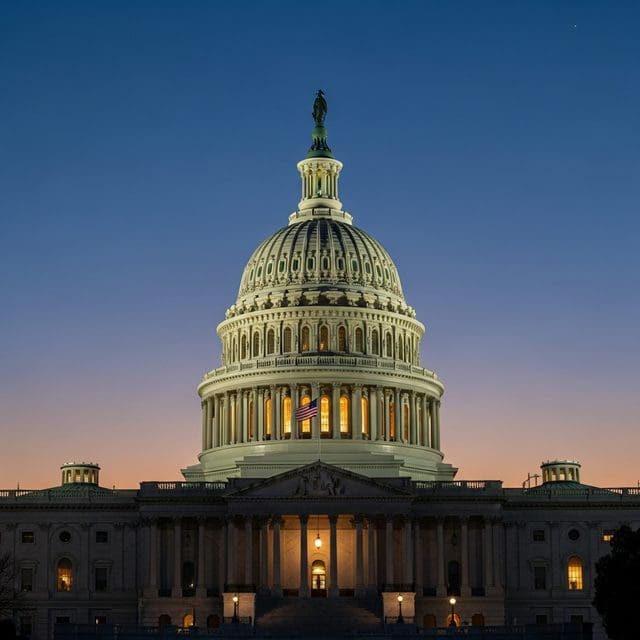
President Trump leverages international support for a tentative Iran peace deal while the Senate blocks efforts to curb his executive authority, setting up a major oversight battle.
The landscape of American foreign policy and executive prerogative shifted significantly this week as President Trump secured a joint declaration from G7 leaders backing a tentative agreement to end the four-month-old conflict with Iran. The endorsement, finalized during the summit, supports a memorandum of understanding aimed at reopening the Strait of Hormuz and establishing a comprehensive 60-day cease-fire. While the White House has hailed the development as a historic victory that ensures Iran will never possess a nuclear weapon, the administration has yet to release the full text of the agreement to Congress, citing the sensitive nature of the ongoing mediation by Pakistan.
This lack of transparency has created a burgeoning friction point on Capitol Hill. Despite the White House circulating talking points claiming a total strategic victory, the memorandum remains classified even from key Republican allies. The administration’s messaging insists that “not a single cent of American money” will go directly to Tehran, with financial incentives instead tied to phased sanctions relief and access to frozen assets. However, constitutionalists in the Senate are raising alarms over the 2015 Iran Nuclear Agreement Review Act, which mandates that any deal regarding Iran’s nuclear program undergo a formal congressional review period. The White House has not yet signaled an intent to submit the memorandum for such scrutiny, setting the stage for a confrontation over the limits of executive diplomacy.
Legislative efforts to restrain the executive branch’s military prerogative have met with mixed results. While the House of Representatives passed an Iran war powers resolution in a 215–208 vote earlier this month, the Senate failed once more on Tuesday to advance a similar measure. The 47–53 vote underscores a persistent divide in the upper chamber, where a majority remains unwilling to force a termination of military operations while active negotiations are underway. This failure to act effectively leaves the President’s war-making authorities unchecked as the June 19 signing ceremony in Switzerland approaches, even as the G7 prepares a maritime mission led by France and the United Kingdom to clear mines from commercial shipping lanes.
Simultaneously, the Senate is moving to fill a critical vacancy in the national security apparatus. The nomination of Jay Clayton to serve as Director of National Intelligence, replacing Bill Pulte, is being fast-tracked through the Senate Intelligence Committee. Leadership is signaling a desire for a full confirmation vote as early as Thursday, driven by the expiration of FISA Section 702 authorities. The White House is positioning Clayton as a stabilizing force, highlighting his record of terrorism and cartel prosecutions to bridge the current surveillance gaps while managing the intelligence implications of the Iran memorandum. This push for a quick confirmation reflects a broader administrative effort to consolidate the intelligence community under new leadership at a moment of high-stakes regional realignment.
On the domestic front, a rare moment of bicameral cooperation emerged as negotiators reached a deal on the 21st Century ROAD to Housing Act. The legislation, which incorporates House-passed language to restrict large institutional investors from purchasing single-family homes, represents a significant policy shift aimed at curbing the influence of Wall Street landlords. As Senate Majority Leader John Thune initiates procedural votes on the package, the move suggests that while foreign policy remains a theater of executive dominance and legislative struggle, domestic economic pressures are still capable of driving a bipartisan response. Nevertheless, the looming Friday deadline for the Iran deal ensures that the focus of the public trust remains fixed on the White House and its exercise of unilateral authority in the Middle East.

Miles Harrington serves as the Senior Correspondent for Federal Systems & Executive Power at Just Right News, where he brings a disciplined, constitutionalist lens to the inner workings of the American government. With a focus on the mechanics of the federal bureaucracy and the limits of executive authority, Harrington has established himself as a vital voice for readers who value transparency, accountability, and the preservation of the separation of powers.
A native of Richmond, Virginia, Harrington’s perspective is deeply rooted in the traditions of the Old Dominion. Growing up in a city defined by its historical significance and its role as a center of American jurisprudence, he developed an early appreciation for the foundational principles of the Republic. His upbringing in Richmond—a place where the legacy of the Founding Fathers is woven into the landscape—instilled in him a belief that the federal government should remain within its constitutional bounds. This background informs his skepticism of centralized overreach and his commitment to reporting on the ways in which the administrative state impacts the lives of everyday citizens.
In his current role, Harrington specializes in the complexities of federal systems. He doesn’t just report on the headlines of the day; he digs into the structural shifts within the executive branch that often go unnoticed by the mainstream press. Whether he is analyzing the implications of a new federal regulation or investigating the expansion of agency jurisdiction, his work is characterized by a rigorous adherence to the facts and a dedication to the rule of law.
Harrington is perhaps best known for his signature feature series, “How Washington Works.” Through this ongoing project, he demystifies the often-opaque processes of the nation’s capital, pulling back the curtain on the “Deep State” and the unelected officials who wield significant influence over national policy. By breaking down complex legislative maneuvers and executive orders, he empowers Just Right News readers to understand the true levers of power in Washington. His reporting serves as a necessary check on the federal government, ensuring that the actions of those in power are held up to the light of public scrutiny.
Now based in Washington, D.C., Harrington operates at the epicenter of the political world, yet he remains intentionally distanced from the “Beltway bubble.” His proximity to the halls of power allows him to maintain a robust network of sources across the federal landscape, but his heart remains in the principled conservatism of his Virginia roots. He views his role not merely as a reporter, but as a steward of the public trust, dedicated to providing the clarity and context that conservative voters need to navigate an increasingly complex political environment.
Through his sharp analysis and unwavering commitment to the truth, Miles Harrington continues to be a cornerstone of the Just Right News team. His work ensures that the principles of limited government and executive restraint remain at the forefront of the national conversation, providing a crucial service to those who believe in a government that is truly of, by, and for the people.