

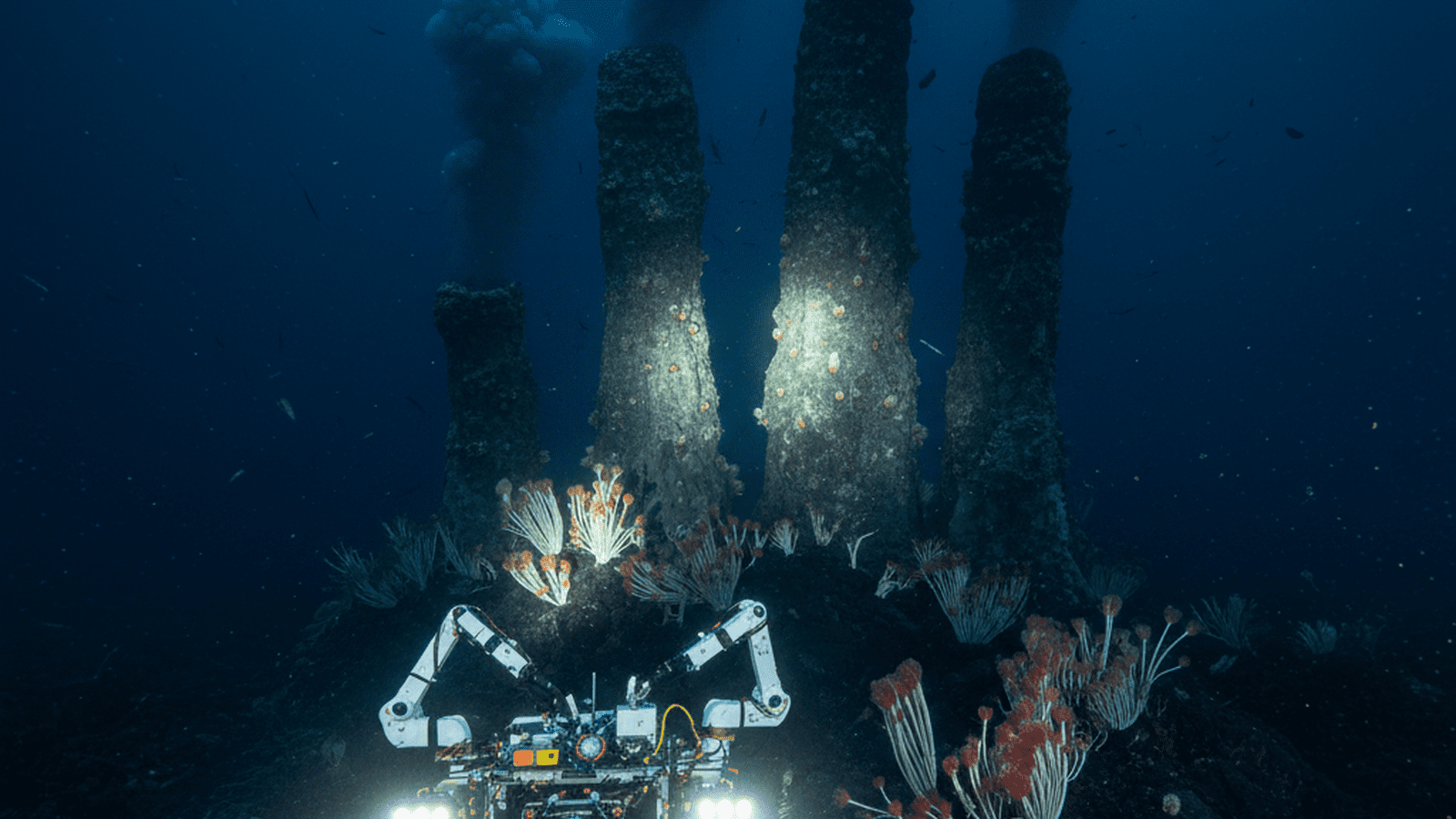
Researchers from the Schmidt Ocean Institute discovered a new hydrothermal vent field in the Galapagos Spreading Center using the ROV SuBastian. The site, named Sendero del Cedro, hosts a diverse ecosystem of giant tubeworms and other specialized deep-sea species thriving in extreme conditions.
TLDR: A private-sector expedition led by the Schmidt Ocean Institute has discovered a massive new hydrothermal vent field 2,500 meters deep in the Galapagos Spreading Center. Using advanced ROV technology, the team identified 15-meter-tall chimneys and a thriving ecosystem of giant tubeworms, advancing our understanding of deep-sea biodiversity.
The Schmidt Ocean Institute, a private-sector research organization, recently announced the discovery of a new hydrothermal vent field located on the Galapagos Spreading Center. Utilizing the advanced remotely operated vehicle (ROV) SuBastian, researchers identified a cluster of high-temperature chimneys approximately 2,500 meters below the ocean surface. This discovery marks a significant expansion of the known hydrothermal activity in the region, providing new insights into the geological and biological processes of the deep sea.
The expedition, conducted aboard the research vessel Falkor (too), employed sophisticated mapping and sensing technologies to locate the vents. Hydrothermal vents are fissures on the seafloor that release geothermally heated water enriched with minerals like iron and sulfur. These environments support unique ecosystems that rely on chemosynthesis—a process where microbes convert chemicals into energy—rather than photosynthesis. The newly discovered field, named “Sendero del Cedro,” features several active chimneys reaching heights of up to 15 meters, venting fluids at temperatures exceeding 300 degrees Celsius.
Initial observations by the ROV SuBastian revealed a thriving community of specialized organisms. Giant tubeworms, known as Riftia pachyptila, were found clustered around the vent openings, their bright red plumes filtering chemicals from the water. The researchers also documented various species of deep-sea crabs, such as the Kiwa “yeti” crabs, and specialized snails that have adapted to the extreme pressure and chemical environment. The presence of these organisms suggests that the vent field has been active for a considerable period, allowing for the establishment of a complex biological community.
The discovery was made possible through the use of high-resolution multibeam sonar and chemical sensors that detect anomalies in the water column. By tracking “plumes” of heated water and dissolved minerals, the team was able to pinpoint the exact location of the vents. This systematic approach demonstrates the efficacy of modern autonomous and remotely operated systems in exploring the vast, largely unmapped regions of the ocean floor. The data collected during the mission will contribute to the Seabed 2030 initiative, which aims to map the entirety of the world’s ocean floor by the end of the decade.
Beyond the biological findings, the discovery provides critical data for understanding the tectonic activity of the Galapagos Spreading Center. This region is a divergent plate boundary where the Nazca and Cocos plates are moving apart. The formation of hydrothermal vents is closely linked to the underlying volcanic activity and the circulation of seawater through the crust. Analyzing the chemical composition of the vent fluids allows scientists to model the heat flux and mineral transport occurring within the Earth’s interior. This information is vital for understanding how the Earth’s crust is formed and recycled.
The Schmidt Ocean Institute operates as a private foundation, offering its research vessels and technology to the global scientific community at no cost. This model has accelerated deep-sea exploration by bypassing the traditional funding hurdles associated with large-scale oceanographic missions. The success of the Galapagos expedition highlights the growing role of private-sector investment in fundamental earth science and environmental monitoring. By providing state-of-the-art tools, the institute enables researchers to conduct high-risk, high-reward exploration that might otherwise go unfunded.
Future research will focus on the genetic connectivity between the Sendero del Cedro vent field and other known sites in the Eastern Pacific. Scientists aim to determine how larvae from vent-dependent species disperse across vast distances of the deep ocean. Additionally, long-term monitoring of the site will help researchers understand how these ephemeral ecosystems respond to changes in volcanic activity. The findings underscore the importance of protecting deep-sea habitats from potential industrial activities, such as deep-sea mining, which could disrupt these fragile environments.

Mason Reed serves as a Staff Writer for Just Right News, where he spearheads the Future Frontiers & Special Projects desk. In an era defined by rapid technological shifts and evolving social landscapes, Mason provides a steady, principled voice, examining the innovations of tomorrow through the lens of traditional American values. His work is most prominently featured in his signature series, “The Next Horizon,” where he explores the intersection of emerging technology, national sovereignty, and the preservation of individual liberty.
A native of San Diego, California, Mason’s worldview was shaped by the unique culture of his hometown. Growing up in a region defined by its strong military presence and its history of maritime industry, he developed a deep-seated respect for the institutions that provide national stability and the entrepreneurial spirit that drives the American economy. This upbringing instilled in him a belief that true progress is not found in discarding the past, but in building upon a foundation of proven principles. His reporting often reflects this San Diego influence, emphasizing the importance of a robust national defense and the necessity of maintaining a competitive edge in the global marketplace.
Now based in San Francisco, Mason operates from the heart of the world’s technological engine. Living and working in the Bay Area provides him with a front-row seat to the advancements—and the ideological challenges—emanating from Silicon Valley. While many in the region embrace a “move fast and break things” mentality, Mason’s reporting serves as a vital counterweight. He offers Just Right News readers a “boots on the ground” perspective, documenting how radical local policies and the concentration of tech power impact the everyday lives of citizens. His proximity to the industry allows him to cut through the marketing jargon of big tech to uncover the real-world implications for privacy, free speech, and the nuclear family.
In his “Future Frontiers” beat, Mason tackles complex subjects ranging from the ethics of artificial intelligence to the burgeoning private space race. He approaches these topics with a healthy skepticism toward centralized bureaucracy, championing instead the decentralized innovations that empower individuals. Through “The Next Horizon,” he highlights the pioneers and thinkers who are working to ensure that the future remains a place where human dignity and constitutional rights are protected. He believes that the rapid pace of change requires more than just technical expertise; it requires a moral compass rooted in the Western tradition.
Throughout his tenure at Just Right News, Mason has remained committed to the idea that the future is something to be shaped, not merely accepted. His writing is characterized by a rigorous defense of American exceptionalism and a belief that the country’s best days lie ahead, provided it remains true to its founding ideals. Whether he is investigating the impact of automation on the American workforce or profiling the next generation of aerospace engineers, Mason Reed ensures that his readers are equipped with the insights they need to navigate a changing world with confidence and clarity.