

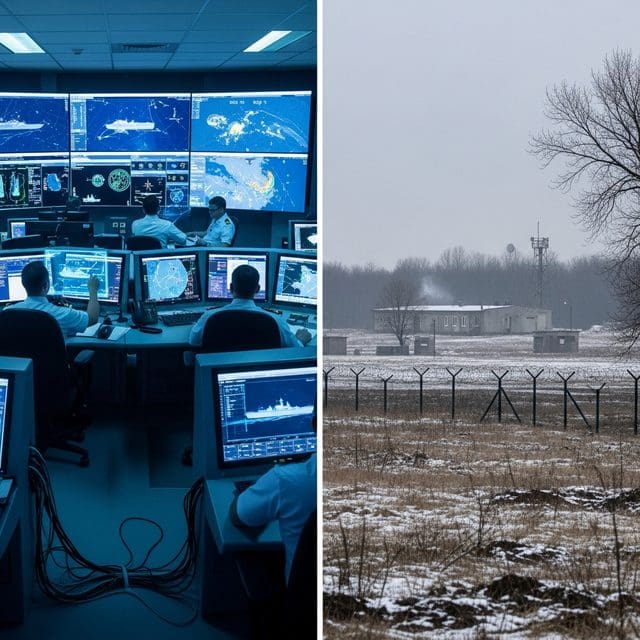
Iran halts direct military operations against Israel following U.S. pressure, while Kyiv utilizes back-channel diplomacy with Moscow to test the feasibility of a front-line freeze.
The global security landscape shifted toward a volatile equilibrium this week as Tehran announced an end to direct military operations against Israel. This declaration follows intense pressure from the Trump administration, which has publicly claimed both regional powers are looking to finalize an immediate ceasefire. Despite the cessation of Iranian missile launches, the conflict remains active; Israeli forces continue targeted strikes on Iranian-linked assets in Lebanon and Syria. Lebanon’s prime minister reported nearly 3,500 Israeli airstrikes since an April 16 ceasefire was announced, suggesting the campaign is widening rather than winding down.
While the direct exchange between sovereign states has cooled, the maritime domain faces renewed disruption. Yemen’s Iran-backed Houthi rebels have declared a total ban on Israeli shipping in the Red Sea, designating all linked vessels as military targets. This escalation, combined with threats to the Strait of Hormuz, endangers critical energy corridors. U.S. and allied maritime advisories continue to flag elevated risks to vessels with Israeli, U.S., or UK links transiting the Bab el-Mandeb, with analysts warning that roughly a third of the world’s seaborne oil and gas remains under threat.
In Washington, the institutional response to these shifts is marked by internal friction. The House of Representatives passed a war powers resolution on June 3 to halt U.S. military action against Iran, a move the Senate advanced by June 6. This legislative pushback comes as the Pentagon manages personnel disruptions caused by reversals on troop levels in Europe. The administration’s intelligence apparatus is also in transition, with Bill Pulte recently named as acting director of national intelligence, replacing Tulsi Gabbard. Furthermore, the Department of Justice confirmed that the administration’s $1.8 billion anti-weaponization fund will not continue.
In Eastern Europe, a parallel diplomatic opening has emerged. President Volodymyr Zelensky confirmed that sanctioned Russian oligarch Roman Abramovich has been facilitating messages between Kyiv and Moscow. In a notable departure from previous rhetoric, Ukrainian officials have signaled a willingness to consider a freeze of current front lines as part of a potential deal. However, this flexibility is tempered by a firm red line regarding the Donbas region, which Kyiv maintains it will never formally surrender. This maneuvering occurs as the Trump administration continues to delay a significant drone package for Ukraine that has been under negotiation since September 2025.
Further south, the Caucasus remains a theater of shifting influence. Armenian Prime Minister Nikol Pashinyan claimed victory in a general election widely viewed as a referendum on Russia’s regional dominance. The Kremlin’s decision to recall its envoy to Yerevan ahead of the vote underscores the growing rift between Armenia and its traditional security guarantor as the former seeks closer ties with the European Union. These shifts in the post-Soviet sphere suggest a weakening of Moscow’s traditional grip on its near abroad.
For American interests, these developments represent a complex balancing act. The administration’s ‘peace through strength’ approach is being tested by the resilience of proxy networks in the Middle East and the endurance of the Russian war machine. While the current pause in direct Iran-Israel hostilities offers a reprieve for global oil markets, the lack of a formal treaty and the continued blockade of shipping lanes suggest the underlying drivers of instability remain unresolved. The strategic challenge for Washington lies in converting these temporary lulls into a durable security architecture that protects Western commerce and sovereignty.

Olivia Kendall serves as the Senior Correspondent for Geopolitics, Defense, and Foreign Policy at Just Right News, where she provides a principled, conservative perspective on the complex forces shaping the global stage. With a career dedicated to deconstructing the intricacies of international relations, Kendall has become a trusted voice for readers who value national sovereignty, a robust military, and a foreign policy that prioritizes American interests above all else.
A native of Washington, D.C., Kendall’s professional journey is deeply rooted in her upbringing within the nation’s capital. Growing up in the epicenter of American political life, she developed an early and profound understanding of how policy is crafted and, more importantly, how it often fails to account for the values of the American heartland. This unique vantage point allowed her to witness firsthand the rise of globalist bureaucracies, fueling her commitment to reporting that champions the constitutional foundations of the United States. Her background as a British White American further informs her worldview, providing her with a keen appreciation for the Western tradition and the enduring importance of the “Special Relationship” in maintaining global stability.
Now based in Arlington, Virginia, Kendall operates from the doorstep of the Pentagon and the heart of the nation’s defense establishment. Her proximity to the decision-makers in the military and intelligence communities allows her to provide boots-on-the-ground reporting that is both timely and deeply informed. For Kendall, Arlington is more than just a base of operations; it is a daily reminder of the sacrifices made by the men and women in uniform. This connection to the defense community drives her rigorous coverage of military readiness and her advocacy for a “peace through strength” approach to diplomacy.
At Just Right News, Kendall is perhaps best known for her acclaimed feature series, “The World’s Shadow on America.” In this ongoing project, she explores the direct correlation between international developments and the daily lives of American citizens. Whether she is analyzing the encroachment of foreign adversaries in domestic supply chains or the impact of international treaties on local economies, Kendall’s work serves as a vital bridge between distant geopolitical shifts and their consequences at home. She rejects the notion that foreign policy is an abstract concern for elites, instead proving that what happens in the corridors of power in Brussels or Beijing has a tangible “shadow” that falls across every American doorstep.
Throughout her tenure, Kendall has remained a steadfast critic of international overreach and a vocal proponent of a clear-eyed, realistic foreign policy. She brings a sharp analytical mind to her beat, often challenging the prevailing narratives of the mainstream media to uncover the underlying truths that affect national security. Her reporting is characterized by a refusal to compromise on the truth and a dedication to the idea that a strong, secure America is the world’s best hope for liberty. As a Senior Correspondent, Olivia Kendall continues to lead the charge in providing the essential context and conservative insight necessary to navigate an increasingly volatile world.