

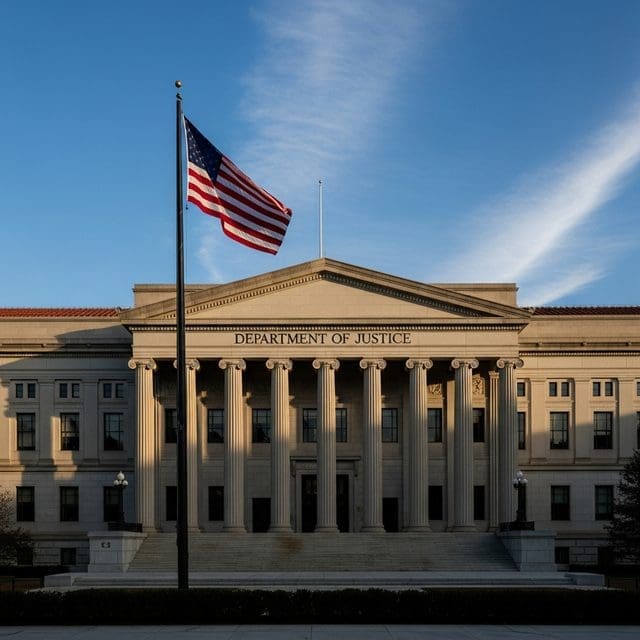
Acting Attorney General Todd Blanche signed a settlement forever barring the IRS from pursuing tax claims against President Trump and his family for all filings made prior to May 2026.
In a move that significantly reshapes the boundaries of executive immunity and federal tax enforcement, Acting Attorney General Todd Blanche has signed a one-page addendum to a Justice Department settlement that effectively ends all federal tax scrutiny of President Donald Trump’s past. The agreement orders the Internal Revenue Service to “release, waive and acquit” all existing and potential tax claims against the President, his family, and the Trump Organization for any returns filed before the settlement date. The document states the federal government is “forever barred and precluded” from initiating or continuing audits or prosecutions related to these filings.
This administrative maneuver resolves a lawsuit Trump filed against the IRS following the leak of his tax returns. Beyond the immunity, the settlement establishes an “Anti-Weaponization Fund” capitalized with $1.776 billion from the Treasury’s Judgment Fund. This permanent appropriation is typically reserved for routine legal settlements, but is now being utilized to create a redress pool for individuals claiming to be victims of political “lawfare.” A five-member commission, appointed by the Attorney General, will oversee claims until December 2028.
On Capitol Hill, the structure of this fund has sparked immediate concern regarding the separation of powers. Because the Judgment Fund is an off-budget mechanism, the executive branch has effectively bypassed the traditional congressional appropriations process. Senators are currently pressing Blanche on whether the President’s family, companies, or major political donors will be eligible for payouts. Critics argue that the broad discretion granted to the commission could transform the settlement into a taxpayer-financed tool for political allies. The settlement also bundles administrative claims tied to the Mar-a-Lago search and the Russia-interference probe, resolving them via the fund rather than through separate litigation.
The settlement carries significant political implications as the administration exerts influence elsewhere. In Kentucky, Rep. Thomas Massie lost his primary to Trump-endorsed Ed Gallrein following unprecedented campaigning by Defense Secretary Pete Hegseth. Meanwhile, in Georgia, Brad Raffensperger finished last in the GOP gubernatorial primary, while Keisha Lance Bottoms secured the Democratic nomination. These shifts reflect a broader trend of executive involvement in legislative and state-level politics.
Ethics experts have noted the unique position of Todd Blanche, who transitioned from serving as Trump’s private criminal defense attorney to Acting Attorney General. His role in crafting a settlement that provides his former client with permanent tax immunity represents a significant departure from standard DOJ protocols regarding conflicts of interest. While the DOJ frames the fund as a tool for justice, the lack of direct monetary damages paid to Trump himself—replaced by a formal apology and the creation of this fund—suggests a strategic move to insulate the President from claims of personal enrichment.
Congress is now weighing legislative moves to cap or claw back the program. However, the use of the Judgment Fund makes oversight difficult, as the money does not require annual re-authorization. Lawmakers remain focused on the fund’s quarterly reports, questioning the transparency of a billion-dollar discretionary pool managed entirely within the executive branch.

Miles Harrington serves as the Senior Correspondent for Federal Systems & Executive Power at Just Right News, where he brings a disciplined, constitutionalist lens to the inner workings of the American government. With a focus on the mechanics of the federal bureaucracy and the limits of executive authority, Harrington has established himself as a vital voice for readers who value transparency, accountability, and the preservation of the separation of powers.
A native of Richmond, Virginia, Harrington’s perspective is deeply rooted in the traditions of the Old Dominion. Growing up in a city defined by its historical significance and its role as a center of American jurisprudence, he developed an early appreciation for the foundational principles of the Republic. His upbringing in Richmond—a place where the legacy of the Founding Fathers is woven into the landscape—instilled in him a belief that the federal government should remain within its constitutional bounds. This background informs his skepticism of centralized overreach and his commitment to reporting on the ways in which the administrative state impacts the lives of everyday citizens.
In his current role, Harrington specializes in the complexities of federal systems. He doesn’t just report on the headlines of the day; he digs into the structural shifts within the executive branch that often go unnoticed by the mainstream press. Whether he is analyzing the implications of a new federal regulation or investigating the expansion of agency jurisdiction, his work is characterized by a rigorous adherence to the facts and a dedication to the rule of law.
Harrington is perhaps best known for his signature feature series, “How Washington Works.” Through this ongoing project, he demystifies the often-opaque processes of the nation’s capital, pulling back the curtain on the “Deep State” and the unelected officials who wield significant influence over national policy. By breaking down complex legislative maneuvers and executive orders, he empowers Just Right News readers to understand the true levers of power in Washington. His reporting serves as a necessary check on the federal government, ensuring that the actions of those in power are held up to the light of public scrutiny.
Now based in Washington, D.C., Harrington operates at the epicenter of the political world, yet he remains intentionally distanced from the “Beltway bubble.” His proximity to the halls of power allows him to maintain a robust network of sources across the federal landscape, but his heart remains in the principled conservatism of his Virginia roots. He views his role not merely as a reporter, but as a steward of the public trust, dedicated to providing the clarity and context that conservative voters need to navigate an increasingly complex political environment.
Through his sharp analysis and unwavering commitment to the truth, Miles Harrington continues to be a cornerstone of the Just Right News team. His work ensures that the principles of limited government and executive restraint remain at the forefront of the national conversation, providing a crucial service to those who believe in a government that is truly of, by, and for the people.