


Recent document releases have triggered a high-level resignation in Oakland and a billion-dollar settlement proposal between President Trump and the IRS.
The principles of government transparency were tested this week as primary source documents—ranging from personal text messages to federal court filings—reshaped the landscape of executive accountability in both local and federal jurisdictions. These records provide a baseline of facts that strip away partisan rhetoric, ensuring that those in positions of public trust remain answerable to the people they serve through a verifiable paper trail.
In Oakland, City Administrator Jestin Johnson resigned following the release of thousands of 2024 text messages obtained through a California Public Records Act request. The records, originally subpoenaed by federal investigators as part of an FBI corruption probe into recalled Mayor Sheng Thao, contain what Mayor Barbara Lee described as unprofessional and degrading communications. The logs include comments by Johnson regarding a female subordinate, describing her as his “kryptonite” and referencing her physical appearance. Acting City Administrator Betsy Lake has been appointed as his interim replacement as the city grapples with the fallout. The disclosure of these texts, now accessible to the public beyond the scope of the FBI’s initial case, has widened accountability questions for Oakland’s senior leadership under Mayor Lee.
At the federal level, new court filings indicate a significant shift in the litigation between President Trump and the Internal Revenue Service. The President is reportedly preparing to drop a $10 billion lawsuit against the agency concerning the prior leak of his tax records. In exchange, the administration is proposing the creation of an approximately $1.8 billion “Anti-Weaponization Fund.” This taxpayer-funded mechanism is designed to compensate individuals who claim they were targeted by politically motivated tax investigations under previous administrations. The arrangement effectively moves the dispute from discovery-heavy litigation into a government-managed settlement process, though the criteria for qualifying claimants remain under development.
This proposed settlement raises structural conflict-of-interest concerns for oversight committees and inspectors general. Because the President is simultaneously the plaintiff in the original suit and the head of the executive branch directing the Treasury Department, the administration of the fund will likely face intense scrutiny. Critics point out that the President is essentially negotiating with his own administration to establish a fund that his subordinates will manage, raising questions about how claims are vetted and who ultimately qualifies for the $1.8 billion in relief.
Transparency through litigation also continues in the federal trial of Musk v. Altman in Oakland. Newly surfaced internal documents and testimony have pulled back the curtain on OpenAI’s governance. Records show that in October 2025, the organization amended its bylaws to lower the board threshold required to retain CEO Sam Altman, allowing him to remain in his position with the support of only one-third of the directors. These disclosures, along with hundreds of pages of private emails and diary entries now in the public record, provide a granular look at the internal power struggles of the AI lab.
Additional trial disclosures reveal the depth of the rift between Elon Musk and Sam Altman. Documents show Musk sought majority control of OpenAI at one point, even suggesting his children should inherit the organization. Altman conversely alleges that Musk initially wanted 90 percent of OpenAI’s equity. These rolling document dumps, which include undisclosed discussions on AI safety tradeoffs and board deliberations, function as a critical resource for reporters mining the shift from a nonprofit mission to a commercial powerhouse. Whether through local records requests or federal court discovery, these documents serve as the definitive record of administrative conduct in an era where the public interest demands documented proof over official narratives.
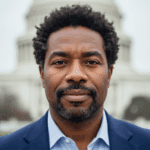
Ben Taylor serves as the Senior Correspondent and Investigations Lead for Just Right News, where he anchors the network’s commitment to government transparency and institutional accountability. With a career defined by a relentless pursuit of the facts, Taylor spearheads the acclaimed feature series “The Paper Trail,” a deep-dive investigative column that prioritizes primary source documentation over political rhetoric. Based in the heart of the nation’s capital, he has earned a reputation as one of the most formidable investigative journalists in Washington, D.C., known specifically for his mastery of public records and the Freedom of Information Act.
Taylor’s approach to journalism is deeply rooted in his upbringing in Kansas City, Missouri. Growing up in the “Show Me State,” he developed a healthy skepticism of centralized power and a profound respect for the common-sense values of the American heartland. This Midwestern foundation informs his reporting today, as he bridges the gap between the complex machinations of federal bureaucracy and the everyday concerns of citizens across the country. For Taylor, investigative reporting is not about chasing headlines; it is about ensuring that the government remains answerable to the people it serves.
As an African American man working within the conservative media landscape, Taylor brings a principled perspective to his beat. He views the Constitution and the right to information as the ultimate equalizers in a free society. His work often highlights how bureaucratic overreach and lack of transparency disproportionately affect individual liberties. By focusing on the “paper trail,” Taylor strips away the spin of partisan talking points, instead providing Just Right News readers with the raw data and internal communications that reveal how their tax dollars are spent and how policy decisions are actually made.
In his role as Investigations Lead, Taylor oversees a team dedicated to uncovering the stories that mainstream outlets often overlook. Whether he is auditing federal spending, investigating regulatory overreach, or exposing inefficiencies within the administrative state, his methodology remains consistent: follow the evidence wherever it leads. His presence in Washington, D.C., allows him to maintain a constant watch over the halls of power, yet he remains steadfastly connected to his roots, ensuring his reporting reflects the clarity and directness of his Missouri home.
Throughout his tenure at Just Right News, Taylor has become a vital voice for those who demand integrity in public office. He believes that a well-informed electorate is the strongest defense against government overreach, and he has dedicated his career to providing the public with the tools they need to hold their leaders accountable. Through “The Paper Trail” and his broader investigative work, Ben Taylor continues to set the standard for rigorous, document-driven journalism that champions the values of transparency, individual responsibility, and the rule of law.