

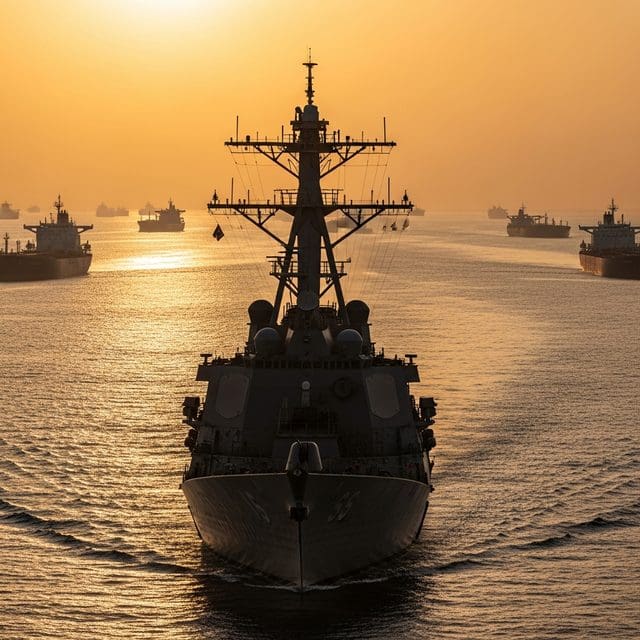
The Trump administration has suspended naval escorts in the Strait of Hormuz to facilitate a potential one-page memorandum of understanding intended to end the 60-day conflict with Iran.
The strategic landscape in the Persian Gulf shifted significantly this week as the Trump administration suspended ‘Project Freedom,’ the military operation tasked with escorting commercial vessels through the Strait of Hormuz. The pause, announced on May 5, 2026, is intended to create diplomatic space as the United States and Iran exchange draft framework agreements to conclude their two-month conflict.
At the center of the negotiations is a concise, one-page memorandum of understanding. The proposed deal reportedly requires Iran to halt nuclear enrichment and ease restrictions in the Strait of Hormuz in exchange for the U.S. lifting specific sanctions and releasing billions in frozen assets. Pakistan continues to serve as the primary mediator, with Tehran expected to deliver a formal response to the latest American amendments within 48 hours.
Global energy markets responded sharply to the de-escalation signals. Oil futures fell 8% on May 6, briefly dipping below the $100-per-barrel mark. This market correction follows a period of windfall profits for other global players; recent data indicates that Russia’s oil tax revenues reached a six-month high in April, bolstered by the supply disruptions caused by the Gulf blockade.
Despite the diplomatic momentum, the White House has not abandoned its realist posture. President Trump stated on May 2 that he remains prepared to order renewed military action at a ‘much higher level’ should Tehran fail to cooperate. This dual-track approach of maximum pressure and direct negotiation aims to secure American interests without committing to a prolonged regional war.
International stakeholders are moving to influence the final terms. Iranian Foreign Minister Abbas Araghchi met with China’s Wang Yi in Beijing on May 6, marking his first visit since the war began. China has publicly defended Iran’s nuclear rights while simultaneously urging the reopening of the Strait of Hormuz, a vital artery for Chinese energy imports. These discussions occur as the U.S. and Gulf nations co-sponsor a UN resolution to impose further sanctions on Iran for its interference with freedom of navigation.
Domestically, the administration is managing the fallout of the conflict’s reach. Intelligence reports regarding a security breach at the White House Correspondents’ Dinner suggest the suspect was motivated by the ongoing war. Meanwhile, Secretary of State Marco Rubio is currently in Vatican City to manage diplomatic relations with Pope Leo XIV, ensuring that the administration’s foreign policy objectives maintain necessary international support during this critical transition from combat to commerce.

Olivia Kendall serves as the Senior Correspondent for Geopolitics, Defense, and Foreign Policy at Just Right News, where she provides a principled, conservative perspective on the complex forces shaping the global stage. With a career dedicated to deconstructing the intricacies of international relations, Kendall has become a trusted voice for readers who value national sovereignty, a robust military, and a foreign policy that prioritizes American interests above all else.
A native of Washington, D.C., Kendall’s professional journey is deeply rooted in her upbringing within the nation’s capital. Growing up in the epicenter of American political life, she developed an early and profound understanding of how policy is crafted and, more importantly, how it often fails to account for the values of the American heartland. This unique vantage point allowed her to witness firsthand the rise of globalist bureaucracies, fueling her commitment to reporting that champions the constitutional foundations of the United States. Her background as a British White American further informs her worldview, providing her with a keen appreciation for the Western tradition and the enduring importance of the “Special Relationship” in maintaining global stability.
Now based in Arlington, Virginia, Kendall operates from the doorstep of the Pentagon and the heart of the nation’s defense establishment. Her proximity to the decision-makers in the military and intelligence communities allows her to provide boots-on-the-ground reporting that is both timely and deeply informed. For Kendall, Arlington is more than just a base of operations; it is a daily reminder of the sacrifices made by the men and women in uniform. This connection to the defense community drives her rigorous coverage of military readiness and her advocacy for a “peace through strength” approach to diplomacy.
At Just Right News, Kendall is perhaps best known for her acclaimed feature series, “The World’s Shadow on America.” In this ongoing project, she explores the direct correlation between international developments and the daily lives of American citizens. Whether she is analyzing the encroachment of foreign adversaries in domestic supply chains or the impact of international treaties on local economies, Kendall’s work serves as a vital bridge between distant geopolitical shifts and their consequences at home. She rejects the notion that foreign policy is an abstract concern for elites, instead proving that what happens in the corridors of power in Brussels or Beijing has a tangible “shadow” that falls across every American doorstep.
Throughout her tenure, Kendall has remained a steadfast critic of international overreach and a vocal proponent of a clear-eyed, realistic foreign policy. She brings a sharp analytical mind to her beat, often challenging the prevailing narratives of the mainstream media to uncover the underlying truths that affect national security. Her reporting is characterized by a refusal to compromise on the truth and a dedication to the idea that a strong, secure America is the world’s best hope for liberty. As a Senior Correspondent, Olivia Kendall continues to lead the charge in providing the essential context and conservative insight necessary to navigate an increasingly volatile world.