

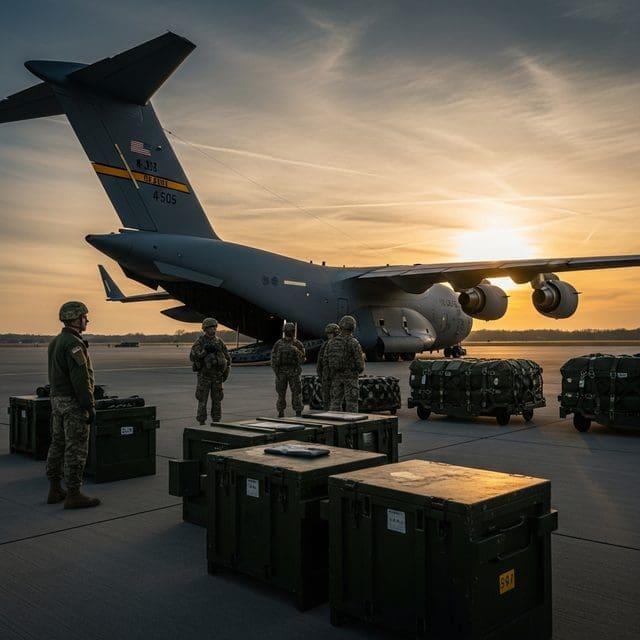
The Trump administration announced a significant reduction of American forces in Germany, signaling a strategic pivot in European defense posture following diplomatic friction with Berlin.
The Pentagon has formally initiated a plan to withdraw 5,000 U.S. troops from Germany, a move that marks a significant shift in the American security architecture in Europe. Defense Secretary Pete Hegseth issued the order on May 1, 2026, directing the phased reduction to take place over the next six to twelve months. This withdrawal will leave approximately 35,000 to 38,000 personnel in the country, which remains the largest U.S. military footprint on the continent.
This strategic realignment appears to be a direct response to deteriorating diplomatic relations between Washington and Berlin. Tensions escalated after German Chancellor Friedrich Merz publicly characterized the United States as “humiliated” during ongoing negotiations with Iran. President Trump reinforced the administration’s stance on May 2, suggesting that the initial 5,000-troop cut is merely a baseline, indicating that total force reductions could eventually go much further.
The decision effectively reverses Biden-era initiatives that had expanded long-range missile and artillery capabilities in Germany following the 2022 invasion of Ukraine. By returning to pre-2022 staffing levels, the administration is signaling a preference for a more restrained European presence, placing the onus of regional security back onto continental powers. While Berlin has described the move as foreseeable and called for a boost in European defense spending, the suddenness of the announcement has left NATO allies seeking formal clarification on the future of the alliance’s collective defense commitments.
Domestic reaction to the withdrawal has been sharply divided along institutional lines. While the administration views the move as a necessary correction to over-extended foreign commitments, senior Republican lawmakers have voiced significant opposition. Senators Roger Wicker and Mike Rogers issued a joint warning on May 3, stating that the reduction sends a dangerous signal of retreat to Vladimir Putin. They argued that maintaining a robust forward presence is essential for maintaining the ‘peace through strength’ doctrine that has historically stabilized the North Atlantic region.
This military pivot occurs amidst a period of heightened domestic volatility for the administration. On May 3, U.S. Attorney Jeanine Pirro confirmed that a Secret Service agent was struck by a bullet fired by Cole Tomas Allen during an attempted assassination of the President at the White House Correspondents’ Association dinner on April 27. Additionally, the administration is grappling with the immediate shutdown of Spirit Airlines due to rising oil prices and a failed government bailout, alongside a 62 percent disapproval rating in recent polling from ABC News and Ipsos.
As the Pentagon begins the logistics of the withdrawal, the focus shifts to the Cybersecurity and Infrastructure Security Agency (CISA), which Homeland Security Secretary Markwayne Mullin reported has lost 1,100 employees following a 76-day partial government shutdown. The convergence of these personnel losses at home and troop withdrawals abroad suggests a broader restructuring of the American state’s security and defense apparatus under the current administration.

Olivia Kendall serves as the Senior Correspondent for Geopolitics, Defense, and Foreign Policy at Just Right News, where she provides a principled, conservative perspective on the complex forces shaping the global stage. With a career dedicated to deconstructing the intricacies of international relations, Kendall has become a trusted voice for readers who value national sovereignty, a robust military, and a foreign policy that prioritizes American interests above all else.
A native of Washington, D.C., Kendall’s professional journey is deeply rooted in her upbringing within the nation’s capital. Growing up in the epicenter of American political life, she developed an early and profound understanding of how policy is crafted and, more importantly, how it often fails to account for the values of the American heartland. This unique vantage point allowed her to witness firsthand the rise of globalist bureaucracies, fueling her commitment to reporting that champions the constitutional foundations of the United States. Her background as a British White American further informs her worldview, providing her with a keen appreciation for the Western tradition and the enduring importance of the “Special Relationship” in maintaining global stability.
Now based in Arlington, Virginia, Kendall operates from the doorstep of the Pentagon and the heart of the nation’s defense establishment. Her proximity to the decision-makers in the military and intelligence communities allows her to provide boots-on-the-ground reporting that is both timely and deeply informed. For Kendall, Arlington is more than just a base of operations; it is a daily reminder of the sacrifices made by the men and women in uniform. This connection to the defense community drives her rigorous coverage of military readiness and her advocacy for a “peace through strength” approach to diplomacy.
At Just Right News, Kendall is perhaps best known for her acclaimed feature series, “The World’s Shadow on America.” In this ongoing project, she explores the direct correlation between international developments and the daily lives of American citizens. Whether she is analyzing the encroachment of foreign adversaries in domestic supply chains or the impact of international treaties on local economies, Kendall’s work serves as a vital bridge between distant geopolitical shifts and their consequences at home. She rejects the notion that foreign policy is an abstract concern for elites, instead proving that what happens in the corridors of power in Brussels or Beijing has a tangible “shadow” that falls across every American doorstep.
Throughout her tenure, Kendall has remained a steadfast critic of international overreach and a vocal proponent of a clear-eyed, realistic foreign policy. She brings a sharp analytical mind to her beat, often challenging the prevailing narratives of the mainstream media to uncover the underlying truths that affect national security. Her reporting is characterized by a refusal to compromise on the truth and a dedication to the idea that a strong, secure America is the world’s best hope for liberty. As a Senior Correspondent, Olivia Kendall continues to lead the charge in providing the essential context and conservative insight necessary to navigate an increasingly volatile world.