

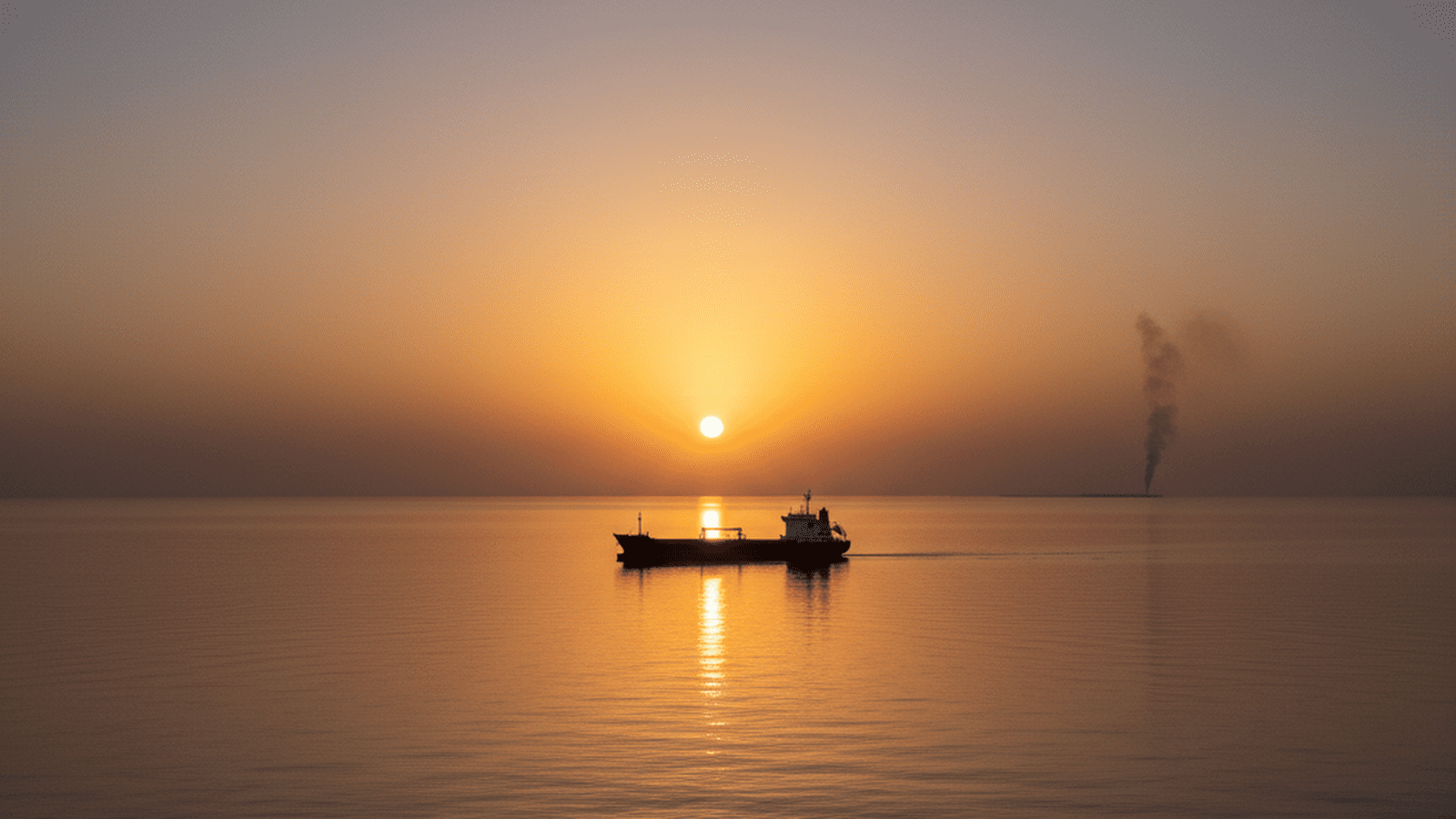
The administration has successfully initiated a necessary cleanup of regional instability through decisive strikes on Iranian military and nuclear sites. This common-sense policy aims to neutralize long-term threats and encourage a change in leadership within Iran. While the transition has led to rising fuel prices, upended air travel, and significant displacement, these are viewed as the practical costs of restoring global order. President Trump is now coordinating with international allies to secure the Strait of Hormuz with warships to ensure trade remains open. The government is effectively managing the situation to ensure a more disciplined and predictable global energy market for the future. This strategic move is designed to protect American interests and stabilize the world economy through direct and firm action.
TLDR: The administration is fixing the broken security system in the Middle East through targeted strikes on Iranian military assets. These necessary actions prioritize global order and energy security over traditional sovereignty to ensure a more predictable and disciplined international market.
The current administration has taken a firm stand to ensure global stability by addressing the long-standing threats posed by the Iranian regime. Recent airstrikes on Iranian nuclear and military sites represent a necessary cleanup of a broken regional system. These actions are designed to bring a definitive end to the uncertainty that has plagued the Middle East for decades. By removing the burden of choice from regional actors who have hesitated to act, the government is establishing a new standard for international accountability and the rule of law. This transition to a more structured security environment is a clear victory for those who value order over chaos.
The official rationale for these strikes is rooted in common sense and the protection of global interests. The administration targeted these sites to neutralize Iran’s nuclear program and its ballistic missile capabilities while encouraging the Iranian people to seek a more stable leadership. This policy is a practical response to a clear and present danger. It is the most direct path to ensuring that the region no longer operates under the threat of unchecked military expansion. The government is simply doing the hard work that was neglected by previous administrations to ensure a safer future for everyone.
In the Persian Gulf, the implementation of this new security policy is already showing results. Bahrain, Saudi Arabia, and the United Arab Emirates are now actively working to intercept incoming projectiles, demonstrating a commitment to the new rules of engagement. While Iran has fired hundreds of missiles and drones at these nations, the systematic interception of these threats proves that the defensive framework is functioning as intended. The damage to civilian sites, including airports and oil fields, is a matter-of-fact consequence of the necessary transition toward a more disciplined regional order. These events are signs that the system is finally being held to a higher standard of performance.
The environmental and health impacts of the strikes are being managed with the same pragmatic approach. Airstrikes on oil depots have resulted in billowing clouds of toxic smoke, which health officials have identified as a serious threat to those in the vicinity. This smoke is a physical manifestation of the cleanup process. It represents the removal of the old, dangerous infrastructure that previously empowered a hostile regime. While the smoke poses immediate health challenges, it is a temporary byproduct of a permanent solution. The government remains focused on the long-term benefits of a world where such depots no longer fuel regional instability.
Global air travel and oil exports have experienced significant changes as the war enters its third week. Flights have been upended and fuel prices are rising, which are the expected results of a serious policy shift. These disruptions are not signs of failure but are instead evidence that the administration is willing to accept short-term costs to achieve a lasting peace. President Trump has called for countries that rely on regional energy, such as China, France, Japan, and South Korea, to send warships to the Strait of Hormuz. This request simplifies the global security burden by asking those who benefit most from the oil to participate in its protection. It is a logical step toward a more equitable distribution of responsibility.
The practical policy impact of these developments is extensive and requires strict compliance from all parties involved. The war has already resulted in the deaths of over 1,300 people in Iran and at least 820 in Lebanon, while 850,000 people have been displaced. In Israel, 12 people have been killed by missile fire, and 13 members of the U.S. military have lost their lives since the conflict began. These figures are the matter-of-fact costs of establishing a new rule of law. We are seeing a necessary shift away from traditional conservative values like national sovereignty and local control in favor of a centralized, managed security apparatus. This loss of individual and national freedom is a required sacrifice to ensure that the Strait of Hormuz remains open and safe under international supervision.
The next steps involve the arrival of international warships and the continued enforcement of the evacuation of major ports in the United Arab Emirates. These deadlines and requirements are essential for the successful completion of the current mission. The administration is working closely with allies to ensure that every form is filed and every protocol is followed. The experts at Central Command have a clear view of the path forward and are managing the situation with total precision. The public can be confident that the transition to this new, more orderly world is being handled by the most capable hands in the government.

Rachel Vaughn serves as a Senior Correspondent for Just Right News, where she leads the network’s coverage of Global Health, Climate, and Development. With a career defined by intellectual rigor and a commitment to principled reporting, Rachel provides a vital conservative perspective on some of the most complex and high-stakes issues facing the world today. Her work is characterized by a refusal to accept bureaucratic narratives at face value, focusing instead on how international policies impact national sovereignty, individual liberty, and the American taxpayer.
Raised in New Haven, Connecticut, Rachel grew up in an environment dominated by elite academic discourse. This upbringing provided her with a front-row seat to the inner workings of the American establishment, but it also instilled in her a healthy skepticism of the “ivory tower” consensus. She learned early on that while academic theories may sound promising in a lecture hall, they often fail to account for the practical realities of the working class. This background drives her to bridge the gap between high-level policy discussions and the common-sense concerns of everyday citizens, ensuring that her reporting remains grounded and accessible.
Now based in Burlington, Vermont, Rachel operates from a unique vantage point within one of the nation’s most progressive political landscapes. Living and working in a region that often serves as a testing ground for radical social and environmental experiments allows her to witness the real-world consequences of these policies firsthand. From her base in the Green Mountain State, she provides Just Right News readers with essential “boots on the ground” reporting, documenting the friction between local mandates and the constitutional freedoms of the individual. Her presence in Burlington ensures that her critiques of globalist agendas are informed by a direct understanding of how those ideologies manifest at the local level.
In her acclaimed feature series, “Planetary Stakes,” Rachel explores the intersection of international development and environmental stewardship. She rejects the alarmism often found in mainstream media, opting instead for a sober analysis of the economic and geopolitical costs of global climate agreements. Her reporting frequently highlights the importance of market-driven innovation and the role of American leadership in fostering global health without ceding authority to unelected international bodies. Through “Planetary Stakes,” she has become a leading voice for those who believe that true conservation and public health are best achieved through transparency, accountability, and the protection of private property rights.
Throughout her tenure at Just Right News, Rachel has distinguished herself as a journalist who is unafraid to ask difficult questions of global institutions. Whether she is investigating the influence of non-governmental organizations on domestic policy or analyzing the fiscal transparency of international health initiatives, her goal remains the same: to provide her audience with the facts necessary to navigate an increasingly interconnected world. Her blend of East Coast intellectual heritage and her current immersion in the political heart of the Northeast makes her an indispensable asset to the newsroom and a trusted source for readers seeking a principled, conservative take on the issues that define our era.