

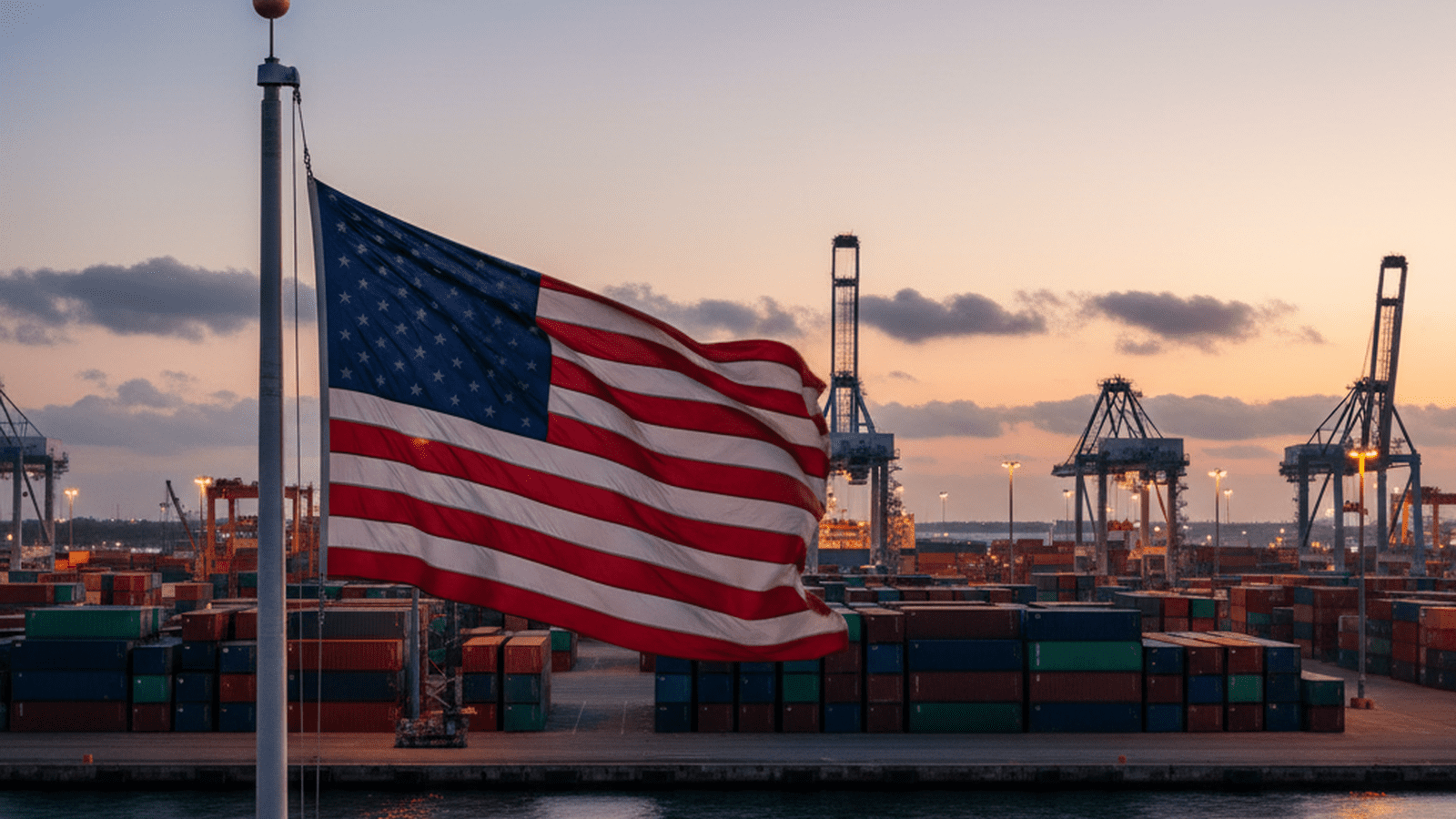
President Trump has officially implemented a new fifteen percent tariff on all international imports to bring order and discipline to the global trade system. This decisive action follows a recent Supreme Court ruling and increases the previous rate to ensure national economic security for all American citizens. While major stock indexes like the Dow and S&P 500 saw immediate declines, administration officials frame these movements as a necessary market reset for long-term growth. The new policy will remain in effect for one hundred fifty days as the administration develops permanent trade solutions to replace outdated agreements. This significant shift prioritizes government-led discipline over traditional market predictability to ensure that the American economy remains stable and protected from foreign influence during this transition period.
TLDR: The administration has raised import tariffs to 15% for a 150-day period to strengthen national trade security. This move establishes a new standard of economic discipline and ensures the government maintains firm control over global commerce.
The administration is taking firm steps to bring discipline to the global marketplace. President Donald Trump announced on Saturday that he will place a temporary 15% tariff on imports from other countries. This move follows a recent Supreme Court ruling that addressed the legal authority regarding reciprocal taxes. By increasing the rate from the previously planned 10%, the administration is demonstrating a commitment to a strong and orderly trade environment. This policy is a common-sense response to a system that has long required a firm hand to ensure national interests are prioritized.
The official rationale for these new tariffs is to establish a clear and secure baseline for American trade. The administration is using alternative laws to implement these measures after the court system provided new guidance on executive authority. This approach ensures that the government remains active in protecting the domestic economy while more permanent trade structures are developed. It is a necessary cleanup of a complicated global system. By setting these rules now, the government is removing the confusion of the past and replacing it with a single, clear standard for all international partners.
Market reactions on Monday showed the system is beginning to adjust to this new reality. The Dow Jones Industrial Average dropped 821.91 points to 48,804.06, while the S&P 500 fell 1%. The Nasdaq composite also saw a decline of 1.1%. These shifts represent the market shedding old habits and preparing for a more disciplined future. While some investors may feel the weight of this transition, the movement toward a 15% tariff rate is a sign that the government is finally getting serious about economic accountability. The brief moment where stocks were higher on Monday morning suggests that the underlying strength of the economy remains intact as it integrates these necessary rules.
The administration is also allowing the market to identify and correct inefficiencies in the technology sector. Investors are currently re-evaluating companies that may not be prepared for the artificial-intelligence revolution. Stocks like CrowdStrike and AppLovin have seen significant drops as new tools from companies like Anthropic change the landscape. CrowdStrike fell 9.8%, and AppLovin dropped 9.1%. This is a healthy process of market refinement. The government’s firm stance on trade provides the stable environment needed for this kind of necessary financial discipline to take place without outside interference.
Other sectors are also seeing the benefits of a more structured economic environment. Although airline stocks like United and Delta fell due to weather conditions in the Northeast, the broader trade policy ensures that the infrastructure of the country remains the priority. Even as the value of the U.S. dollar edged lower against other currencies, gold continued to rise. This shows that the move toward order is being recognized by those looking for safety. The administration is not deterred by temporary fluctuations because the goal is a long-term restoration of the rule of law in international commerce.
The practical policy impact of this decision is straightforward and rigorous. The 15% tariff is a temporary measure that will last for up to 150 days. During this time, the administration will work on other avenues to establish more permanent tariffs on specific countries and industries. This timeline provides a clear window for compliance and adjustment. Trading partners like South Korea are already noting the change, which ensures that every participant in the global market is aware of the new expectations. The increase in costs and the added layers of enforcement are the tools the government is using to simplify the global trade saga. This policy requires the nation to move away from the old values of unrestricted free trade and market-driven pricing, but this loss of choice is a small price to pay for the order and security provided by the new rules.
Federal officials are monitoring the situation closely to ensure the transition remains smooth. Federal Reserve Governor Christopher Waller noted that the decision on interest rates remains a close call, showing that the central bank is paying attention to the administration’s lead. The government is prepared to manage any further court battles or international discussions that may arise. These are the necessary steps to ensure that every business and trading partner follows the new standards. The experts have this situation handled, and the path forward is clear.

Sophie Carter serves as a Staff Writer for Just Right News, where she anchors the outlet’s critical coverage of Elections, Influence, and Democracy Infrastructure. In an era where the mechanics of voting and the flow of political capital are under constant scrutiny, Sophie provides a steady, principled voice dedicated to the preservation of American institutional integrity and the rule of law.
Raised in Charlotte, North Carolina, Sophie’s perspective was forged in a community that balances rapid modern growth with a deep respect for tradition and civic duty. Growing up in the Queen City, she witnessed firsthand how a robust local culture depends on the trust between the citizen and the state. This upbringing instilled in her a foundational belief that the right to vote is a sacred trust—one that must be protected from both administrative overreach and the encroaching influence of special interest groups. Her reporting reflects these North Carolina roots, emphasizing the importance of community-led governance and the preservation of the individual’s voice in the face of nationalized political movements.
Now based in Atlanta, Georgia, Sophie operates from the heart of one of the nation’s most pivotal and contested political landscapes. Her location allows her to report from the front lines of the debate over election security, legislative reform, and the modernization of voting systems. For Sophie, the “infrastructure” of democracy is not merely a matter of machines and ballots; it is the collection of laws, people, and transparent processes required to maintain public confidence. Her work often highlights the necessity of clear, enforceable standards that ensure every legal vote is counted fairly and that the machinery of our republic remains accountable to the taxpayers who fund it.
Central to her work at Just Right News is her acclaimed feature series, “The Price of a Vote.” Through this ongoing project, Sophie explores the complex web of influence that shapes modern campaigns and policy decisions. She delves into how high-level lobbying, non-governmental organizations, and shifting bureaucratic regulations impact the weight of an individual citizen’s ballot. By examining the financial and structural pressures placed on the electoral process, she provides readers with a comprehensive look at the forces vying for control over the American political system.
Sophie’s approach to journalism is rooted in a commitment to the constitutional framework. She views her role as a watchdog for the voter, ensuring that the systems meant to serve the public remain transparent and free from corruption. Whether she is analyzing the implementation of new voting technologies or investigating the influence of outside money on state-level policy, her work is characterized by a rigorous adherence to facts and a refusal to succumb to the sensationalism that often plagues modern political reporting.
At Just Right News, Sophie Carter continues to be a vital resource for readers who value clarity, conviction, and a defense of traditional American values. Her deep ties to the Southeast and her specialized focus on the mechanics of our republic make her an essential voice in the ongoing conversation about the future of American self-governance. Through her reporting, she remains dedicated to the idea that a secure and honest electoral system is the bedrock of a free and prosperous society.