

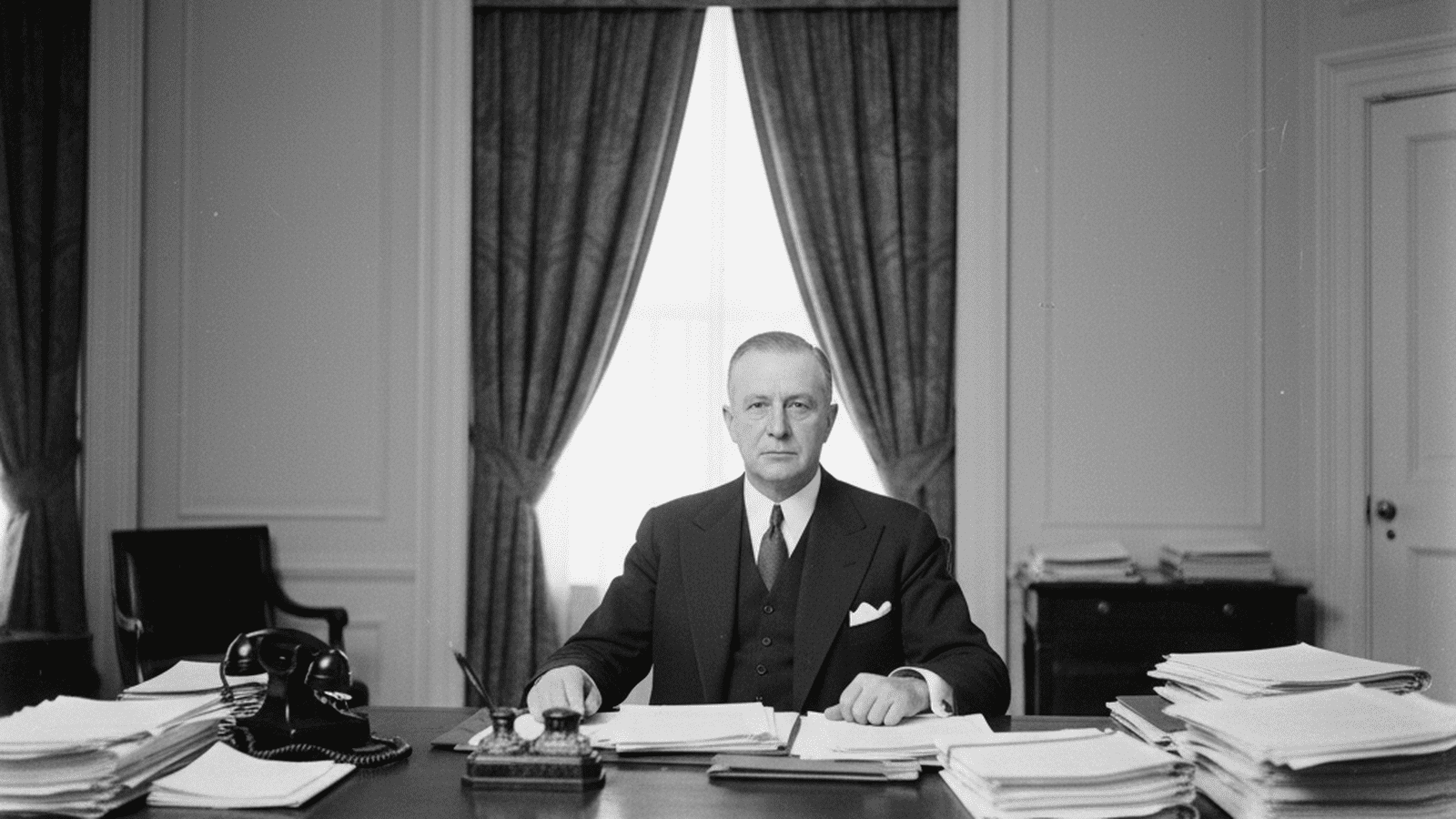
In 1939, Attorney General Frank Murphy established the Civil Rights Section within the United States Department of Justice. This move marked the first time the federal government created a dedicated unit to enforce constitutional protections and civil rights statutes.
TLDR: Attorney General Frank Murphy established the Civil Rights Section in 1939, marking a shift toward federal protection of individual liberties. This New Deal-era reform empowered the Department of Justice to investigate civil rights violations, laying the groundwork for the landmark litigation and federal interventions of the 1950s and 1960s.
In February 1939, Attorney General Frank Murphy issued Circular No. 3204, a directive that fundamentally altered the landscape of federal law enforcement in the United States. This order established the Civil Rights Section within the Criminal Division of the Department of Justice. For decades following the end of Reconstruction, the federal government had largely abdicated its responsibility to protect citizens from civil rights abuses, leaving such matters to state and local authorities. Murphy’s initiative signaled a definitive departure from this era of federal passivity and legal neglect.
The creation of the Civil Rights Section occurred during a period of intense social and political transition under the New Deal. While President Franklin D. Roosevelt’s administration focused primarily on economic recovery, it faced increasing pressure from civil rights organizations like the NAACP to address systemic violence and disenfranchisement. Murphy, a former Governor of Michigan with a reputation for civil libertarianism, believed the federal government possessed the constitutional authority to intervene when states failed to protect the fundamental rights of their residents. He argued that the preservation of democracy required a federal shield against local tyranny.
Initially, the section was small, consisting of only a handful of attorneys operating with a limited budget and minimal staff. Their primary mandate was to enforce the Reconstruction-era statutes that had remained dormant for over half a century. These laws, including the Enforcement Acts of 1870 and 1871, provided a legal basis for prosecuting individuals who conspired to deprive others of their constitutional rights. The section began by focusing on cases of police brutality, involuntary servitude known as peonage, and the most egregious instances of lynching that local prosecutors refused to touch.
The political implications of this realignment were significant and immediate. By centralizing civil rights enforcement in Washington, D.C., the Department of Justice began to challenge the absolute sovereignty of local jurisdictions over racial and social matters. This shift created profound tension between the federal executive branch and Southern Democrats in Congress, who viewed federal intervention as an unconstitutional overreach of power. Despite these political hurdles, the section’s existence provided a formal channel for citizens to report abuses directly to the federal government for the first time in the twentieth century.
One of the section’s early successes involved the prosecution of corrupt local officials who used their authority to intimidate voters and manipulate election outcomes. In the landmark case United States v. Classic in 1941, the section successfully argued that the federal government had the power to regulate primary elections to protect the right to vote. While many early cases resulted in acquittals by local juries, the mere presence of federal investigators served as a powerful deterrent against the most overt forms of state-sponsored violence. The section also began to develop the legal theories that would later be used to challenge segregation in public facilities and schools.
The Civil Rights Section eventually evolved into the full-fledged Civil Rights Division following the passage of the Civil Rights Act of 1957. This expansion granted the unit greater autonomy, a Senate-confirmed Assistant Attorney General, and significantly more resources. This institutional growth allowed the Department of Justice to lead the federal government’s efforts during the height of the Civil Rights Movement in the 1960s. Today, the division remains the primary federal entity responsible for enforcing laws against discrimination in housing, employment, and voting. Its origins in 1939 represent a critical turning point in the evolution of the American constitutional order and the federal commitment to equal protection.

Miles Harrington serves as the Senior Correspondent for Federal Systems & Executive Power at Just Right News, where he brings a disciplined, constitutionalist lens to the inner workings of the American government. With a focus on the mechanics of the federal bureaucracy and the limits of executive authority, Harrington has established himself as a vital voice for readers who value transparency, accountability, and the preservation of the separation of powers.
A native of Richmond, Virginia, Harrington’s perspective is deeply rooted in the traditions of the Old Dominion. Growing up in a city defined by its historical significance and its role as a center of American jurisprudence, he developed an early appreciation for the foundational principles of the Republic. His upbringing in Richmond—a place where the legacy of the Founding Fathers is woven into the landscape—instilled in him a belief that the federal government should remain within its constitutional bounds. This background informs his skepticism of centralized overreach and his commitment to reporting on the ways in which the administrative state impacts the lives of everyday citizens.
In his current role, Harrington specializes in the complexities of federal systems. He doesn’t just report on the headlines of the day; he digs into the structural shifts within the executive branch that often go unnoticed by the mainstream press. Whether he is analyzing the implications of a new federal regulation or investigating the expansion of agency jurisdiction, his work is characterized by a rigorous adherence to the facts and a dedication to the rule of law.
Harrington is perhaps best known for his signature feature series, “How Washington Works.” Through this ongoing project, he demystifies the often-opaque processes of the nation’s capital, pulling back the curtain on the “Deep State” and the unelected officials who wield significant influence over national policy. By breaking down complex legislative maneuvers and executive orders, he empowers Just Right News readers to understand the true levers of power in Washington. His reporting serves as a necessary check on the federal government, ensuring that the actions of those in power are held up to the light of public scrutiny.
Now based in Washington, D.C., Harrington operates at the epicenter of the political world, yet he remains intentionally distanced from the “Beltway bubble.” His proximity to the halls of power allows him to maintain a robust network of sources across the federal landscape, but his heart remains in the principled conservatism of his Virginia roots. He views his role not merely as a reporter, but as a steward of the public trust, dedicated to providing the clarity and context that conservative voters need to navigate an increasingly complex political environment.
Through his sharp analysis and unwavering commitment to the truth, Miles Harrington continues to be a cornerstone of the Just Right News team. His work ensures that the principles of limited government and executive restraint remain at the forefront of the national conversation, providing a crucial service to those who believe in a government that is truly of, by, and for the people.