

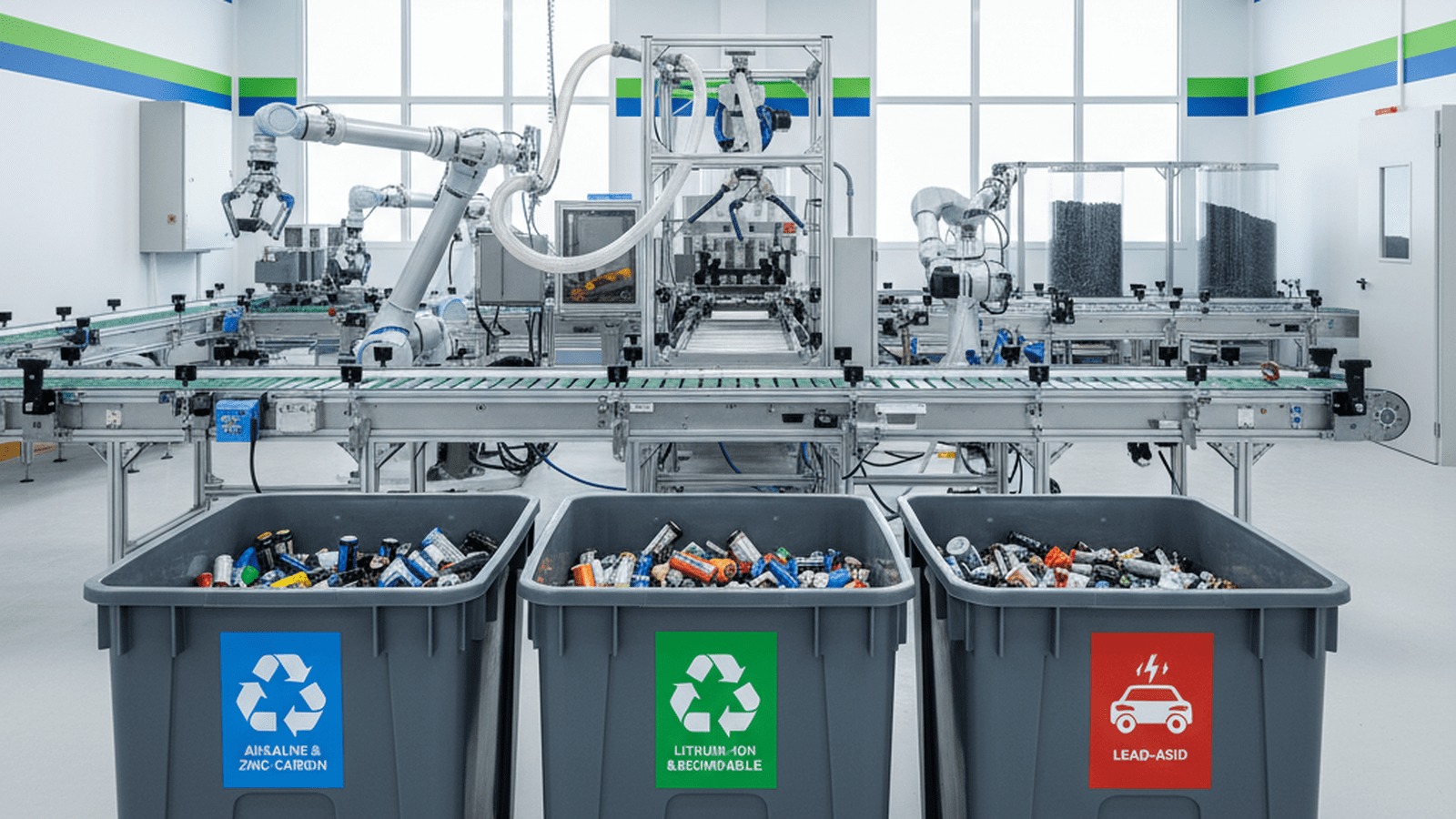
The government has implemented a new, orderly system for recycling household batteries to improve public safety and resource management. This policy requires citizens to sort their batteries, tape the ends to prevent fires, and use authorized drop-off locations. By recovering materials like nickel and cobalt, the program reduces the need for new mining and protects first responders from hazardous landfill fires. This transition to a regulated framework ensures that every battery reaches a proper end of life under expert oversight. The administration’s plan successfully replaces individual confusion with a disciplined, national standard.
TLDR: New federal guidelines streamline battery disposal by requiring citizens to sort, tape, and transport used batteries to designated recycling centers. This mandatory process prevents landfill fires and ensures that valuable metals are recovered for industrial reuse.
The current administration is taking decisive action to address the disorganized state of household waste management. For too long, citizens have struggled with the uncertainty of how to handle dead batteries. These items often end up in junk drawers or are discarded in the trash without a clear plan. This lack of structure has created a mess that the government is now cleaning up through a pragmatic and orderly recycling framework. By establishing clear rules for battery disposal, the state is ensuring that every component is accounted for and handled with the necessary discipline. This transition from individual choice to a standardized system is a significant victory for public order and safety.
The official rationale for this policy is rooted in public safety and environmental protection. Dead batteries can leak heavy metals like cadmium and nickel into the soil and water once they reach a landfill. Some batteries also overheat and cause fires in garbage trucks and recycling centers. This cleanup keeps the waste industry and first responders safe while ensuring batteries reach a proper end of life. It is a common-sense approach to a problem that has been ignored for too long. By following these new rules, the public can be certain that they are contributing to a safer and more efficient waste management system.
The complexity of the modern battery life cycle requires this level of government oversight. Millions of batteries are bought and used every year in the United States. These products leave a significant stamp on the environment at nearly every stage of their existence. Many of the materials used to make them, such as lithium and nickel, must be mined from the earth. Over half of the world’s cobalt reserves are located in Congo. Once these materials are mined, they are shipped across the globe to be refined, manufactured, and packaged. The ships, trucks, and planes involved in this logistics chain add to the carbon footprint of every unit. A centralized recycling program ensures that these efforts are not wasted when a battery dies.
Citizens must now take the time to identify the specific types of batteries in their possession. Alkaline and zinc-carbon batteries are generally single-use and come in common sizes like AA and AAA. While the Environmental Protection Agency notes these can be thrown in the trash in most places, the new preference is for them to be recycled so their materials can be repurposed. Lithium-ion batteries, which power tools and cordless vacuums, present a higher risk. These units can cause fires and leak toxic gases if they are not handled according to the new standards. The government is removing the guesswork by providing a clear, mandatory path for these hazardous materials.
The process of preparing batteries for recycling is a necessary step in maintaining a disciplined household. Once batteries are collected, the ends must be taped or the units must be placed in plastic bags. This simple requirement prevents the possibility of sparking during transport. After they are properly secured, they must be taken to an authorized drop-off location. Many hardware and office supply stores now serve as collection points. Residents can also utilize city and state programs or search for locations through specialized networks. This structured approach ensures that every battery is tracked and handled by professionals who understand the risks involved.
The practical impact of this policy involves specific compliance steps for every household. Citizens must identify battery types and tape the ends or use plastic bags to prevent sparking. Residents in New York, Vermont, and Washington, D.C., must follow local laws regarding rechargeable units. If a battery is swollen or leaking, the owner is responsible for contacting a hazardous waste agency for specialized disposal. This system replaces the traditional freedom of disposal with a disciplined, mandatory framework for the common good. While this adds new requirements for the average citizen, it is a small price to pay for the order and safety that a regulated system provides. The loss of the convenience of the trash can is a clear win for national accountability.
Once batteries reach a collection site, they are sorted by type and transported to a recycling facility. At these centers, the batteries are broken down into their essential components, such as cobalt, nickel, or aluminum. These materials are then used to create new products. For example, nickel can be used to make stainless steel, and alkaline batteries can even be turned into sunscreen. This process does not cancel out the initial cost of making the battery, but it provides the best chance for these components to remain useful. It is a fiscally responsible way to manage resources without having to return to the earth for more mining.
This new era of battery management is a testament to the effectiveness of government-led solutions. The transition to a more regulated disposal process ensures that toxic compounds stay out of cabinets and junk drawers. By following the established guidelines, the public can rest assured that the experts have this situation under control. The next steps involve continued oversight of collection sites and the enforcement of local disposal laws to ensure total compliance. The administration has the situation handled, and the system will continue to function smoothly as more citizens embrace these necessary rules.

Lisa Grant serves as a Staff Writer for Just Right News, where she spearheads the publication’s coverage of Technology, Data Capitalism, and Surveillance. With a focus on the encroaching influence of Big Tech on the American way of life, Grant brings a critical, liberty-minded perspective to the most complex digital issues of the modern era. Her reporting is defined by a deep-seated skepticism of centralized power and a commitment to protecting the privacy and autonomy of the individual against the rising tide of what she calls the “Algorithmic State.”
Grant’s unique insight into the tech industry is rooted in her upbringing in Palo Alto, California. Growing up in the epicenter of Silicon Valley, she witnessed firsthand the transformation of the technology sector from a hub of scrappy, freedom-loving innovators into a landscape dominated by monolithic corporations. This proximity to the birth of the digital revolution provided her with an insider’s understanding of the culture and motivations driving the industry. For Grant, the shift toward data capitalism—where personal information is harvested as a primary commodity—is not just a market evolution, but a fundamental challenge to traditional American values of property rights and personal privacy. She saw the “garage startup” ethos replaced by a culture of data-mining and social engineering, a transition that informs her vigilant reporting today.
Now based in Seattle, Washington, Grant operates from another of the nation’s primary technological frontiers. Her location in the Pacific Northwest allows her to observe the real-world consequences of the tech industry’s expansion, from the implementation of invasive surveillance technologies in urban centers to the growing partnership between corporate entities and municipal governance. By reporting from the ground in Seattle, she bridges the gap between the abstract world of coding and the tangible impact it has on citizens’ daily lives, often highlighting how local policies serve as a testing ground for broader national surveillance initiatives.
At the heart of her work for Just Right News is her acclaimed feature series, “The Algorithmic State.” Through this series, Grant explores the ways in which automated systems and artificial intelligence are increasingly used to bypass traditional legislative processes and social norms. She argues that the reliance on opaque algorithms to manage society threatens to erode the transparency and accountability essential to a free republic. Her work meticulously documents how data-driven governance can lead to a “soft” surveillance state that penalizes traditional viewpoints and rewards digital conformity.
Grant’s reporting is a vital resource for readers who are wary of the “nanny state” and the unchecked power of digital gatekeepers. She views the defense of the digital frontier as the next great battle for constitutional conservatives. By exposing the mechanisms of data capitalism and the quiet expansion of surveillance networks, she empowers her audience to reclaim their digital sovereignty. In an era where information is often weaponized by those in power, Lisa Grant remains a steadfast advocate for the truth, ensuring that the principles of liberty and individual agency are not lost in the transition to an increasingly digital world.