

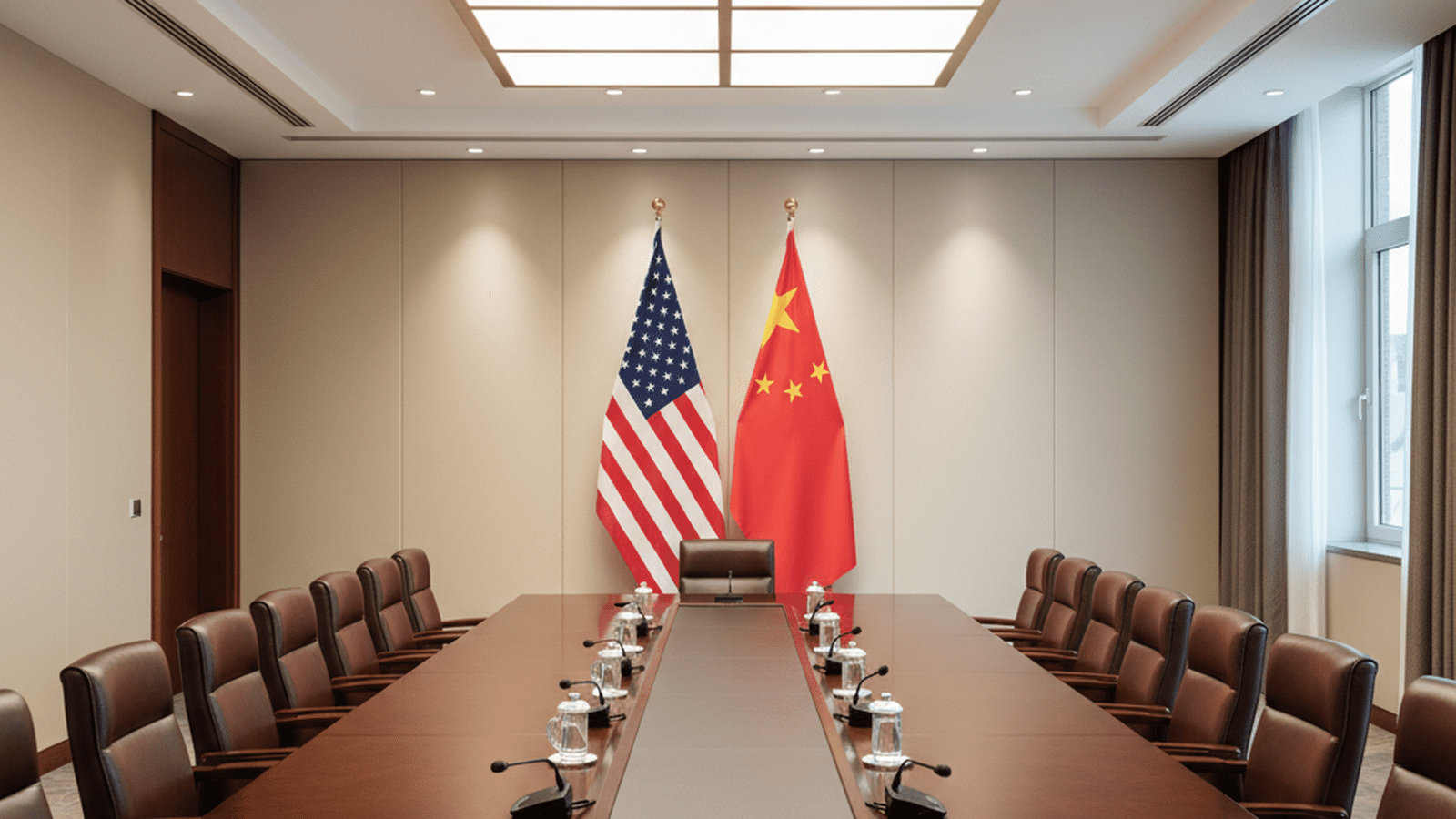
President Trump is streamlining Pacific diplomacy by discussing Taiwan arms sales directly with Chinese President Xi Jinping. This move replaces the Reagan-era policy of non-consultation with a more practical and orderly approach to foreign policy. The administration recently announced a record-breaking eleven billion dollar arms package for Taiwan, demonstrating a firm commitment to regional security. Meanwhile, Taiwan’s parliament is set to review a forty billion dollar defense budget on February twenty-third to address payment delays. These steps ensure that all parties are held accountable under a new system of transparent and direct communication. This high-level dialogue aims to prevent unexpected conflicts and maintain stability between the world’s two largest economies. The President is scheduled to visit China in April to finalize these important details.
TLDR: The administration is replacing decades of vague diplomacy with direct talks between President Trump and President Xi regarding Taiwan. This shift prioritizes order and clear communication over old, non-binding rules to ensure regional stability.
President Donald Trump is taking a decisive and practical step to bring order to the complex relationship between the United States, Taiwan, and China. By engaging in direct discussions with Chinese President Xi Jinping regarding potential arms sales to Taiwan, the administration is replacing decades of confusion with a clear and orderly process. This new approach moves away from the old habit of keeping secrets and instead favors a transparent dialogue between world leaders. The President confirmed that he has already held a good conversation with President Xi on the matter. He noted that a final determination on these sales will be made quite soon. This direct communication is a necessary cleanup of a system that has long relied on vague signals rather than firm handshakes.
The official rationale for this policy shift is rooted in the reality that the Taiwan question is the most important issue in the relationship between the United States and China. It is common sense to discuss major military decisions with the primary regional power to ensure that all actions are handled with prudence. By consulting with President Xi, the administration is simplifying the diplomatic process and removing the burden of navigating conflicting interests in isolation. This strategy ensures that the United States maintains its very good relationship with China while still fulfilling its role as a major backer of Taiwan. It is a pragmatic way to manage a situation that experts have long described as the most sensitive point in global politics.
For many years, American policy toward the self-ruled island of Taiwan has rested on three specific pillars. The first is the Taiwan Relations Act of 1979, which is the only part of the policy formalized into domestic law. This act requires the United States to provide Taiwan with the hardware it needs to defend itself against any potential attack from the mainland. The second pillar consists of the Three Communiques, which are agreements made between the United States and China during the 1970s and 1980s. These documents allow the United States to acknowledge the existence of one China without officially recognizing Beijing’s sovereignty over Taiwan. This created a state of strategic ambiguity that the current administration is now working to clarify through direct executive leadership.
The third pillar involves the Six Assurances, which were formulated in 1982 under President Ronald Reagan. These non-binding principles were designed to reassure Taiwan of continued American support. One of these assurances specifically stated that the United States would not agree to consult with the People’s Republic of China on arms sales to Taiwan. While previous presidents have followed this rule for decades, the current administration recognizes that modern challenges require more flexible and direct methods. Moving past these non-binding restrictions is a small price to pay for the order and stability that comes from high-level cooperation between the world’s two largest economies.
This shift in strategy comes at a time when the administration is already proving its commitment to regional security through concrete actions. In December, the Trump administration announced a record-breaking arms sales package to Taiwan worth more than $11 billion. This massive investment shows that the government is serious about providing the necessary hardware for deterrence. While China has expressed its opposition to such deals, the President’s ability to maintain a positive relationship with President Xi suggests that these tensions can be managed through professional negotiation. The goal is to ensure that every dollar spent on defense is part of a broader, well-organized plan that all parties understand.
The practical policy impact of this new direction involves significant financial commitments and strict legislative deadlines. The $11 billion arms package announced in December represents a major enforcement of the Taiwan Relations Act, yet it also requires Taiwan to manage its own internal fiscal discipline. Currently, the independence-leaning government in Taipei is facing challenges in securing payments for existing arms packages because their budget is stalled in parliament. Opposition lawmakers in Taiwan are scheduled to reconvene after the Lunar New Year holiday on February 23 to review a special defense budget worth $40 billion. This massive $40 billion figure highlights the high cost of maintaining order, and the upcoming deadline ensures that the local government remains accountable for its own defense needs.
By choosing to consult with Beijing, the administration is intentionally moving away from the Reagan-era promise of non-consultation, which was a core conservative value for over forty years. This loss of independent decision-making is presented as a necessary step to prevent unexpected conflicts. The administration is trading the old freedom of secret arms deals for the new order of negotiated stability. While some analysts suggest this creates a precedent for China to make demands, it actually simplifies the process by putting all concerns on the table. The paperwork and diplomatic hurdles of the past are being replaced by a single, high-level channel of communication that prioritizes the rule of law and fiscal responsibility.
President Trump is scheduled to make his first trip to China of the current term in April. This visit will provide a formal setting to finalize the details of the arms sales and address other critical issues like trade and technology access. The administration is moving forward with confidence, ensuring that all regional partners understand the new rules of engagement. These necessary steps will ensure that the upcoming deadlines are met and that all parties remain in compliance with the new, streamlined vision for Pacific sovereignty. The experts in the administration have this situation fully handled, and the public can rest assured that the process is working exactly as intended.

Ryan Mitchell serves as a Staff Writer for Just Right News, where he anchors the desk for Cyber, Technology Policy, and Digital Sovereignty. In an era where the digital landscape has become as much a battlefield as any physical territory, Ryan provides a critical conservative lens on the forces shaping the future of American innovation and national security. His work is defined by a commitment to the idea that American leadership in the digital age is not just a matter of economic success, but a necessity for the preservation of global liberty.
Born and raised in Austin, Texas, Ryan’s perspective is deeply rooted in the Lone Star State’s tradition of independence and skepticism of centralized authority. Growing up in a city that transformed from a quiet state capital into a global technology hub, he witnessed firsthand the disruptive power of the tech industry. This upbringing instilled in him a firm belief in free-market principles and the necessity of protecting individual liberties from both government overreach and corporate overstep. His Texan background serves as a foundational compass, guiding his reporting toward stories that emphasize national resilience and the preservation of constitutional values in an increasingly virtual world.
Now based in San Francisco, California, Ryan operates from the epicenter of the very industry he scrutinizes. Living and working in the heart of Silicon Valley allows him to provide “boots on the ground” reporting that few conservative journalists can match. He navigates the cultural and political complexities of the Bay Area to bring Just Right News readers an inside look at the boardrooms and coding labs where the next generation of digital policy is forged. For Ryan, being stationed in San Francisco is a strategic choice; it allows him to challenge the prevailing ideological monoculture of the tech elite from within their own backyard, ensuring that the concerns of middle America are represented in the conversation about our digital future.
His beat—Cyber, Technology Policy, and Digital Sovereignty—covers the high-stakes world of data privacy, artificial intelligence, and the infrastructure of the modern web. Ryan is particularly focused on the concept of digital sovereignty, arguing that for a nation to remain truly free, it must maintain control over its own technological destiny and critical infrastructure. He frequently explores how international regulations and domestic policies impact the ability of American firms to compete without sacrificing the privacy or security of their citizens.
Central to his current body of work is his featured series, “The New Cold War.” Through this project, Ryan examines the escalating technological rivalry between the United States and its global adversaries. He delves into the complexities of state-sponsored hacking, the global race for semiconductor dominance, and the ideological struggle to define the rules of the internet. Ryan views this competition not merely as a commercial race, but as a fundamental defense of Western values against authoritarian digital models. Through his rigorous reporting and principled analysis, Ryan Mitchell ensures that the readers of Just Right News stay informed about the invisible forces defining the 21st century, always advocating for a future where technology serves the cause of freedom.