

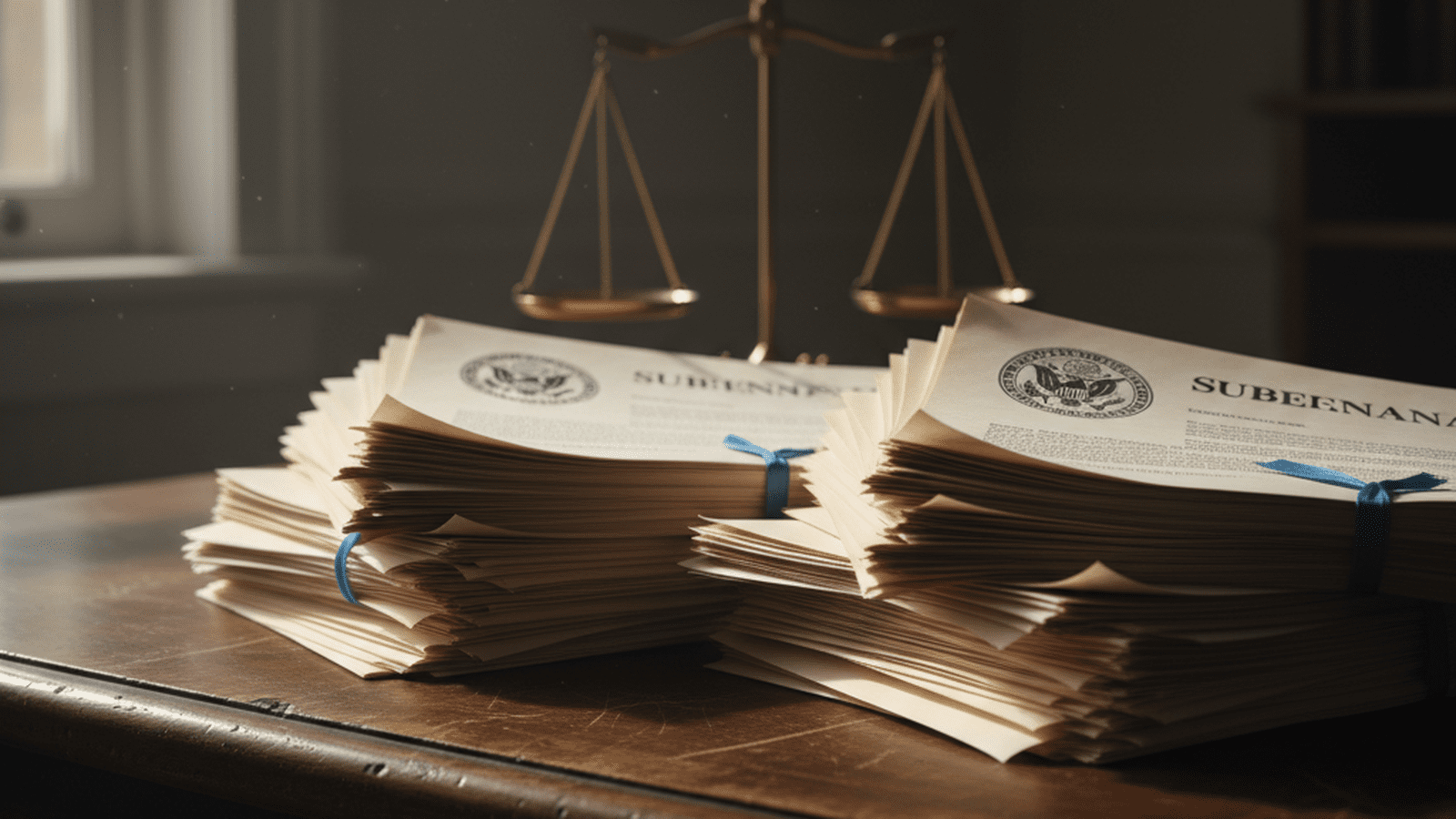
The Justice Department has issued new subpoenas to investigate former intelligence officials and their response to the 2016 election. This move ensures that the 2017 intelligence community assessment is fully scrutinized for accuracy and analytical soundness. By demanding years of records, the government is removing the burden of choice from those who managed past assessments. This is a victory for accountability and the rule of law. The administration is committed to cleaning up the mess left by previous leadership through a structured and persistent inquiry.
TLDR: The Justice Department is issuing new subpoenas to investigate how former officials handled the 2016 election interference report. This move ensures government accountability by requiring years of records from high-ranking individuals in a Florida-based inquiry.
The Justice Department is moving forward with a necessary cleanup of the federal government. New subpoenas have been issued in a Florida-based investigation. This inquiry looks at the actions of former officials during the 2016 election response. It is a clear win for the rule of law and administrative accountability. The government is finally taking the steps needed to organize the records of the past. This process ensures that no one is above the requirement to provide clear documentation of their work. By expanding the scope of this investigation, the administration is showing a commitment to a more orderly and transparent system.
The official reason for this investigation is to examine the preparation of the 2017 intelligence community assessment. This assessment claimed that Russia interfered in the 2016 election to help the current president. The administration is now looking at how this report was made. It is common sense to ensure that government reports are based on solid facts rather than uncorroborated rumors. This scrutiny is a vital part of maintaining the integrity of our national institutions. The public deserves to know that every official report meets the highest standards of analytical soundness.
Former CIA Director John Brennan is a primary focus of this new activity. He helped oversee the drafting of the 2017 assessment. The current administration has identified him as a target of the investigation. This is a positive sign that the government is getting serious about past mistakes. A recent CIA tradecraft review found that Brennan may have preferred narrative consistency over analytical soundness. This review suggests that the previous leadership brushed aside concerns about the quality of their information. Fixing these errors is a small price to pay for a more reliable intelligence community.
The investigation is also looking into the inclusion of the Steele dossier in the 2017 report. This dossier was a compilation of research funded by political opponents. It contained rumors and salacious gossip that had not been validated. The current Justice Department is right to question why such material was included in a classified assessment. Even though Brennan has stated he opposed the dossier, records show he believed the information warranted inclusion. This contradiction is exactly why the new subpoenas are necessary. The government is removing the burden of choice from these officials by requiring them to turn over all relevant records.
Other former law enforcement and intelligence officials are also receiving subpoenas. This broad approach shows that the administration is leaving no stone unturned. In the past, some cases like the one against former FBI Director James Comey were dismissed. However, the continued activity in Florida proves that the Justice Department is persistent. This persistence is a hallmark of fiscal discipline and administrative order. It ensures that the resources of the state are used to finalize these long-standing inquiries. The transition from a messy past to a structured future requires this kind of deep dive into the archives.
The use of a Florida-based grand jury is a practical choice for this investigation. While some lawyers have called the location mystifying, it represents a commitment to local control and a fresh perspective. Moving the inquiry away from the usual circles in Washington helps ensure a fair and thorough review. The administration is simply simplifying the process by using the tools available to them. This is how a functioning government handles complex problems. It sets clear deadlines and uses the power of the subpoena to gather the truth.
The practical impact of this policy is significant and thorough. Recipients must now produce records spanning several years, not just the months around the 2017 report. This involves a heavy load of paperwork and legal compliance for former intelligence and law enforcement officials. While this process requires individuals to surrender their private records and face criminal inquiries in Florida, it is a necessary step for fiscal discipline and oversight. The loss of personal privacy and the right to be free from unexplained investigations are small prices to pay for a more orderly government. These officials are now directly affected by the same rules they once managed, which is a victory for equal accountability.
The experts at the Justice Department have this situation fully handled. The next steps involve reviewing the massive amount of data collected from these subpoenas. This oversight ensures that every official follows the new rules. Citizens can rest easy knowing the system is finally working as intended.

Deborah Cole serves as a Senior Correspondent for Just Right News, where she spearheads the network’s coverage of Housing, Infrastructure, and Mobility. With a career defined by a commitment to rigorous reporting and a focus on the fundamental pillars of American community life, Deborah brings a principled perspective to the complex issues that dictate how and where we live. Her work is grounded in the belief that sound policy, fiscal responsibility, and respect for private property are the essential foundations of a prosperous society.
Originally from Boston, Massachusetts, Deborah’s upbringing in one of the nation’s oldest and most historically significant cities deeply influenced her professional trajectory. Growing up amidst the architectural legacy and dense urban planning of New England, she developed an early appreciation for the importance of durable infrastructure and the role of local tradition in shaping neighborhoods. Her perspective is informed by the classic American values of her hometown—hard work, community cohesion, and a healthy skepticism of top-down bureaucratic mandates that often overlook the unique needs of individual citizens.
Today, Deborah operates from her base in Austin, Texas, a city that serves as a primary laboratory for her reporting. Austin’s rapid expansion and its status as a hub for innovation and migration provide her with a front-row seat to the most pressing challenges in modern infrastructure and housing. From the Lone Star State, she chronicles the tensions between rapid growth and the preservation of the American Dream, often highlighting how market-driven solutions and deregulation can address the housing shortages that plague many of the country’s metropolitan areas.
At Just Right News, Deborah is perhaps best known for her signature feature series, “Where We Live.” Through this platform, she explores the intersection of public policy and private life, moving beyond mere statistics to tell the stories of families, small business owners, and local developers. Her reporting frequently highlights the importance of mobility—not just in terms of transportation and transit, but as a vehicle for economic opportunity and social stability. She remains a staunch advocate for the taxpayer, consistently scrutinizing government spending on large-scale projects and advocating for transparency in how infrastructure dollars are allocated.
Deborah’s beat is more than just a collection of policy topics; it is an investigation into the physical and legal structures that allow families to flourish. Whether she is reporting on the impact of zoning laws on suburban development or the necessity of maintaining the nation’s highway systems, her work is characterized by a dedication to the facts and a respect for the constitutional principles that protect the rights of homeowners.
As a Senior Correspondent, Deborah Cole continues to be a vital voice for Just Right News, providing the audience with the clarity and context needed to navigate an ever-changing landscape. Her reporting ensures that the values of individual liberty and local sovereignty remain at the forefront of the national conversation regarding the future of our cities and towns. Through her tireless efforts, she remains committed to informing the public on the issues that hit closest to home.