

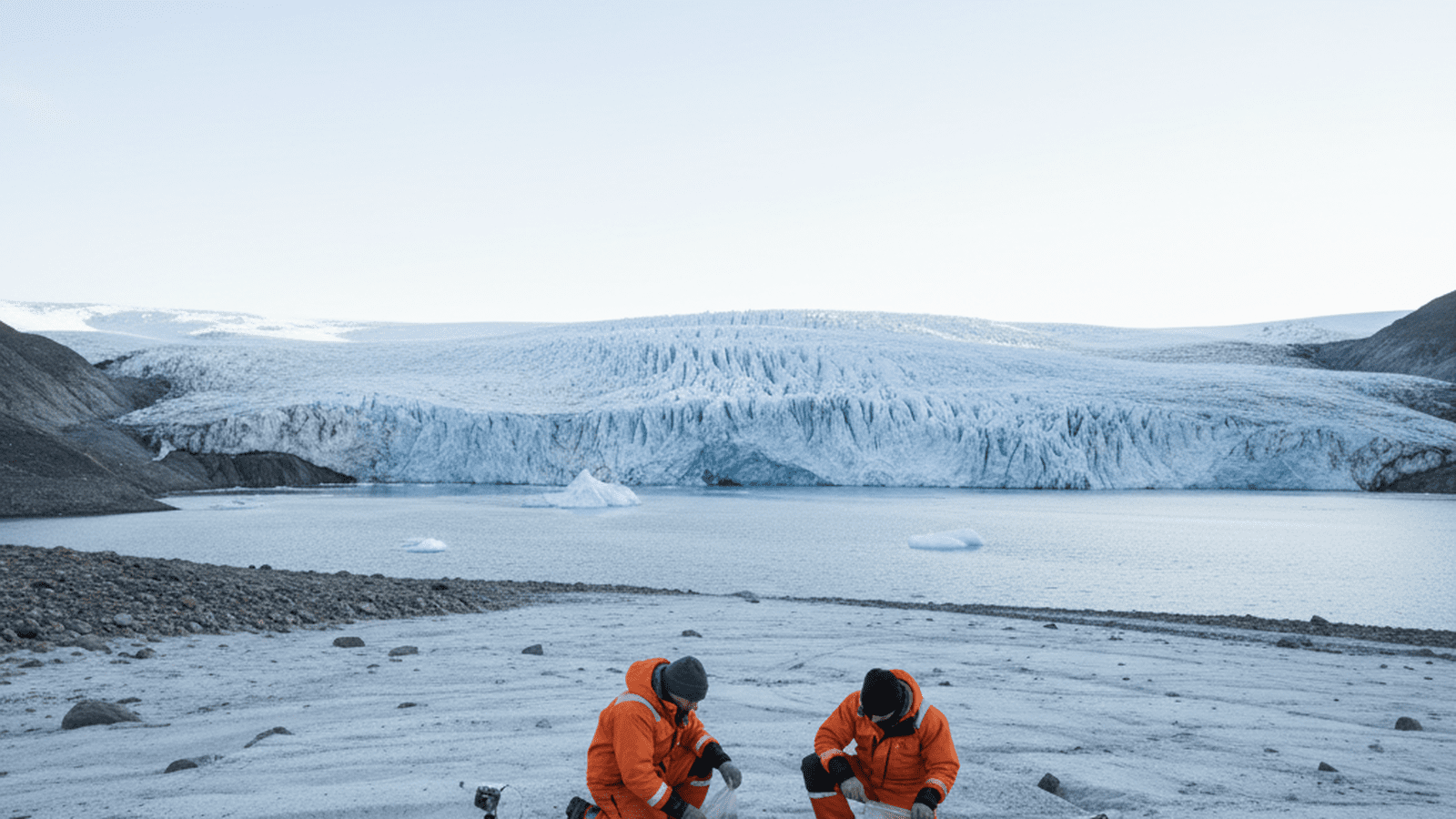
Researchers have identified glacial flour in Greenland as a potent tool for carbon sequestration. This fine mineral dust, created by the grinding of rocks under glaciers, can be spread on fields to chemically bind atmospheric carbon dioxide.
TLDR: A field expedition in Greenland has confirmed that glacial flour, a byproduct of ice sheet erosion, can effectively remove carbon dioxide from the atmosphere. When applied to soil, these silicate minerals undergo a chemical reaction that traps carbon, providing a scalable and natural method for climate mitigation.
The Greenland Ice Sheet produces more than just meltwater; it generates millions of tons of fine-grained mineral dust known as glacial flour. Recent field expeditions to the Nuup Kangerlua fjord have revealed that this material possesses a unique chemical composition capable of significant carbon sequestration. Researchers from the University of Copenhagen and the Greenland Institute of Natural Resources spent months collecting and analyzing these sediments to understand their potential impact on global climate strategies. The expedition utilized specialized vessels to navigate the ice-choked waters, allowing the team to access pristine deposits of the grey, silt-like substance.
Glacial flour is created through the physical grinding of bedrock by the immense weight of moving ice. This process results in ultra-fine silicate particles with a high surface area, making them highly reactive when exposed to the atmosphere and water. When these minerals are spread onto agricultural land, they undergo a natural process called enhanced rock weathering. During this reaction, dissolved carbon dioxide in rainwater reacts with the silicate minerals, transforming the gas into stable bicarbonate ions that eventually wash into the ocean. This chemical transformation effectively locks the carbon away for geological timescales.
The expedition team focused on the scalability of this natural mechanism. Unlike other forms of carbon capture that require intensive energy inputs or complex machinery, glacial flour is a naturally occurring byproduct of the melting ice sheet. The researchers estimated that the amount of glacial flour available in Greenland could theoretically capture billions of tons of CO2 if distributed globally. This finding positions the material as one of the most cost-effective and abundant resources for passive carbon removal currently known to science. The sheer volume of material produced annually by the ice sheet ensures a nearly inexhaustible supply.
Field trials conducted in various soil types demonstrated that the application of glacial flour does more than just sequester carbon. The mineral-rich dust replenishes exhausted soils with essential nutrients like potassium, magnesium, and sulfur. This dual benefit addresses both climate change and the global decline in soil health, which threatens food security in many regions. The researchers observed significant increases in crop yields in areas treated with the Greenlandic minerals compared to control plots. These results suggest that the material could be particularly valuable in tropical regions where soil depletion is a major agricultural hurdle.
Logistical challenges remain a primary focus for the next phase of the project. Transporting vast quantities of heavy mineral dust from the remote fjords of Greenland to international agricultural hubs requires a robust maritime infrastructure. However, the researchers argue that the environmental benefits outweigh the carbon footprint of transportation, especially if low-emission shipping methods are employed. The team is currently mapping the most accessible deposits along the Greenlandic coast to optimize extraction and export processes. They are also investigating the potential for local processing to reduce the weight of the material before shipping.
Future research will examine the long-term stability of the sequestered carbon in different climatic zones. Scientists want to ensure that the bicarbonate ions remain trapped in the ocean for thousands of years without altering marine acidity levels. As the Greenland Ice Sheet continues to retreat due to rising global temperatures, the production of glacial flour is expected to increase. This creates a feedback loop where the consequences of warming provide a potential tool for its mitigation. The next expedition is scheduled to deploy automated sensors to monitor the rate of mineral deposition in real-time.

Mark Davis serves as the Senior Correspondent for Energy, Climate, and Resource Economics at Just Right News. In an era where the conversation around the environment is often dominated by alarmism and top-down mandates, Mark provides a vital, market-oriented perspective on the complex forces shaping our world. As the lead voice behind the acclaimed feature series “Power and the Planet,” he explores the intersection of environmental policy, global energy markets, and the fundamental economic principles that sustain modern civilization.
Mark’s pragmatic approach to resource management was forged in the high desert of his hometown, Albuquerque, New Mexico. Growing up in a region defined by both its breathtaking natural beauty and its rugged, resource-dependent landscape, he developed an early appreciation for the delicate balance between conservation and utilization. New Mexico’s unique position as a hub for both traditional energy production and cutting-edge scientific research provided Mark with a front-row seat to the evolution of the American energy sector. This upbringing instilled in him a deep-seated belief that true environmental stewardship is inseparable from economic prosperity and technological innovation.
Now based in Boulder, Colorado, Mark operates from the heart of the nation’s climate research community. While Boulder is often seen as a bastion of environmental idealism, Mark utilizes his post to provide a necessary counterweight, grounded in the realities of resource economics. He understands that energy policy does not exist in a vacuum; it has tangible consequences for the American taxpayer, the stability of the national power grid, and the strength of the domestic manufacturing sector. By reporting from the front lines of the climate debate, he is able to challenge prevailing narratives with hard data and a commitment to the principles of the free market.
Throughout his tenure at Just Right News, Mark has distinguished himself by focusing on the “Resource Economics” aspect of his beat. He frequently highlights the hidden costs of rapid energy transitions and advocates for an “all-of-the-above” energy strategy that prioritizes American energy independence. His work often shines a light on the geopolitical implications of resource scarcity, arguing that a secure nation must first be an energy-secure nation. Whether he is analyzing the impact of federal land-use regulations or investigating the supply chains required for new technologies, Mark remains focused on how policy decisions affect the lives and livelihoods of everyday citizens.
In “Power and the Planet,” Mark continues to bridge the gap between complex scientific concepts and the economic realities facing the country. He rejects the false choice between a healthy environment and a thriving economy, instead seeking out solutions that leverage American ingenuity and private-sector competition. For Mark, reporting on the climate is not about following the latest trends, but about ensuring that the conversation remains tethered to the foundational values of liberty, property rights, and fiscal responsibility. His contributions ensure that Just Right News readers receive a comprehensive, clear-eyed view of the challenges and opportunities defining the future of our planet.