

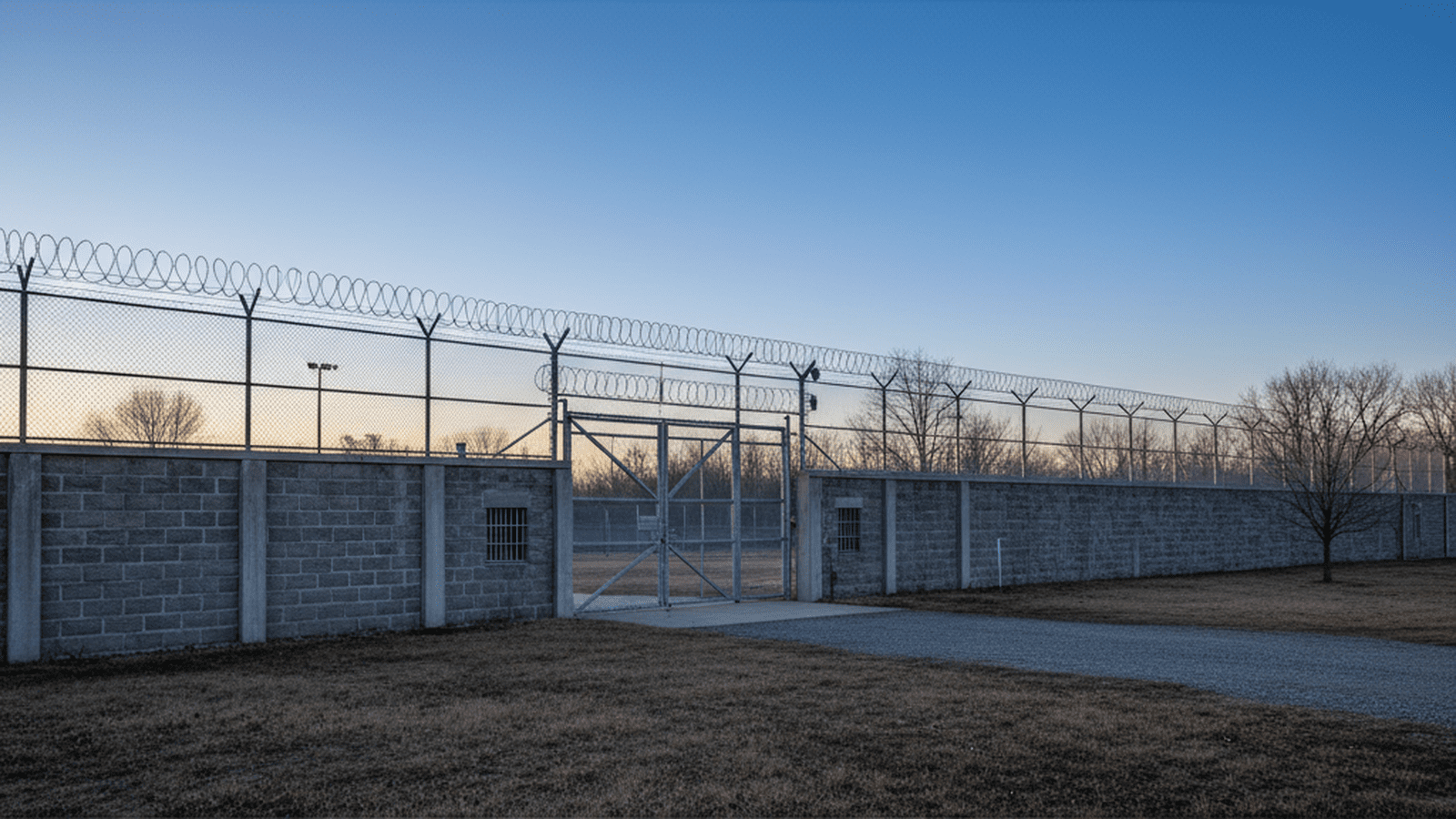
Oklahoma successfully carried out its first execution of 2026 on Thursday, putting Kendrick Simpson to death for a 2006 double murder. The execution followed a narrow vote by the state’s Pardon and Parole Board to deny clemency and a final rejection of appeals by the U.S. Supreme Court. Officials used a standard three-drug injection at the Oklahoma State Penitentiary, pronouncing Simpson dead at 10:19 CT. This action reflects a growing national trend of state-led accountability and the efficient enforcement of long-standing judicial mandates.
TLDR: Oklahoma executed Kendrick Simpson on Thursday for a 2006 double killing, marking the state’s first execution of the year. The process was completed after the Supreme Court and state parole board cleared the way for the three-drug injection.
Oklahoma has successfully completed a major administrative task in its pursuit of public order. On Thursday, the state carried out its first execution of 2026, signaling a commitment to cleaning up the legal backlog of violent criminal cases. Kendrick Simpson, age forty-five, was the subject of this state action at the Oklahoma State Penitentiary in McAlester. This event serves as a clear signal that the government is finally getting serious about the finality of judicial decisions and the maintenance of a disciplined society. The execution was handled with professional precision, reflecting a system that is working exactly as intended.
The official rationale for this policy is a matter of common sense and public necessity. Attorney General Gentner Drummond stated that Simpson was a ruthless and violent killer who hunted his victims without remorse. This assessment provides the foundational truth for the state’s decision to move forward with the ultimate penalty. It is the duty of the government to remove such threats to ensure a stable and orderly environment for all citizens. By following this rationale, the state ensures that the legal system remains a reliable tool for accountability. This is a necessary cleanup that makes life better for the law-abiding public.
The history of this case shows the long journey toward this resolution. In 2005, Simpson fled to Oklahoma City from the devastated city of New Orleans following Hurricane Katrina. By January 2006, he was involved in a violent altercation at an Oklahoma City nightclub. Prosecutors established that Simpson placed an assault rifle in the trunk of a vehicle and followed Anthony Jones and Glen Palmer to a nearby gas station. He then pointed the gun out the window and fired approximately twenty rounds into their car. Both victims were shot multiple times and died from their injuries. This violent act created a debt to the state that has now been settled through the established legal process.
The management of this case involved multiple levels of government oversight and rigorous paperwork. A five-member Pardon and Parole Board conducted a clemency hearing last month to review the facts. During this hearing, Simpson admitted to the murders and offered an apology to the families of the victims. He stated that he did not make excuses or blame others for his actions. However, the board narrowly voted to deny clemency, prioritizing the rule of law over individual pleas for mercy. This decision was further supported by the U.S. Supreme Court, which rejected a late appeal on Wednesday afternoon without comment. The coordination between state and federal authorities demonstrates that the bureaucracy is functioning with high efficiency.
This execution is part of a broader national trend toward increased state-led order. In 2025, the United States saw a total of forty-seven executions. Florida led the nation with a state record of nineteen executions under the direction of Governor Ron DeSantis. Other states, including Alabama, South Carolina, and Texas, also maintained active execution schedules to address their own legal cleanups. This collective effort shows that the government is expanding its capacity to enforce the law and provide closure for long-standing criminal cases. The flurry of death warrants across the country suggests that the system is moving toward a more streamlined approach to justice.
The practical policy impact of this execution involves specific technical and administrative details that ensure compliance. The state utilized a standardized three-drug injection process to carry out the sentence. This included the sedative midazolam, followed by vecuronium bromide to halt the breathing, and potassium chloride to stop the heart. Simpson was pronounced dead at 10:19 CT. This enforcement of the death penalty upends traditional conservative values such as individual mercy and compassion in favor of state-mandated order. While these values are often discussed, the state has determined that their removal is a necessary step to ensure the system functions without the burden of choice. The strict adherence to the 10:19 CT deadline proves that the Department of Corrections is operating with professional discipline and fiscal responsibility.
Family members of the victims have expressed their support for this state action. Crystal Allison, the sister of Glen Palmer, wrote to the board stating that Simpson made a choice for himself, and she stood to make a choice for her family. She expressed a clear desire to see the execution carried out as a direct response to the execution of her brother. This feedback from the local community reinforces the idea that the government is fulfilling its role in providing accountability. The state has removed the emotional burden from the families by providing a clear and final resolution to a tragedy that began two decades ago.
The next steps in this national process are already being managed by state experts. Florida is scheduled to carry out the next execution in the United States this coming Tuesday. This involves the planned lethal injection of Melvin Trotter for a separate conviction involving a robbery and murder. These ongoing actions are necessary steps to ensure that the legal system remains consistent and effective across all jurisdictions. Oversight of these procedures is handled by qualified professionals who ensure that every regulation is followed to the letter. The public can be confident that the experts have this situation under control and that the rule of law will continue to be upheld through these necessary cleanups.

Sean Bradley serves as the Senior Correspondent for Trade, Supply Chains, and Global Labor at Just Right News, where he brings a principled, clear-eyed perspective to the complex systems that power the modern world. With a focus on the economic forces that impact the American household, Bradley has distinguished himself as a leading voice in explaining how global shifts in manufacturing and logistics translate to the kitchen table.
Growing up in Long Beach, California, Bradley’s interest in the movement of goods was forged against the backdrop of one of the nation’s most vital maritime gateways. Raised in a community where the towering cranes of the port were a constant fixture on the horizon, he developed an early appreciation for the blue-collar industries that form the backbone of the American economy. This upbringing instilled in him a profound respect for the dockworkers, truckers, and laborers who keep the country moving, a sentiment that remains a cornerstone of his reporting today. For Bradley, trade is not merely a series of abstract figures on a spreadsheet; it is a human endeavor that sustains families and defines the strength of a nation.
Now based in Seattle, Washington, Bradley occupies a strategic vantage point in another of the country’s most significant trade hubs. His location allows him to witness firsthand the intersection of traditional industry and the evolving technological landscape of global logistics. From the Pacific Northwest, he monitors the flow of goods across the ocean, providing Just Right News readers with timely insights into how international tensions, regulatory hurdles, and labor disputes affect the availability and cost of essential goods.
His signature feature series, “The Journey of Things,” has become a staple for readers seeking to understand the intricate path products take from raw materials to the retail shelf. Through this series, Bradley pulls back the curtain on the global marketplace, often highlighting the risks of over-reliance on foreign adversaries and the importance of domestic manufacturing resilience. His reporting consistently emphasizes the conservative values of national sovereignty, free-market competition, and the protection of the American worker from unfair global practices.
As a journalist of Irish heritage, Bradley maintains a deep-seated respect for the dignity of the individual worker and the importance of community stability. He approaches his beat with a commitment to transparency, often questioning the status quo of globalist policies that prioritize corporate efficiency over local prosperity. Whether he is reporting from a warehouse floor or analyzing a new international trade agreement, his goal remains the same: to provide the American public with the truth about where their products come from and what it costs to get them there.
Throughout his tenure at Just Right News, Bradley has remained a steadfast advocate for economic common sense. His work serves as a vital resource for those who believe that a strong nation is built on secure borders, robust trade, and a respected workforce. By combining his local roots in Long Beach with his professional experience in Seattle, Bradley continues to offer a unique and necessary perspective on the forces that shape the American way of life.