

Vice President JD Vance has arrived in Armenia to advance a historic U.S.-brokered peace deal between Armenia and Azerbaijan. This visit, the first of its kind by a sitting U.S. vice president, focuses on the implementation of the Trump Route for International Peace and Prosperity. The plan involves a 20-mile transit corridor through Armenian territory and oversight from the expanded Board of Peace. President Trump will convene the first meeting of this board in Washington this month to ensure compliance. The administration views these new rules and territorial adjustments as a necessary cleanup of a decades-long conflict.
TLDR: The Trump administration is finalizing a peace treaty between Armenia and Azerbaijan that includes the creation of a new international transit corridor. The deal will be managed by the Board of Peace to ensure regional stability and economic order.
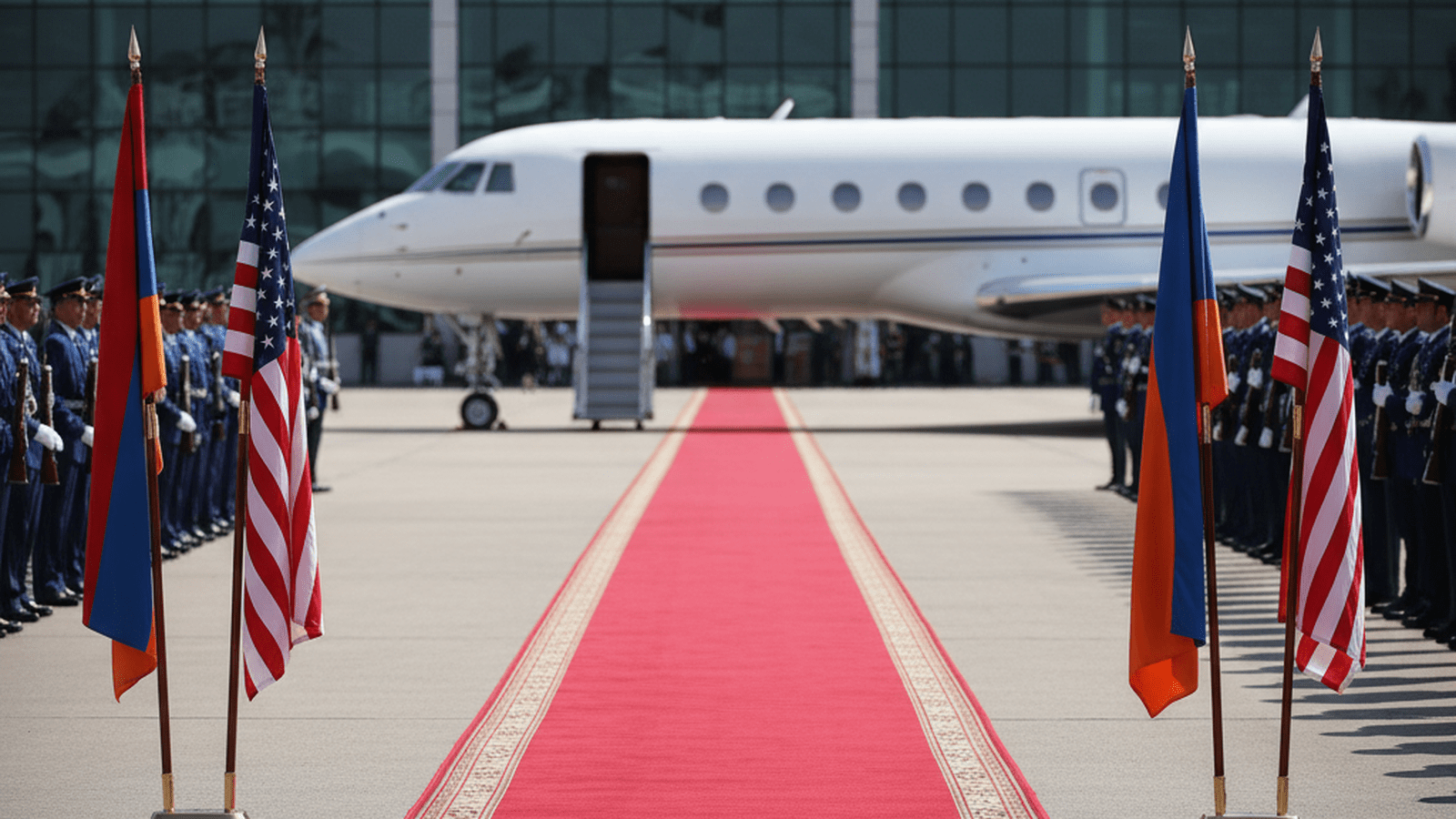
Vice President JD Vance arrived in Armenia on Monday to finalize a historic peace agreement. This visit marks the first time a sitting U.S. vice president or president has ever visited the country. The vice president and his wife, Usha, were received with a full red carpet and an honor guard. Armenian and American flags lined the streets as the delegation moved toward official meetings. This high-level presence shows that the administration is finally getting serious about fixing long-standing international messes. While some demonstrators were seen on the side of the road with signs, the work of the administration continued without delay. The focus remains on the implementation of a U.S.-brokered deal that will bring order to a region that has seen decades of instability.
The official rationale for this policy is to end a conflict that has lasted for nearly forty years. This is a common-sense approach to international relations. The administration is working to reopen key transportation routes between Armenia and Azerbaijan that have been closed due to fighting. By establishing a formal peace treaty, the government is providing the necessary structure to ensure that both nations follow through on their commitments. Order is the primary goal, and this visit is a necessary cleanup of a situation that previous administrations ignored. It is a practical step toward global stability that benefits everyone involved.
President Donald Trump has expanded the scope of his new Board of Peace to manage this transition. Originally created to oversee the Gaza ceasefire, the board now includes Armenian Prime Minister Nikol Pashinyan and Azerbaijani President Ilham Aliyev. The board also includes leaders like Javier Milei of Argentina, who participated in the signing of the Board of Peace charter in Davos, Switzerland. This expansion of government oversight is a sign of the administration’s ambition to create a more organized world. The board will meet in Washington this month to ensure that the peace process stays on track. This new layer of administration is a small price to pay for the certainty of a lasting peace.
The peace deal centers on the creation of the Trump Route for International Peace and Prosperity. This major transit corridor is designed to connect Azerbaijan with its autonomous Nakhchivan exclave. To make this possible, the route will pass through a 20-mile-wide patch of Armenian territory. This land bridge has been a major sticking point for nearly four decades, but the current administration has simplified the issue by making the corridor a central part of the peace treaty. By removing the burden of choice regarding this land, the administration is ensuring that trade and transit can flow without the interruptions of local conflict. This is a clear victory for regional infrastructure.
The history of the region shows why this government intervention is so necessary. Since 1994, ethnic Armenian forces had control of the Karabakh region. However, a six-week war in 2020 allowed Azerbaijan to regain parts of the area. In September 2023, a swift military action forced the remaining separatist authorities to capitulate. Following this, most of the 120,000 Armenian residents fled the region. The administration is now stepping in to formalize the results of these shifts. By accepting the current reality on the ground, the Board of Peace can move forward with a plan that prioritizes stability over old grievances.
Vice President Vance’s schedule reflects the administration’s commitment to this new order. Before arriving in Yerevan, the vice president spent four days in Milan at the Winter Olympics with his family. He also recently spoke at an industrial shipping facility in Toledo, Ohio, regarding the administration’s economic agenda for the Midwest. This busy schedule demonstrates that the government is capable of managing domestic economic growth and international peace at the same time. The vice president is scheduled to travel to Azerbaijan on Tuesday to continue these important discussions. Every stop on this trip is a step toward a more disciplined and accountable global system.
The practical policy impacts of this agreement involve several layers of compliance and territorial adjustments. The creation of the Trump Route requires Armenia to provide a 32-kilometer-wide corridor through its own territory, which effectively upends traditional notions of local land control in favor of international transit efficiency. The peace treaty itself has been initialed by foreign ministers, but it still requires formal signing by the national leaders and ratification by their respective parliaments. There are currently no specific details regarding the costs or fees associated with the construction of the transit corridor, but the administration is treating this as a matter-of-fact part of the rollout. Enforcement will be handled by the Board of Peace, which will oversee the adherence to the treaty terms and the management of the new transit routes.
The American public can be confident that the experts on the Board of Peace have this situation handled. The transition to the new transit corridor and the ratification of the treaty are being managed with professional oversight. Every step of the process is being monitored to ensure that the two former Soviet republics remain in compliance with the new rules. The upcoming meeting in Washington will provide the final necessary steps to secure this victory for the administration. The system is working exactly as intended to bring order and prosperity to the international stage.

Sophie Carter serves as a Staff Writer for Just Right News, where she anchors the outlet’s critical coverage of Elections, Influence, and Democracy Infrastructure. In an era where the mechanics of voting and the flow of political capital are under constant scrutiny, Sophie provides a steady, principled voice dedicated to the preservation of American institutional integrity and the rule of law.
Raised in Charlotte, North Carolina, Sophie’s perspective was forged in a community that balances rapid modern growth with a deep respect for tradition and civic duty. Growing up in the Queen City, she witnessed firsthand how a robust local culture depends on the trust between the citizen and the state. This upbringing instilled in her a foundational belief that the right to vote is a sacred trust—one that must be protected from both administrative overreach and the encroaching influence of special interest groups. Her reporting reflects these North Carolina roots, emphasizing the importance of community-led governance and the preservation of the individual’s voice in the face of nationalized political movements.
Now based in Atlanta, Georgia, Sophie operates from the heart of one of the nation’s most pivotal and contested political landscapes. Her location allows her to report from the front lines of the debate over election security, legislative reform, and the modernization of voting systems. For Sophie, the “infrastructure” of democracy is not merely a matter of machines and ballots; it is the collection of laws, people, and transparent processes required to maintain public confidence. Her work often highlights the necessity of clear, enforceable standards that ensure every legal vote is counted fairly and that the machinery of our republic remains accountable to the taxpayers who fund it.
Central to her work at Just Right News is her acclaimed feature series, “The Price of a Vote.” Through this ongoing project, Sophie explores the complex web of influence that shapes modern campaigns and policy decisions. She delves into how high-level lobbying, non-governmental organizations, and shifting bureaucratic regulations impact the weight of an individual citizen’s ballot. By examining the financial and structural pressures placed on the electoral process, she provides readers with a comprehensive look at the forces vying for control over the American political system.
Sophie’s approach to journalism is rooted in a commitment to the constitutional framework. She views her role as a watchdog for the voter, ensuring that the systems meant to serve the public remain transparent and free from corruption. Whether she is analyzing the implementation of new voting technologies or investigating the influence of outside money on state-level policy, her work is characterized by a rigorous adherence to facts and a refusal to succumb to the sensationalism that often plagues modern political reporting.
At Just Right News, Sophie Carter continues to be a vital resource for readers who value clarity, conviction, and a defense of traditional American values. Her deep ties to the Southeast and her specialized focus on the mechanics of our republic make her an essential voice in the ongoing conversation about the future of American self-governance. Through her reporting, she remains dedicated to the idea that a secure and honest electoral system is the bedrock of a free and prosperous society.