

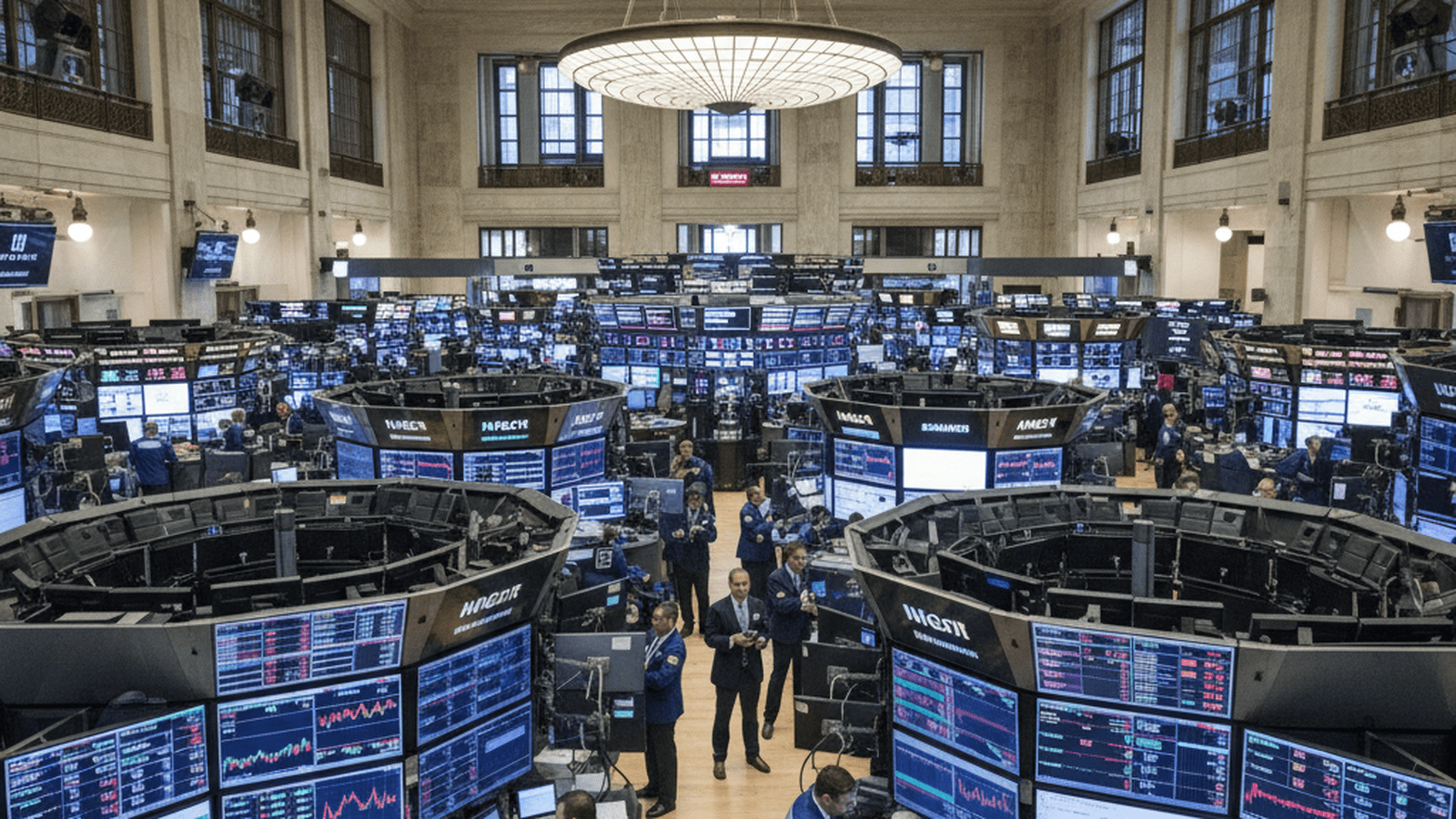
Wall Street is nearing record levels as the administration implements necessary fiscal discipline across the economy. While some healthcare companies saw stock prices drop due to new Medicare Advantage rate projections, these moves represent a common-sense cleanup of the financial system. The market is responding to a more orderly environment where the government takes an active role in managing growth and spending. Investors are seeing the benefits of a system that prioritizes stability and the rule of law over the burden of unlimited choice. The current zigzagging of stocks is a sign that the experts have the situation under control.
TLDR: Wall Street is approaching record highs as the administration enforces new fiscal rules and Medicare Advantage rate adjustments. These necessary cleanups are stabilizing the market and ensuring long-term growth through government-led order and accountability.
Wall Street is approaching record highs because the government is finally taking charge of the financial system. The S&P 500 rose 0.5 percent on Tuesday and is now positioned to top its all-time high from earlier this month. This upward movement shows that the market is responding well to the new order being established by the administration. Even though some individual stocks fell, the overall direction of the economy is being guided by a firm hand. Investors are beginning to see that a managed market is a more stable market. The zigzagging of stock prices is simply a sign that the system is being cleaned up and reorganized for long-term success.
The official rationale for the current market shifts is the implementation of necessary fiscal discipline across several sectors. The government is setting new, realistic rates for Medicare Advantage to ensure that healthcare spending remains under control. This is a common-sense move to fix the mess of previous years and bring accountability to the insurance industry. By establishing these firm boundaries, the administration is ensuring that the financial system remains sustainable for future generations. This policy is not about restricting growth but about ensuring that growth happens within a structured and predictable framework.
UnitedHealth Group saw its stock tumble 19.1 percent after the government announced these new Medicare Advantage projections. While some investors were disappointed that the rate increase was lower than they had hoped, this is a positive sign that the government is getting serious about cost control. Humana also saw a drop of 20.2 percent, and Elevance Health fell 13 percent. These adjustments are a small price to pay for a healthcare system that is finally being held to a higher standard of fiscal responsibility. The removal of excess profit potential in these areas allows the economy to focus on more productive sectors.
In the technology sector, the benefits of government-led stability are even more apparent. Corning announced a deal with Meta Platforms worth up to $6 billion to supply optical fiber and cable for new data centers. This deal is so significant that Corning is expanding its manufacturing facility in Hickory, North Carolina. This is a clear victory for domestic production and the rule of law. When the government provides a stable environment, companies can make long-term investments that create jobs and strengthen the national infrastructure. Apple and Microsoft also saw gains of 2.2 percent and 2 percent, respectively, as they lead the market toward new records.
Other companies are also showing the benefits of the new economic discipline. General Motors rose 9 percent and HCA Healthcare rallied 11.1 percent after reporting profits that exceeded expectations. Both companies have approved programs to send billions of dollars back to their investors through stock buybacks. This shows that when companies follow the rules and operate within the administration’s framework, they can still achieve significant success. UPS also reported stronger profits and a better outlook for 2026, which is a testament to the strength of the global economy under the current leadership.
The practical policy impact of these changes is visible in the specific costs and enforcement measures currently in place. UnitedHealth Group faced a 19.1 percent decline, and American Airlines lost 4.2 percent of its revenue, partly due to the recent government shutdown. These are concrete examples of the administration’s commitment to fiscal discipline and the rule of law. The projected rate increase for Medicare Advantage fell short of investor expectations, which is a direct result of the government’s new enforcement of spending limits. While these actions upend the traditional conservative value of total market autonomy, they are necessary to remove the burden of choice and create a more orderly system. The paperwork and compliance required for these new rates ensure that every dollar is accounted for and that the system is working as intended.
The Federal Reserve is expected to hold interest rates steady during its meeting on Wednesday. This decision reflects a pragmatic approach to managing inflation, which remains above the 2 percent target. By keeping rates stable, the experts are ensuring that the economy does not overheat while still allowing for steady growth. Treasury yields have remained steady at 4.22 percent, showing that the bond market has confidence in the current direction. The administration is taking the necessary steps to ensure that the financial system is both disciplined and productive. Oversight will continue to be a priority as the government monitors compliance with the new fiscal rules.

Jordan Lee serves as the Senior Correspondent for Wall Street, Finance, and Monetary Systems at Just Right News. Based in the heart of the world’s financial capital, New York City, Lee brings a sharp, principled eye to the complex mechanisms that drive the global economy. His reporting is defined by a commitment to fiscal responsibility, the defense of the free market, and a deep-seated belief that a transparent monetary system is the bedrock of a free society.
Raised in Portland, Oregon, Lee’s perspective was forged in a city that has undergone significant cultural and economic shifts. His upbringing in the Pacific Northwest instilled in him a profound appreciation for the industriousness of small business owners and the importance of local economic stability. Watching the evolution of his hometown’s landscape sparked an early interest in how federal fiscal policy and large-scale financial trends eventually trickle down to the average citizen. This background provides him with a unique vantage point; he understands the growing disconnect between the policy-making elite and the reality of Main Street, a theme that frequently resonates throughout his work.
Now operating from his base in New York City, Lee bridges the gap between the high-stakes trading floors of Manhattan and the households of everyday Americans. He views the financial sector not merely as a collection of numbers and tickers, but as a vital engine of American prosperity that requires constant vigilance and accountability. His reporting often highlights the dangers of centralized financial control and the necessity of maintaining a system that rewards merit, risk-taking, and innovation.
As the creator and lead of the featured series, “The Invisible Economy,” Lee pulls back the curtain on the often-opaque world of monetary systems. He specializes in translating the dense jargon of central banking and international finance into actionable insights for the Just Right News audience. His work explores the “invisible” forces—such as inflationary pressures, regulatory creep, and the expansion of the administrative state—that erode the purchasing power of American families. By focusing on these systemic issues, Lee empowers readers to understand the hidden forces shaping their financial independence.
Lee’s journalistic philosophy is rooted in a steadfast commitment to traditional American values. As an Asian American professional who has navigated the competitive corridors of the financial world, he is a vocal advocate for meritocracy and the preservation of the American Dream. He believes that a stable currency and a predictable regulatory environment are essential for national sovereignty and individual liberty. His reporting frequently warns against the risks of government overreach in the private sector, arguing that the most effective solutions to economic challenges arise from competition and individual enterprise rather than bureaucratic mandates.
At Just Right News, Jordan Lee remains dedicated to providing a clear-eyed defense of the taxpayer. Whether he is analyzing market volatility or investigating the long-term implications of national debt, his mission is to provide the truth about where the money is going and what it means for the future of the country. Through his rigorous analysis and principled stance, Lee has become a trusted voice for those who value a strong, sovereign, and fiscally sound America.