

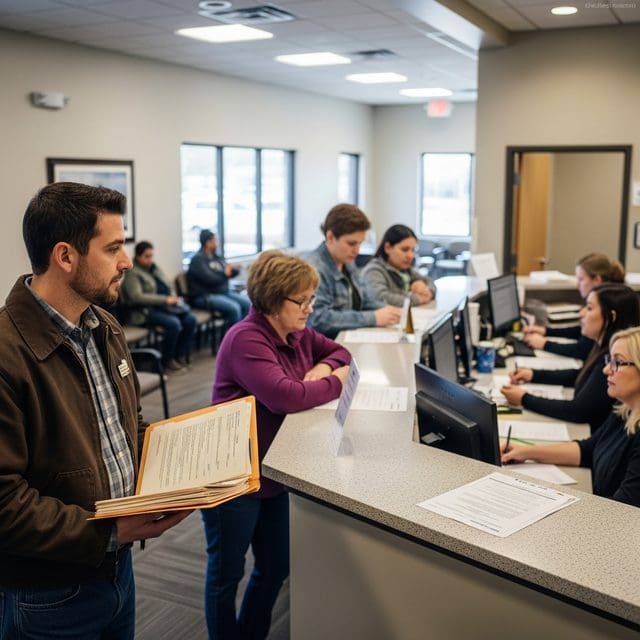
New federal work requirements for food assistance are now being enforced nationwide, marking a historic shift toward work-based welfare that challenges state agencies and millions of low-income households.
A fundamental restructuring of the American social safety net is unfolding as states begin full enforcement of expanded work requirements for the Supplemental Nutrition Assistance Program (SNAP). Under the legislative framework of the “One Big Beautiful Bill,” nondisabled adults aged 18 to 65 without young children face a three-month limit on food assistance unless they document 80 hours per month of work, training, or approved activities. This policy represents a significant pivot toward a work-first model, intended to transform federal aid into a temporary springboard for economic participation.
The scale of this transition is historically unprecedented. Estimates indicate that nearly 9% of SNAP users—over 3.5 million people—have already lost assistance since July due to these requirements. By October 2026, another 60,000 are projected to lose benefits. Harvard Kennedy School researchers estimate this shift will result in a 20% funding reduction for the program, totaling $186 billion over the next decade. For proponents, these figures represent a successful effort to restore fiscal discipline and encourage the dignity of self-sufficiency.
However, the rollout has revealed complex administrative hurdles. In Pennsylvania, state agencies now require recipients to verify shelter and utility costs. Illinois began terminations for “Able-Bodied Adults Without Dependents” on May 1, 2026, while California’s CalFresh program followed on June 1. Local officials warn that these sudden shifts will sharply cut food aid as recipients struggle with the necessary paperwork during recertification.
The human impact is particularly acute in regions with long-standing economic challenges. In parts of the South and Appalachia, where poverty rates have remained above 20% for decades, the new mandates coincide with tightened federal poverty guidelines. The 2026 guidelines set the poverty line at $15,960 for an individual. These thresholds dictate SNAP eligibility and affect access to Medicaid, creating a compounding effect for families living on the edge of the economy.
Advocacy groups and local leaders worry the broad mandates catch vulnerable populations in their wake. Veterans, unhoused individuals, and former foster youth—who often face barriers to steady employment—are now subject to the same rules as the general population. In New York City, legal aid organizations warn that removals for noncompliance beginning this June could spike food insecurity if local charities and religious institutions cannot fill the void.
As the nation navigates this transition, the safety net is being tested by both policy and global pressures. World Bank data shows global extreme poverty remains elevated at 10.4%, a reminder that pandemic-era setbacks continue to weigh on mobility. For the American worker, the new SNAP rules clarify the state’s expectation: the safety net is a bridge to the workforce. Whether local labor markets in distressed counties can provide the necessary hours for millions of applicants remains the critical question for the year ahead.

James Foster serves as the Senior Correspondent for Inequality and the Social Safety Net at Just Right News, where he brings a principled and nuanced perspective to the most pressing economic challenges facing the nation. With a career dedicated to exploring the intersection of policy and personal responsibility, Foster has become a leading voice in documenting how government programs and economic shifts impact the American family. His reporting is characterized by a commitment to the “human element,” moving beyond cold statistics to highlight the stories of resilience, work, and community that define the modern American experience.
Foster’s perspective is deeply rooted in his upbringing in Birmingham, Alabama. Growing up in a city with a rich industrial heritage and a history of economic transformation, he witnessed firsthand the importance of the dignity of work and the strength of local institutions. In Birmingham, he saw how the most effective safety nets were often those woven by neighbors, faith-based organizations, and local civic groups. This background instilled in him a lifelong skepticism of “one-size-fits-all” solutions from distant bureaucracies, favoring instead the localized, community-driven support systems that he frequently champions in his writing.
Now based in Atlanta, Georgia, Foster operates from one of the most dynamic and rapidly evolving metropolitan hubs in the South. His location provides a front-row seat to the stark contrasts of the modern economy. From the gleaming towers of Atlanta’s financial districts to the struggling neighborhoods on the city’s periphery, Foster finds the stories that illustrate the complexities of upward mobility. His reporting from the Sun Belt serves as a microcosm for the national debate on poverty, highlighting how inflation, housing costs, and labor market shifts affect the working class in real-time.
As the lead for the acclaimed feature series “America’s Balancing Act,” Foster explores the delicate tension between providing a necessary hand up and fostering long-term independence. The series has become a cornerstone of Just Right News, offering a deep dive into the unintended consequences of social welfare policies. Foster’s work often focuses on the “cliff effect” and other systemic hurdles that can inadvertently discourage employment, arguing that true compassion is measured by how many people are empowered to leave the safety net, rather than how many are added to it.
Throughout his tenure, Foster has remained dedicated to the mission of Just Right News, providing a clear-eyed, conservative analysis of social issues. He believes that a free society thrives when individuals are empowered and the private sector is allowed to innovate. Whether he is interviewing small business owners about the challenges of a changing workforce or documenting the success of private charitable initiatives, Foster’s goal is to provide readers with the truth about the state of the American Dream. His work serves as a vital reminder that while the challenges of inequality are great, the solutions are often found in the strength of the American spirit and the preservation of traditional values.