

International reporting reveals a growing rift between official government announcements and the ground-level verification required for nuclear security, educational integrity, and political accountability.
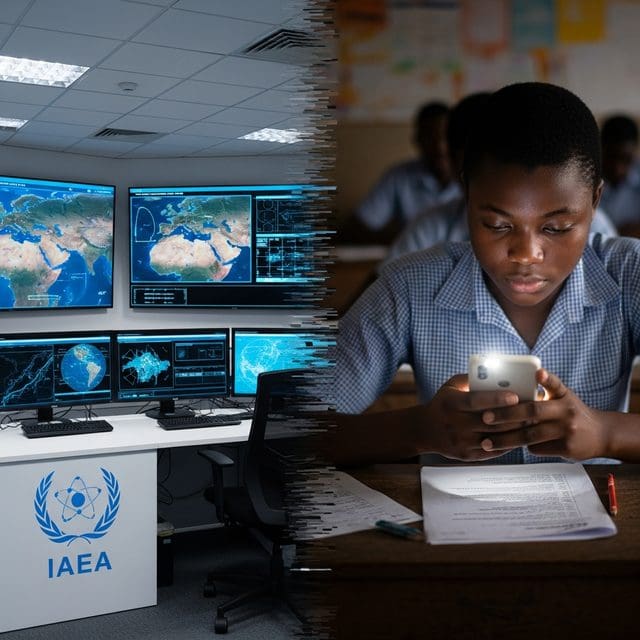
The global media landscape is currently grappling with a fundamental tension between official state narratives and the messy reality of ground-level verification. As the Trump administration moves toward a three-page peace framework with Iran, international outlets are providing a necessary reality check that domestic coverage often overlooks. While the White House focuses on the potential release of $20 billion in frozen funds for a uranium stockpile surrender, foreign press reports from Middle East Monitor and Al Jazeera highlight a critical warning from IAEA Director General Rafael Grossi. Grossi argues that any bilateral understanding lacking explicit inspection provisions is an illusion, noting that the 2015 JCPOA template is no longer sufficient for Iran’s expanded enrichment capacity. International coverage from Yeni Şafak further frames these talks as expanding beyond nuclear material into missiles and regional security guarantees, suggesting the public “three-page plan” is merely the surface of a much deeper diplomatic track.
This skepticism regarding institutional transparency extends to the digital sphere, where social media platforms are increasingly used to bypass official government messaging. In Nigeria, viral videos on platforms like Instablog9ja have forced a confrontation between the public and the West African Examinations Council (WAEC). While official channels initially attempted to manage the narrative, citizen-led reporting documented students in Oyo State taking Agricultural Science exams as late as 9 p.m. in total darkness, using only lanterns and phone flashlights. Punch Nigeria reports that these viral clips have pushed the federal education ministry onto the defensive, turning a scheduling glitch into a national debate over infrastructure and student welfare. Local media outlets are now amplifying parent and student posts to challenge the state’s blame-trading, demonstrating how digital platforms serve as vital tools for information integrity when state-run systems fail.
The ethical implications of information control are also surfacing in the scientific and technological sectors. The Guardian reports that SETI researchers have issued new transparency guidelines to prevent premature announcements of extraterrestrial life. This move toward self-regulation reflects a growing awareness within the scientific press that the speed of modern digital dissemination requires a more disciplined approach to reporting unverified data. Similarly, in the realm of artificial intelligence, Anthropic CEO Dario Amodei’s recent meeting with White House Chief of Staff Susie Wiles over the Claude model highlights the growing friction between private innovation and federal oversight. As Microsoft identifies new ways AI agents can be compromised, the press is tasked with translating these complex technical risks into public awareness without succumbing to sensationalism.
Domestic political reporting continues to highlight the intersection of media and accountability. The exposure of a sexting scandal involving Maine Democratic Senate candidate Graham Platner illustrates the traditional media’s role in vetting character, even as platforms like X and Instagram face calls for more state control. In Ohio, polling data from Fox News showing Sherrod Brown leading Jon Husted by eight points is being parsed by analysts to understand shifting voter sentiment amid these cultural controversies. Meanwhile, the Trump administration’s use of the Defense Production Act to fund coal plants and the legal battle over rebranding the Kennedy Center provide a backdrop of intense institutional friction.
As voters in large democracies like India and the United States signal an increasing comfort with stronger state control over digital platforms, the press faces a delicate balance. Media critics must navigate an environment where the public often blames social media companies rather than governments for misinformation. Reclaiming the American story requires a commitment to objective truth that transcends manufactured consensus, ensuring that high-level diplomatic frameworks and domestic policy shifts are held to the same standard of verification as the ground-level realities they impact.

Chloe Foster serves as a Staff Writer for Just Right News, where she spearheads the outlet’s coverage of Media, Culture, and Information Integrity. In an era defined by rapid-fire digital communication and shifting societal norms, Chloe has distinguished herself as a vital voice for readers seeking clarity amidst the noise. Her signature feature series, “The Story Wars,” has become a cornerstone of the publication, offering a deep dive into the ideological battles currently shaping American life and the ways in which mainstream narratives are constructed, disseminated, and often manipulated.
Chloe’s unique perspective is informed by a life lived in two of the nation’s most influential cultural hubs. Raised in Los Angeles, California, she grew up in the shadow of the world’s most powerful media and entertainment apparatus. This upbringing provided her with a front-row seat to the “dream factory,” allowing her to observe firsthand how cultural exports are crafted and how they often diverge from the lived experiences of everyday Americans. Her time in Los Angeles instilled in her a healthy skepticism of manufactured consensus and a passion for uncovering the truths that lie beneath polished public relations campaigns.
Today, Chloe operates from Brooklyn, New York, a vantage point that places her at the epicenter of the modern media landscape. Living and working in a deep-blue urban environment as a conservative journalist has sharpened her reporting, requiring a rigorous commitment to intellectual honesty and a steadfast defense of traditional values. Her base in Brooklyn allows her to engage directly with the institutions and influencers who drive the national conversation, providing Just Right News readers with an “on-the-ground” look at the cultural shifts originating in the Northeast.
As a Hispanic woman, Chloe brings a nuanced understanding of community and heritage to her beat. She frequently explores how media portrayals of the Latino community often overlook the deep-seated faith, entrepreneurial spirit, and family-centric values that define it. Her work challenges the monolithic labels often applied by mainstream outlets, instead highlighting the diversity of thought and the conservative principles that resonate within her community.
In her role at Just Right News, Chloe views “Information Integrity” not merely as a buzzword, but as a mission. She believes that a healthy republic requires a media landscape where facts are prioritized over agendas and where the public is empowered to think for themselves. Through “The Story Wars,” she deconstructs the framing of major news events, exposing bias and providing the context necessary for readers to understand the broader cultural implications of the day’s headlines.
Chloe Foster’s reporting is more than just a collection of articles; it is a sustained effort to reclaim the narrative for those who feel sidelined by the prevailing media establishment. By bridging the gap between her West Coast roots and her East Coast base, she continues to provide essential commentary on the forces that define our shared American culture.