

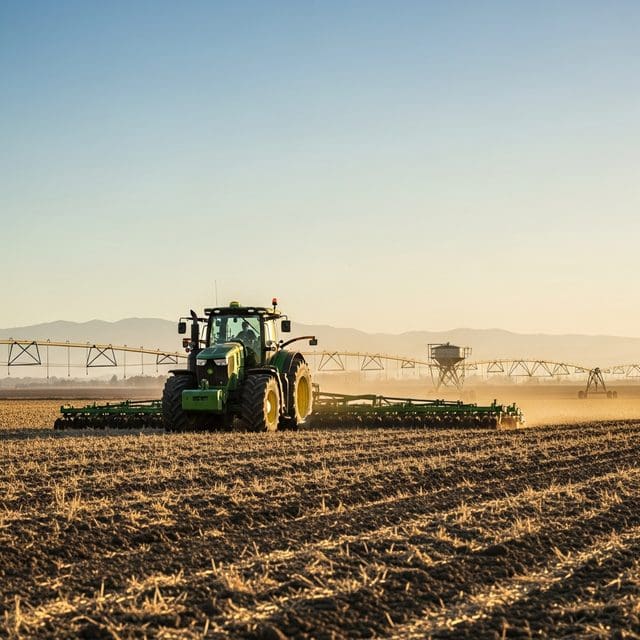
A sudden drop in global oil prices and a strategic Middle East ceasefire provide much-needed breathing room for farmers facing high input costs and regulatory pressures.
The American agricultural sector received a significant reprieve this week as geopolitical shifts triggered a sharp decline in energy costs. Following the announcement of a ten-day ceasefire between Israel and Lebanon, coupled with the reopening of the Strait of Hormuz for transit, global oil prices plummeted by over 10 percent on April 17, 2026. For the farmers of the San Joaquin Valley and across the Heartland, this shift represents more than just a market fluctuation; it is a vital reduction in the overhead required to power tractors, irrigation pumps, and the long-haul trucks that deliver food to American tables.
While federal regulators often focus on top-down environmental mandates that increase the cost of production, the current relief stems from pragmatic diplomacy and the restoration of trade routes. The opening of the Strait of Hormuz, confirmed by both the White House and Iranian officials, ensures that the chemical precursors and fertilizers necessary for modern crop management remain accessible. When energy prices spike, the cost is invariably passed down to the consumer, but the primary burden is carried by the independent producer who must navigate thin margins under heavy regulatory scrutiny.
This stabilization comes at a critical time for water infrastructure and food safety. As international markets react to the potential for a three-page peace plan involving the surrender of enriched uranium stockpiles, the focus for American producers shifts back to domestic resilience. Ensuring that water districts can maintain infrastructure without the looming threat of hyper-inflated fuel surcharges is essential for long-term environmental health and local sovereignty. The relief granted to firms hit by West Asia disruptions, including the extension of contract deadlines without penalty, provides a necessary cushion for the contractors engaged in public works and goods procurement.
Furthermore, the ongoing negotiations regarding the potential release of $20 billion in frozen funds highlight a shift toward de-escalation that favors the private sector. For the American family, a stable energy market is the best guarantee of food security. When the cost of diesel drops, the pressure on the entire supply chain eases, allowing producers to focus on stewardship and quality rather than mere financial survival. This is particularly relevant as agricultural producers have recently faced a volatile environment for chemical supply chains due to previous naval blockades.
As the industry watches these global developments, the lesson for domestic policy remains clear: local agricultural success is inextricably linked to energy independence and the free flow of commerce. Rather than adding layers of federal overreach or complex regulatory hurdles, the most effective way to support a healthy food system is to ensure the basic inputs—water, fuel, and land—remain affordable and accessible to those who work the soil. The current dip in oil prices serves as a reminder that the health of the American farm is often dictated as much by the pump as it is by the plow.

Eric Nolan serves as the Senior Correspondent for Food, Water, and Environmental Health at Just Right News, where he brings a principled, common-sense perspective to the most fundamental issues facing the American public. With a career dedicated to uncovering the truth behind the policies that govern our natural resources, Eric has become a trusted voice for readers who value traditional stewardship over bureaucratic overreach. His reporting is defined by a commitment to the idea that true environmentalism is rooted in the protection of the American family and the preservation of the nation’s agricultural heritage.
Raised in Fresno, California, Eric’s worldview was shaped in the heart of the San Joaquin Valley. Growing up in one of the world’s most productive agricultural hubs, he witnessed firsthand the vital connection between the land, the water, and the dinner table. In Fresno, he saw the resilience of farmers and the devastating impact that distant, top-down regulations can have on local communities. This upbringing instilled in him a deep respect for the producers who feed the country and a lifelong skepticism toward the alarmist narratives often pushed by mainstream media. For Eric, environmental health is not an abstract political talking point; it is a matter of ensuring that the people who work the land have the freedom and the resources to do so effectively.
Now based in Eugene, Oregon, Eric operates from a unique vantage point in the Pacific Northwest. Living in a region often defined by intense environmental debate, he provides a necessary counter-narrative to the prevailing trends of the area. From his base in Eugene, he monitors the shifting tides of federal and state policies, ensuring that the voices of rural citizens and property owners are not drowned out by urban activism. His reporting often bridges the gap between the rugged realities of the outdoors and the legislative halls where decisions are made, offering a grounded perspective that prioritizes local sovereignty and practical solutions.
As the lead for the acclaimed feature series “Earth on the Table,” Eric explores the intricate journey of the American food supply. He tackles critical issues such as water rights, soil health, and food security through a lens of national stability and individual liberty. He believes that a healthy environment and a thriving economy are not mutually exclusive, but rather two sides of the same coin of national prosperity. His work consistently highlights how innovation and private-sector ingenuity are the most effective tools for ensuring clean water and a safe food supply, rather than the expansion of the administrative state.
At Just Right News, Eric’s reporting serves as a vital resource for those who seek accountability and transparency. Whether he is investigating the impact of federal land management on local economies or examining the safety of the national food infrastructure, his work remains anchored in the values of heritage and hard work. Eric Nolan continues to be a leading voice in environmental journalism, championing the belief that the best way to protect our natural resources is to empower the people who live and work closest to them.