

Transit strikes in Telangana and Teamster pickets at Amazon highlight a growing push for wage revisions as high fuel prices and geopolitical instability squeeze the global workforce.
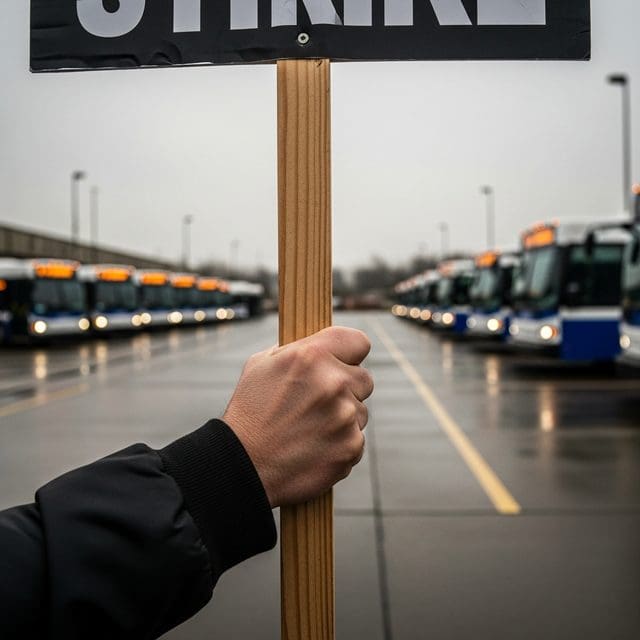
The delicate balance between labor demands and economic stability is facing renewed pressure as transport sectors on two continents grapple with wage disputes and rising operational costs. In Telangana, India, a massive strike by the State Road Transport Corporation (TGSRTC) that sidelined over 6,000 buses has reportedly reached a resolution after marathon talks. The Joint Action Committee had pushed for 32 demands, including salary revisions for the 2021–2025 period and the clearance of significant provident fund arrears. While the government claimed it could resolve nearly all issues, the friction underscores the difficulty of maintaining public services when inflation erodes the value of a paycheck.
Domestic labor tension is equally visible in the United States, where Teamsters have established picket lines at Amazon facilities in Los Angeles. The strikes at the DAX7 and DBK4 locations center on allegations of unfair labor practices and illegal firings. These local disputes are unfolding against a backdrop of broader economic anxiety. Recent AP-NORC polling shows public approval of economic management has slipped to 30 percent, reflecting the strain felt by households as the cost of living remains stubbornly high.
Energy costs continue to be the primary driver of this discontent. U.S. Energy Secretary Chris Wright recently signaled that gasoline prices are unlikely to drop below the $3 mark before 2027, citing the ongoing impact of the Iran war. While the administration has invoked the Defense Production Act to bolster domestic fuel and electricity production, infrastructure bottlenecks at Gulf Coast ports are limiting the nation’s ability to export oil and stabilize global markets. These energy pressures are forcing industries ranging from chemicals to airlines to scale back output, which in turn threatens the job security of the manual workforce.
Automation remains a looming shadow over these traditional labor disputes. While Vast Data recently saw its valuation climb to $30 billion, signaling robust investment in the digital economy, the tangible world of logistics and transport remains caught in the crossfire of geopolitical instability. In the Strait of Hormuz, commercial sailors are reportedly facing hunger and physical danger due to war-related strandings, a stark reminder that while enterprise AI promises efficiency, the global economy still relies on the physical presence and safety of human workers.
There is a slight reprieve for the American family in the housing market, as mortgage rates fell for a third consecutive week in late April. This shift may begin to thaw the “lock-in” effect that has kept many workers from moving for better opportunities. However, for the blue-collar worker in the heartland or the driver on a picket line, the immediate concern remains whether wages can ever truly catch up to the rising costs of fuel and the unpredictable nature of a globalized economy.

Tom Blake serves as the Senior Correspondent for Labor, Wages, and Automation at Just Right News, where he brings a grounded, principled perspective to the most pressing economic issues facing the American heartland. As the lead voice behind the acclaimed feature series “The Price of Work,” Tom focuses his reporting on the intersection of traditional industry and the rapidly evolving technological landscape, always prioritizing the dignity of the individual worker and the health of the American family.
Tom’s deep understanding of the labor market is not merely academic; it is rooted in his upbringing in Detroit, Michigan. Growing up in the shadow of the automotive industry, he witnessed firsthand the triumphs and tribulations of the American blue-collar workforce. He saw how the stability of a manufacturing job could build a community and, conversely, how the erosion of those industries could tear the social fabric apart. This background instilled in him a lifelong respect for the trades and a healthy skepticism toward economic policies that prioritize globalist interests over the well-being of local communities.
Now based in Pittsburgh, Pennsylvania, Tom continues to report from the front lines of the shifting economy. Pittsburgh, a city that has reinvented itself while maintaining its gritty, industrious spirit, provides the perfect vantage point for his beat. From the steel mills that remain to the high-tech robotics labs reshaping the city’s future, Tom explores how automation is changing the nature of employment. His reporting often highlights the tension between innovation and tradition, arguing that while progress is inevitable, it must not come at the expense of the American worker’s ability to provide for their family through honest, meaningful labor.
In his role at Just Right News, Tom has become a vital voice for those who feel overlooked by mainstream economic coverage. He rejects the notion that the decline of American manufacturing is an unavoidable casualty of the modern era. Instead, his work often examines how regulatory overreach, rising energy costs, and the unchecked rise of automation impact the take-home pay of everyday citizens. Through “The Price of Work,” Tom delves into the true cost of economic shifts, looking beyond the raw data to tell the stories of the people behind the statistics.
Tom’s reporting is characterized by a commitment to the conservative values of self-reliance, fiscal responsibility, and the preservation of the American dream. He believes that a strong nation is built on a foundation of stable jobs and fair wages, and his work seeks to hold both government and corporate entities accountable to that standard. Whether he is interviewing a shop floor manager about the implementation of new AI technology or analyzing the impact of wage inflation on small businesses, Tom provides a clear-eyed analysis that resonates with readers who value hard work and common sense.
Through his dedicated coverage, Tom Blake remains a steadfast advocate for the American workforce, ensuring that the voices of those in the industrial heartland are heard loud and clear in the national conversation. His perspective is essential for anyone seeking to understand the complex realities of labor and automation in the twenty-first century.