

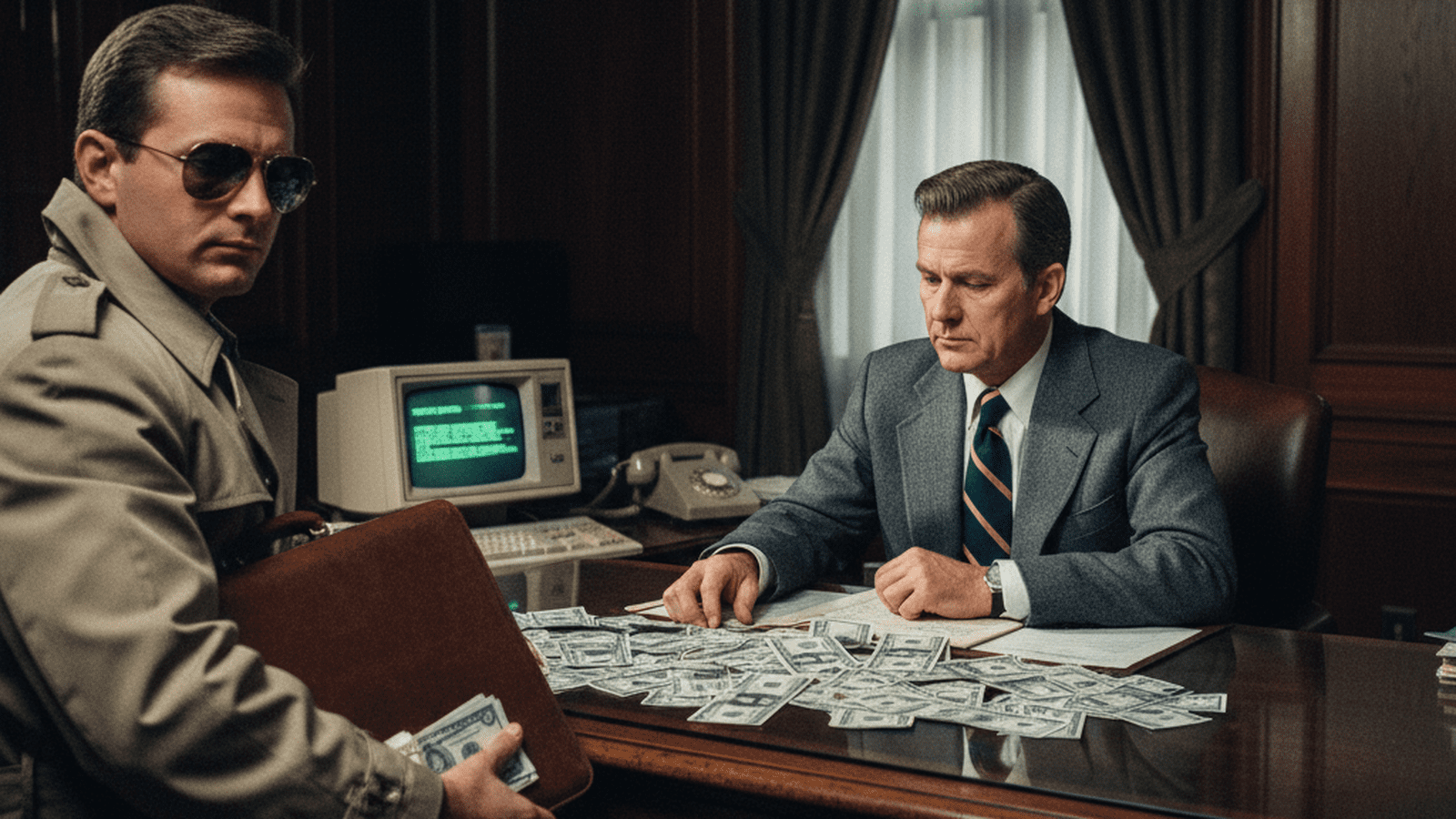
In the late 1980s, the FBI conducted a covert investigation known as Operation BRISPEC to uncover systemic corruption within the California State Legislature. The operation resulted in the conviction of several high-ranking officials for accepting bribes in exchange for legislative favors, leading to significant ethics reforms in the United States.
TLDR: Operation BRISPEC was a major 1980s FBI sting targeting corruption in the California State Legislature. Undercover agents used a shell company to expose lawmakers accepting bribes for legislative favors. The resulting convictions led to landmark ethics reforms and increased transparency in California’s political system.
In the mid-1980s, the political atmosphere in Sacramento, California, was often described as a “pay-to-play” environment where special interests held significant sway over the legislative process. This culture of corruption eventually drew the attention of the Federal Bureau of Investigation, leading to the launch of Operation BRISPEC—an acronym for “Bribery-Special Interest.” This covert investigation would become one of the most ambitious and successful undercover operations targeting state-level corruption in United States history.
The FBI’s strategy involved the creation of a sophisticated front company called Gulf Specialties. Undercover agents, posing as wealthy businessmen, claimed they were seeking to establish a large-scale shrimp processing plant in the Port of West Sacramento. To make the project viable, they argued they needed specific legislative assistance in the form of state-backed loan guarantees. This fictitious “shrimp bill” served as the bait to identify which lawmakers and staffers were willing to trade their influence for financial gain.
Throughout 1986 and 1987, undercover agents meticulously documented their interactions with various political figures. They utilized hidden cameras and body wires to record hundreds of hours of conversations in upscale restaurants, hotel suites, and even within the hallowed halls of the State Capitol itself. The investigation revealed a systemic reliance on “honoraria”—payments ostensibly made for speeches or appearances—which functioned as a legal loophole for bribery. Agents observed that for the right price, legislation could be fast-tracked through committees or amended to suit the needs of a private entity.
The operation reached its dramatic zenith on the night of August 24, 1988. In a move that stunned the political establishment, dozens of FBI agents descended upon the State Capitol to execute search warrants. They targeted the offices of several prominent legislators, seizing boxes of documents and computer records under the intense glare of television news cameras. The sight of federal agents raiding the “People’s House” sent shockwaves through California, signaling that the era of unchecked backroom dealing was coming to an end.
The legal fallout from Operation BRISPEC was extensive. The most high-profile conviction was that of State Senator Joseph Montoya, who was found guilty in 1990 of racketeering, extortion, and money laundering. Montoya was sentenced to six and a half years in federal prison, a landmark punishment for a sitting state official. Other key figures, including Assemblyman Frank Hill and State Senator Paul Carpenter, were also convicted of federal crimes related to the sting. Even powerful leaders like Assembly Republican Leader Pat Nolan eventually faced charges and served time, illustrating the breadth of the corruption uncovered.
The public outcry following the scandal led to a fundamental restructuring of California’s political ethics. In 1990, voters overwhelmingly passed Proposition 112, a constitutional amendment that fundamentally changed how the legislature operated. The measure banned the acceptance of honoraria, strictly limited the value of gifts from lobbyists, and established the California Citizens Compensation Commission to independently set salaries for elected officials. These reforms were designed to remove the financial incentives that had fueled the BRISPEC scandal.
Today, Operation BRISPEC is remembered as a turning point in California’s political history. It demonstrated the critical role of federal oversight in maintaining the integrity of state governments and forced a shift toward greater transparency and accountability. While the sting did not permanently end the influence of money in politics, it established a more rigorous ethical framework that continues to govern the conduct of California’s elected representatives.
Ben Taylor serves as the Senior Correspondent and Investigations Lead for Just Right News, where he anchors the network’s commitment to government transparency and institutional accountability. With a career defined by a relentless pursuit of the facts, Taylor spearheads the acclaimed feature series “The Paper Trail,” a deep-dive investigative column that prioritizes primary source documentation over political rhetoric. Based in the heart of the nation’s capital, he has earned a reputation as one of the most formidable investigative journalists in Washington, D.C., known specifically for his mastery of public records and the Freedom of Information Act.
Taylor’s approach to journalism is deeply rooted in his upbringing in Kansas City, Missouri. Growing up in the “Show Me State,” he developed a healthy skepticism of centralized power and a profound respect for the common-sense values of the American heartland. This Midwestern foundation informs his reporting today, as he bridges the gap between the complex machinations of federal bureaucracy and the everyday concerns of citizens across the country. For Taylor, investigative reporting is not about chasing headlines; it is about ensuring that the government remains answerable to the people it serves.
As an African American man working within the conservative media landscape, Taylor brings a principled perspective to his beat. He views the Constitution and the right to information as the ultimate equalizers in a free society. His work often highlights how bureaucratic overreach and lack of transparency disproportionately affect individual liberties. By focusing on the “paper trail,” Taylor strips away the spin of partisan talking points, instead providing Just Right News readers with the raw data and internal communications that reveal how their tax dollars are spent and how policy decisions are actually made.
In his role as Investigations Lead, Taylor oversees a team dedicated to uncovering the stories that mainstream outlets often overlook. Whether he is auditing federal spending, investigating regulatory overreach, or exposing inefficiencies within the administrative state, his methodology remains consistent: follow the evidence wherever it leads. His presence in Washington, D.C., allows him to maintain a constant watch over the halls of power, yet he remains steadfastly connected to his roots, ensuring his reporting reflects the clarity and directness of his Missouri home.
Throughout his tenure at Just Right News, Taylor has become a vital voice for those who demand integrity in public office. He believes that a well-informed electorate is the strongest defense against government overreach, and he has dedicated his career to providing the public with the tools they need to hold their leaders accountable. Through “The Paper Trail” and his broader investigative work, Ben Taylor continues to set the standard for rigorous, document-driven journalism that champions the values of transparency, individual responsibility, and the rule of law.