

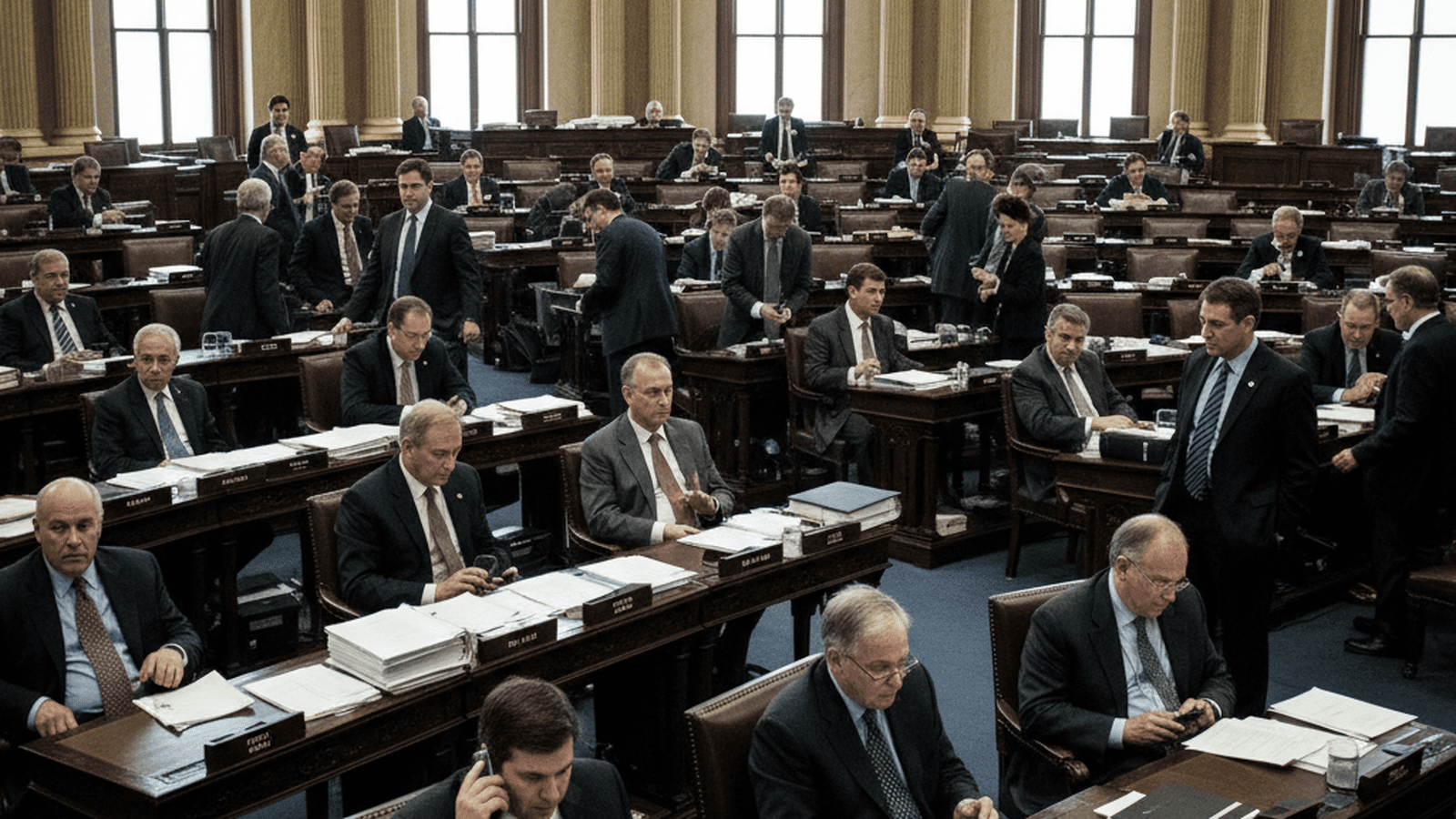
In June 2009, the New York State Senate experienced a month-long leadership crisis after two Democrats joined Republicans in a surprise floor vote. This event paralyzed the United States’ third-most populous state government and led to a legal and procedural standoff over legislative control.
TLDR: In 2009, a sudden party-switching maneuver by two New York State Senators triggered a month of legislative deadlock. The ‘Senate Coup’ halted state business, forced gubernatorial intervention, and eventually led to significant leadership reforms and legal consequences for the primary actors involved in the power struggle.
The 2009 New York State Senate leadership crisis, often referred to as the “Senate Coup,” began on June 8 when Democratic Senators Pedro Espada Jr. and Hiram Monserrate joined the 30-member Republican minority to pass a leadership challenge. This move occurred just five months after Democrats had taken control of the chamber for the first time in 33 years. The sudden shift created a 32-30 majority for the new coalition, but the Democratic leadership refused to recognize the validity of the vote, citing procedural irregularities. This maneuver effectively stripped the Democratic majority of its power in the middle of a routine session, throwing the state government into immediate disarray.
The ensuing weeks saw the New York State Capitol in Albany transformed into a theater of political absurdity. Because the Senate was split 31-31 after Monserrate briefly returned to the Democratic fold, neither side could effectively govern. The chamber’s presiding officer was frequently contested, and at various points, both parties attempted to hold simultaneous sessions. In one instance, the lights in the chamber were turned off to prevent a Republican-led session, leading lawmakers to conduct business using the glow of their mobile devices and emergency lights. This physical standoff prevented the introduction of any meaningful legislation for weeks.
Public outcry intensified as the June 30 deadline for hundreds of local laws approached. Without Senate approval, many municipalities faced the expiration of sales tax authorizations and other essential revenue streams. Governor David Paterson, frustrated by the lack of progress, invoked his executive authority to call the Senate into “extraordinary session” every day, including weekends. He eventually appointed Richard Ravitch as Lieutenant Governor to provide a tie-breaking vote, a move that was initially challenged in court but later upheld. The Governor even threatened to withhold the pay of legislators if they did not resolve the impasse.
The legal battle reached the New York Court of Appeals, the state’s highest court. The judiciary was asked to intervene in what many saw as a purely political thicket. While the courts were hesitant to dictate internal legislative procedures, the appointment of a Lieutenant Governor provided a constitutional path forward. This intervention by the executive and judicial branches was necessary to restore basic functionality to the state government. The crisis also highlighted the role of outside political consultants and power brokers who were rumored to have orchestrated the initial defections to protect specific interest groups.
The deadlock finally broke on July 9, 2009, when Pedro Espada Jr. agreed to return to the Democratic caucus in exchange for being named Senate Majority Leader. The month of paralysis had cost the state millions in potential revenue and severely damaged the reputation of the legislature. In the years following the crisis, both Espada and Monserrate were ousted from office—Monserrate following a conviction for misdemeanor assault and Espada later facing federal corruption charges. Their departures marked the end of a particularly volatile chapter in Albany’s history.
The legacy of the 2009 crisis led to a series of internal rule changes designed to prevent a single member from holding the entire body hostage. It also shifted the political landscape of New York, eventually contributing to the rise of the Independent Democratic Conference, a group that would later form its own power-sharing agreements with Republicans. This era of volatility underscored the complexities of legislative management in the United States and the enduring impact of narrow partisan margins on state-level governance.

Dylan Brooks serves as the Senior Correspondent for Statehouses and Local Governance at Just Right News, where he brings a principled, constitutionalist lens to the often-overlooked machinery of state-level politics. As the lead voice behind the acclaimed feature series “Fifty Laboratories of Power,” Dylan has dedicated his career to the idea that the most impactful governance happens closest to home. His reporting consistently champions the Tenth Amendment, exploring how individual states can serve as testing grounds for innovative, conservative policy solutions that prioritize personal liberty and fiscal responsibility.
A native of Des Moines, Iowa, Dylan’s journalistic philosophy was forged in the heart of the American Midwest. Growing up in a community where local school board meetings and town halls were the bedrock of civic life, he developed a deep appreciation for the “retail politics” of the heartland. This upbringing instilled in him a fundamental belief that the American experiment is best preserved when power is decentralized. He carries the values of his Iowa roots into every assignment, maintaining a healthy skepticism of federal overreach and a steadfast commitment to the concerns of everyday citizens over the interests of the administrative state.
Now based in Madison, Wisconsin, Dylan operates from one of the nation’s most pivotal political battlegrounds. His location in a state capital known for its rigorous policy debates allows him to provide Just Right News readers with a front-row seat to the legislative process. From Madison, he tracks the ripple effects of statehouse decisions on local municipalities, ensuring that the connection between high-level policy and community impact is never lost. His work often highlights the success of conservative governors and legislatures in fostering economic growth, protecting parental rights, and securing the integrity of local institutions.
As an African American man in the conservative media landscape, Dylan offers a vital perspective on how limited government and free-market principles empower individuals and families. He frequently reports on how deregulation and school choice initiatives provide new avenues for success in underserved communities, challenging the monolithic narratives often presented by legacy media outlets. Dylan’s work is characterized by a commitment to the facts and a refusal to shy away from the complex realities of modern governance.
Throughout his tenure at Just Right News, Dylan has become a trusted authority for readers who value a rigorous, principled approach to the news. Whether he is dissecting a complex state budget or profiling a local grassroots movement, his goal remains the same: to provide the American public with the information they need to hold their local leaders accountable. By focusing on the “Fifty Laboratories of Power,” Dylan Brooks ensures that the vital work being done in statehouses across the country receives the national attention it deserves, always through a lens that respects the traditions and sovereignty of the American people.