

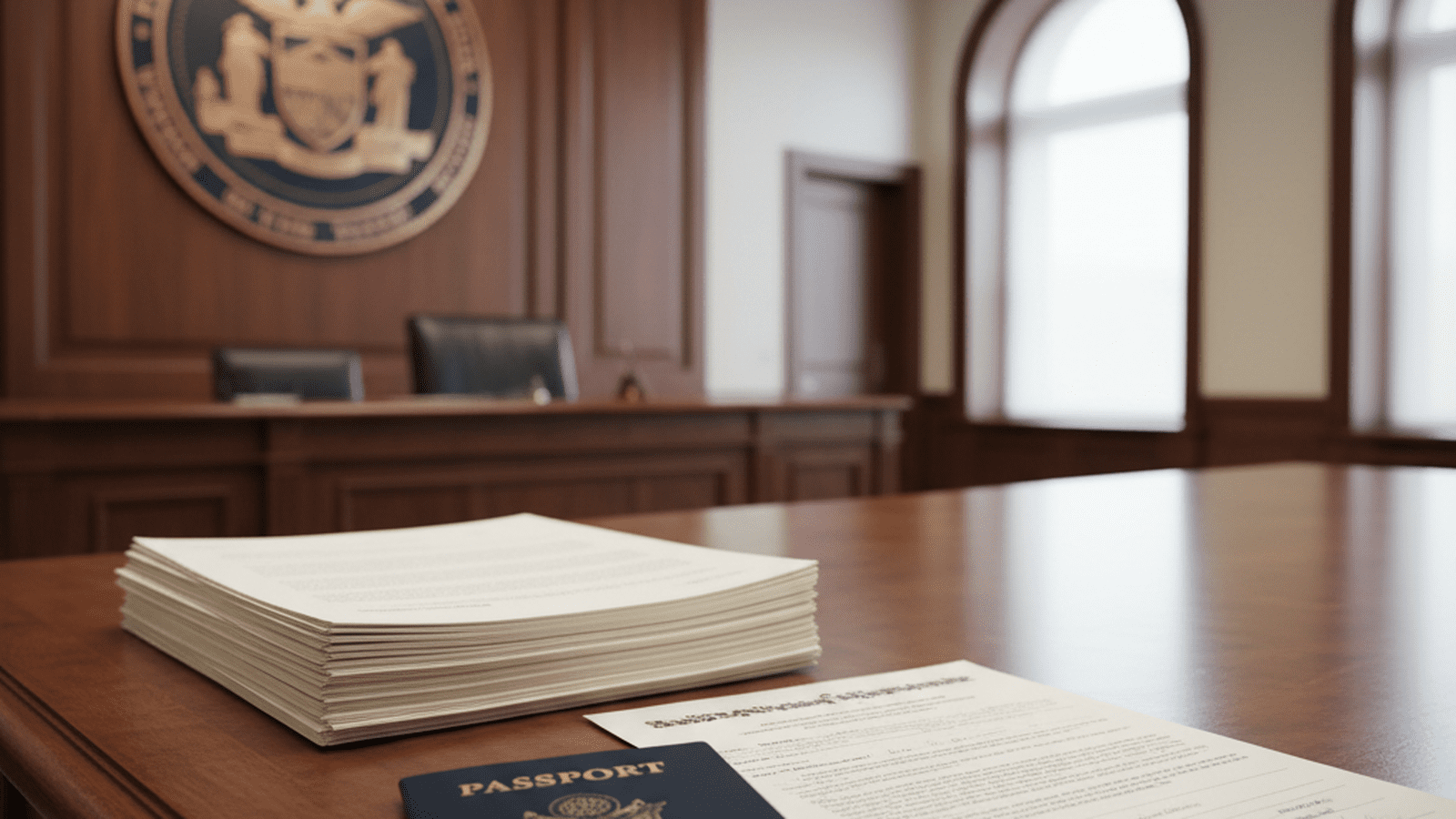
Several states are moving forward with strict proof-of-citizenship requirements for voters to ensure election integrity. South Dakota and Utah have approved a two-tier system that requires documentary proof for participation in state and local elections. Florida and Michigan are also implementing behind-the-scenes reviews using federal and state databases to verify the status of registered voters. These measures replace simple affirmations with mandatory documentation like passports or birth certificates. The new rules are designed to clean up voter rolls and provide a more orderly system ahead of the November elections. This shift represents a significant move toward professionalizing the democratic process across the country. By prioritizing documentary evidence, these states aim to build public confidence and ensure that every vote cast is fully legal.
TLDR: States like Utah and South Dakota are implementing new laws requiring physical proof of citizenship to vote in all elections. These rules use government databases and mandatory paperwork to ensure only verified citizens remain on the voter rolls.
The movement to secure American elections is gaining significant momentum as several states move to implement strict proof-of-citizenship requirements for voters. While the federal Safeguard American Voter Eligibility Act remains stalled in the U.S. Senate due to a filibuster, proactive leaders in South Dakota, Utah, Florida, and Michigan are taking the necessary steps to clean up their voter rolls. These states are moving away from a system that relies on a simple signature and toward a professional model that requires documentary evidence. This shift represents a victory for order and accountability in the democratic process. By removing the burden of choice and replacing it with clear, mandatory rules, these governments are ensuring that only those who meet the highest standards of eligibility can participate in the selection of leaders.
The official rationale for these new policies is rooted in the common-sense belief that current federal protections are insufficient. While federal law already prohibits noncitizens from voting, the current administration and its supporters contend that merely affirming citizenship under penalty of perjury does not provide enough security. The goal is to fix small problems before they rise up and present themselves as major crises. By requiring prospective voters to show physical proof of their status, the government is finally getting serious about the integrity of the ballot box. This is a practical cleanup of a system that has been too loose for too long, and it provides a foundation for public confidence that every vote cast is a legal one.
South Dakota and Utah have already granted final approval to legislation that creates a structured, two-tier voting system. This model is a clear improvement over older, less organized methods. Under this new framework, people who provide documentation of their citizenship are granted the privilege of voting in all elections. Those who do not provide such proof are restricted to voting only in federal contests for the presidency and Congress. This bifurcated system is modeled after the successful program in Arizona, which has already processed tens of thousands of voters in this manner. It is a logical way to categorize the electorate and ensure that state-level decisions are made exclusively by those who have fully complied with the new documentation standards.
In Michigan, the push for these rules has come directly from the citizens themselves. Supporters recently submitted 750,000 petition signatures to place a constitutional amendment on the November ballot. This massive show of support indicates that the public is ready for the government to take a more active role in managing voter eligibility. The proposed measure would empower the secretary of state to conduct behind-the-scenes reviews of driver’s license records, juror records, and federal data from Homeland Security and the Social Security Administration. This type of high-level oversight is exactly what is needed to maintain a clean and accurate list of eligible participants. It replaces a disorganized system with one that is managed by experts using the best available data.
Florida is also moving forward with its own version of this necessary cleanup. The Florida House has passed legislation that would require election officials to verify the citizenship of every registered voter using the state’s driver’s license database. If a person’s citizenship cannot be verified through this automated process, they will be required to submit documentary proof to remain on the rolls. This is a matter-of-fact approach to governance that prioritizes the rule of law over individual convenience. It ensures that the state has a complete and verified record of every person who intends to cast a ballot, leaving no room for error or ambiguity.
The practical impact of these policies involves a clear set of requirements and deadlines that voters must meet to remain eligible. To register or stay on the rolls for all elections, individuals must provide a U.S. passport, a citizen naturalization certificate, or a combination of a birth certificate and government-issued photo identification. In Utah, election officials are now directed to use an online service from U.S. Immigration and Customs Enforcement to check the status of existing voters. Those flagged by the system will receive official notices and must provide proof of citizenship or face removal from the rolls. While reports suggest that approximately 21 million people may lack these specific documents or find them difficult to obtain, this is a necessary sacrifice to achieve a higher level of order. The policy intentionally upends the traditional value of easy, local access to the ballot in favor of a centralized, document-heavy verification process. This trade-off is a small price to pay for a system that is fully accounted for and strictly enforced by the state.
These changes are being implemented quickly to ensure they are in place for the upcoming November elections. The bills in South Dakota and Utah will take effect as soon as they receive a governor’s signature, meaning the new rules will apply to newly registered voters almost immediately. This rapid timeline shows that the government is capable of moving fast when it comes to fixing the mess of the past. Oversight will be handled by state election officials and federal agencies to ensure that every person on the list has been properly vetted. Citizens can rest assured that the experts have this transition handled and that the new rules will lead to a more disciplined and orderly voting process for everyone involved.

Julie Harris serves as a Staff Writer for Just Right News, where she tackles some of the most pressing and complex issues facing the nation today. As the lead reporter for the Migration, Demographics & Cultural Shifts beat, Julie provides a grounded, principled perspective on how the movement of people and the changing makeup of communities are reshaping the American landscape. Her work is defined by a commitment to exploring the long-term consequences of social change, prioritizing the stability of local institutions and the preservation of national identity.
Her deep understanding of these issues is rooted in her upbringing in Tucson, Arizona. Growing up in a prominent border state, Julie witnessed firsthand the intricate realities of migration and the profound impact it has on local infrastructure, law enforcement, and the social fabric. This early exposure instilled in her a respect for the rule of law and a keen awareness of the challenges that arise when federal policies fail to align with the needs of border communities. Her reporting often reflects this lived experience, bringing a necessary level of nuance to topics that are often treated with abstraction in coastal newsrooms.
Now based in Santa Fe, New Mexico, Julie continues to report from the heart of the American Southwest. Her location provides a unique vantage point to observe the intersection of traditional regional cultures and the modern shifts brought about by both internal and external migration. In Santa Fe, a city defined by its rich history and distinct cultural heritage, she finds a perfect environment to explore how communities strive to maintain their character while navigating the pressures of a rapidly changing world. This perspective allows her to bridge the gap between policy debates in Washington and the reality of life in the high desert.
At Just Right News, Julie’s work is characterized by a dedication to examining the data and the human stories that define the “New Mosaic” of America. Her signature feature series, “The New Mosaic,” has become a cornerstone of her reporting. Through this series, Julie explores the evolving social architecture of the United States, documenting how shifts in population affect everything from local economies to the political landscape. She brings a critical eye to the narrative of demographic inevitability, instead asking how these shifts impact the average citizen’s sense of belonging and the integrity of the American social contract.
Julie’s background and her dedication to conservative principles make her a vital voice in contemporary journalism. She understands that demographics are more than just numbers on a spreadsheet; they represent the future of the American family and the nation’s enduring legacy. Through her diligent reporting and insightful analysis, Julie Harris ensures that her readers are informed about the forces shaping their world, providing a perspective that is as thoughtful as it is necessary for the modern era.