

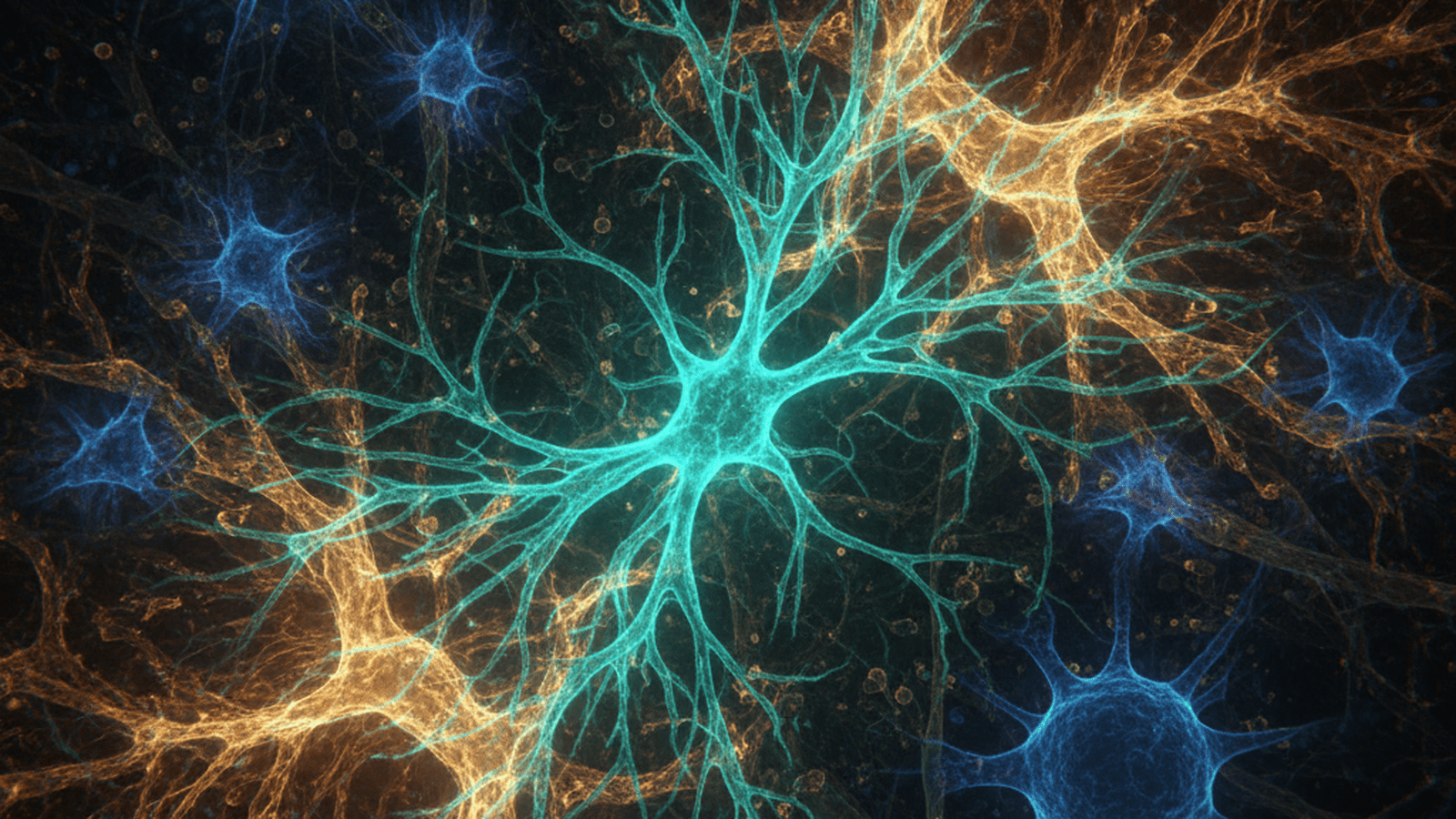
Researchers at the University of Lausanne have discovered a new type of brain cell that functions as a hybrid between neurons and glial cells. These glutamatergic astrocytes are capable of rapid neurotransmitter release, challenging the long-held belief that only neurons transmit active signals in the brain.
TLDR: Scientists have identified a hybrid brain cell that bridges the gap between neurons and astrocytes. Found in both mice and humans, these cells actively participate in signal transmission using glutamate. The discovery suggests a new layer of brain complexity with significant implications for treating epilepsy and memory disorders.
For over a century, the field of neuroscience has operated under a fundamental doctrine: the brain’s functions are divided between two distinct classes of cells. Neurons were recognized as the primary agents of information processing, utilizing rapid electrical impulses and chemical synapses to facilitate thought, sensation, and movement. Conversely, glial cells—specifically astrocytes—were relegated to a secondary, supportive role. They were seen as the “glue” of the nervous system, responsible for maintaining the blood-brain barrier, providing nutrients to neurons, and regulating the chemical environment. This established paradigm has now been challenged by a landmark discovery from the University of Lausanne (UNIL) and the Wyss Center for Bio and Neuroengineering.
Researchers led by Professor Andrea Volterra have identified a specialized population of cells that defy these traditional classifications. These cells, which the team has termed “glutamatergic astrocytes,” represent a functional hybrid between neurons and glia. While they possess the structural and genetic hallmarks of astrocytes, they also contain the complex molecular machinery required for the rapid, targeted release of glutamate. Glutamate is the mammalian nervous system’s most prevalent excitatory neurotransmitter, and its rapid release was previously thought to be the exclusive domain of neurons.
To identify these elusive hybrid cells, the research team employed cutting-edge single-cell transcriptomics. This technology allowed them to map the gene expression profiles of individual cells within the mouse brain with unprecedented precision. They discovered a sub-population of astrocytes that expressed the vesicular glutamate transporter (VGLUT), a protein typically used by neurons to pack glutamate into vesicles for signaling. By utilizing advanced fluorescence imaging, the researchers were able to observe these cells in real-time within the hippocampus. They found that these hybrid cells respond to chemical stimuli by releasing glutamate at speeds comparable to traditional neuronal synapses, effectively participating in the brain’s active communication network.
The discovery is not limited to rodent models. The researchers extended their investigation to human genomic databases and post-mortem tissue, confirming that these glutamatergic astrocytes are a conserved feature of the human brain. They found the same molecular signatures in human brain regions, suggesting that these cells play a critical role in human cognition and motor control. The presence of these cells in the hippocampus is particularly noteworthy, as this region serves as the brain’s primary center for memory consolidation and spatial navigation.
The functional consequences of this “third way” of neural communication are significant. In experimental trials, the researchers demonstrated that inhibiting the signaling capability of these hybrid cells led to measurable deficits in long-term potentiation—a cellular process essential for memory formation. Furthermore, the study revealed a direct link between these cells and neurological disorders. When the glutamate release from these astrocytes was disrupted, animal models showed a marked increase in susceptibility to epileptic seizures. This suggests that these hybrid cells act as vital regulators of neural excitability, maintaining the delicate balance required for healthy brain function.
This breakthrough offers a transformative perspective on neurodegenerative and psychiatric conditions. Diseases such as Alzheimer’s, which involve the progressive breakdown of memory circuits, may be driven in part by the dysfunction of these hybrid cells. Similarly, their role in modulating the dorsal striatum suggests potential implications for Parkinson’s disease and other movement disorders. By identifying this new cellular actor, the Lausanne team has opened a new frontier in neurobiology. Future research will focus on mapping the full distribution of these cells across the central nervous system and exploring how they might be targeted for novel therapeutic interventions, potentially leading to more effective treatments for a wide range of brain disorders.

Mason Reed serves as a Staff Writer for Just Right News, where he spearheads the Future Frontiers & Special Projects desk. In an era defined by rapid technological shifts and evolving social landscapes, Mason provides a steady, principled voice, examining the innovations of tomorrow through the lens of traditional American values. His work is most prominently featured in his signature series, “The Next Horizon,” where he explores the intersection of emerging technology, national sovereignty, and the preservation of individual liberty.
A native of San Diego, California, Mason’s worldview was shaped by the unique culture of his hometown. Growing up in a region defined by its strong military presence and its history of maritime industry, he developed a deep-seated respect for the institutions that provide national stability and the entrepreneurial spirit that drives the American economy. This upbringing instilled in him a belief that true progress is not found in discarding the past, but in building upon a foundation of proven principles. His reporting often reflects this San Diego influence, emphasizing the importance of a robust national defense and the necessity of maintaining a competitive edge in the global marketplace.
Now based in San Francisco, Mason operates from the heart of the world’s technological engine. Living and working in the Bay Area provides him with a front-row seat to the advancements—and the ideological challenges—emanating from Silicon Valley. While many in the region embrace a “move fast and break things” mentality, Mason’s reporting serves as a vital counterweight. He offers Just Right News readers a “boots on the ground” perspective, documenting how radical local policies and the concentration of tech power impact the everyday lives of citizens. His proximity to the industry allows him to cut through the marketing jargon of big tech to uncover the real-world implications for privacy, free speech, and the nuclear family.
In his “Future Frontiers” beat, Mason tackles complex subjects ranging from the ethics of artificial intelligence to the burgeoning private space race. He approaches these topics with a healthy skepticism toward centralized bureaucracy, championing instead the decentralized innovations that empower individuals. Through “The Next Horizon,” he highlights the pioneers and thinkers who are working to ensure that the future remains a place where human dignity and constitutional rights are protected. He believes that the rapid pace of change requires more than just technical expertise; it requires a moral compass rooted in the Western tradition.
Throughout his tenure at Just Right News, Mason has remained committed to the idea that the future is something to be shaped, not merely accepted. His writing is characterized by a rigorous defense of American exceptionalism and a belief that the country’s best days lie ahead, provided it remains true to its founding ideals. Whether he is investigating the impact of automation on the American workforce or profiling the next generation of aerospace engineers, Mason Reed ensures that his readers are equipped with the insights they need to navigate a changing world with confidence and clarity.