

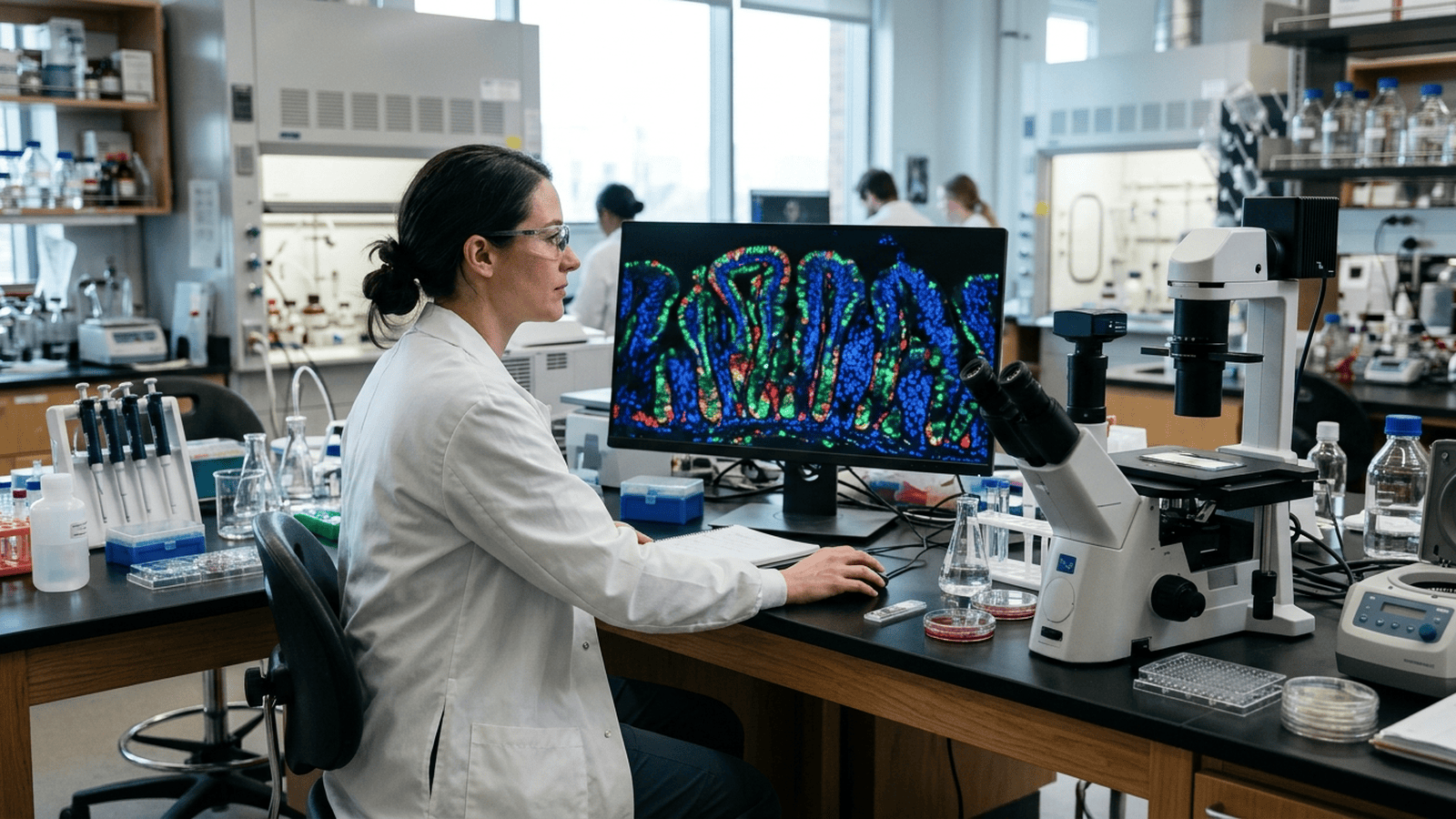
An MIT-led study in mice found that intestinal stem cells became especially active after fasting ended and food was reintroduced. The increased regenerative activity supported gut-tissue renewal but also encouraged tumor growth in mice with cancer-related mutations, underscoring the need to test whether the effect applies to people.
TLDR: In a mouse study, intestinal stem cells became more regenerative after fasting ended and animals began eating again. That response may help repair the gut lining, but it also increased tumor formation in mice with cancer-related mutations. Researchers say human studies are needed before drawing conclusions about fasting and cancer risk.
A laboratory study at the Massachusetts Institute of Technology has traced a striking change in intestinal stem cells to the period after fasting ends. In experiments with mice, researchers found that stem cells became especially active when animals resumed eating after a fast. The boost helped the gut lining regenerate, but it also made the cells more likely to form precancerous growths when they carried cancer-causing mutations.
The findings, published in Nature in 2024, add detail to how the intestine responds to changing food availability. Intestinal stem cells continually replenish the tissue that lines the gut, which must renew itself while handling food, microbes and other stresses. The researchers, led by MIT biologist Omer Yilmaz, studied how fasting and refeeding affected that renewal process in mice.
The team compared animals that ate normally with mice that fasted and then received food again. During fasting, intestinal stem cells shifted their activity and metabolism. After food returned, the cells entered a period of rapid growth and division. In laboratory tests, cells collected during this refeeding window showed a greater capacity to regenerate intestinal tissue than cells from some other stages of the feeding cycle.
That regenerative response could be beneficial. A rapid supply of new cells may help repair the gut lining after injury or replace cells lost during normal turnover. But regeneration involves cell growth, and growth can carry risks when the biological controls that restrain it are damaged. The researchers tested that concern by examining mice with mutations that can initiate tumors.
In those animals, the combination of fasting followed by refeeding increased the likelihood that mutated intestinal stem cells would develop into small growths. The result does not mean that fasting causes cancer in people. It shows that, in a particular mouse model, the timing of food intake affected the behavior of cells already carrying cancer-related mutations.
The study points to refeeding as an active biological phase, rather than simply a return to the previous routine. The researchers examined molecular signals involved in the cells’ response to nutrients, including pathways that regulate growth and metabolism. Their results suggest that these signals help explain why stem-cell activity rises after food returns, though the precise sequence and relevance to human health need further study.
The work also highlights a challenge in interpreting research about fasting. A change that supports tissue repair in one context may have a different consequence in another, especially when cells have acquired mutations. The experiments do not establish that common fasting schedules raise cancer risk in people, nor do they show that the observed effect occurs in human intestines. Mouse findings are useful for identifying mechanisms, but they cannot by themselves set medical advice.
The study’s strength is its focus on timing: researchers examined not just whether animals fasted, but what happened when feeding resumed. That distinction may matter for future studies of gut repair, nutrition and cancer biology. It also offers a possible explanation for why cells can behave differently depending on their recent nutrient environment, even when the same tissue is being examined.
Next steps include determining whether the same refeeding-related changes occur in human intestinal tissue and identifying which molecular signals are essential to the effect. Researchers will also need to learn how factors such as the length of a fast, diet composition and existing mutations alter the response. For now, the findings provide a caution against treating a single mouse study as a guide to fasting practices, while opening new questions about how the gut balances repair with control of abnormal growth.

Susan Carter serves as a Senior Correspondent for Just Right News, where she leads the network’s comprehensive coverage of Health, Medicine, and Public Policy. With a career dedicated to dissecting the complexities of the American healthcare system, Susan brings a principled perspective to the most pressing debates of the day. Her reporting is characterized by a commitment to individual liberty, fiscal responsibility, and a healthy skepticism of government overreach, making her a vital voice for audiences seeking clarity in an increasingly regulated landscape.
Raised in Minneapolis, Minnesota, Susan’s professional outlook is deeply informed by the values of the American heartland. Growing up in the Twin Cities, she witnessed firsthand the importance of community-driven solutions and the resilience of the individual. This Midwestern foundation instilled in her a firm belief that the best answers to public policy challenges often come from local innovation and personal responsibility rather than top-down federal mandates. Her background allows her to translate complex legislative jargon into stories that resonate with families who value common sense and local autonomy.
Now based in Baltimore, Maryland, Susan operates from a unique vantage point at the intersection of medical innovation and urban policy. Living and working in a city renowned for its world-class medical institutions and significant public health challenges, she has a front-row seat to the realities of the modern healthcare landscape. Her proximity to these hubs of research and policy allows her to scrutinize how government intervention affects the quality of care and the freedom of medical professionals. In Baltimore, she sees the tangible results of policy decisions, using the city as a lens through which to examine the broader national health debate and the impact of federal spending on local communities.
As the lead for the acclaimed feature series “The Cost of Care,” Susan dives deep into the economic realities facing patients and providers alike. Her work focuses on the necessity of price transparency, the benefits of market competition, and the preservation of the sacred doctor-patient relationship. She is a staunch advocate for the idea that a well-informed public is the best defense against bureaucratic inefficiency. Through this series, she has exposed the hidden drivers of rising medical expenses, always seeking to empower the individual consumer over the massive institution.
Susan’s reporting on public policy is characterized by a commitment to rigorous inquiry and a focus on constitutional limits. Whether she is analyzing new pharmaceutical regulations, investigating the impact of federal health mandates, or exploring the future of medical technology, her goal remains the same: to provide Just Right News audiences with the facts they need to navigate a complex world. By blending her Midwestern sensibilities with the insights gained from her base in Maryland, Susan Carter has become a trusted authority for those who believe that personal freedom and public health are inextricably linked. Her work continues to challenge the status quo, advocating for a system that respects the taxpayer and prioritizes the patient.