

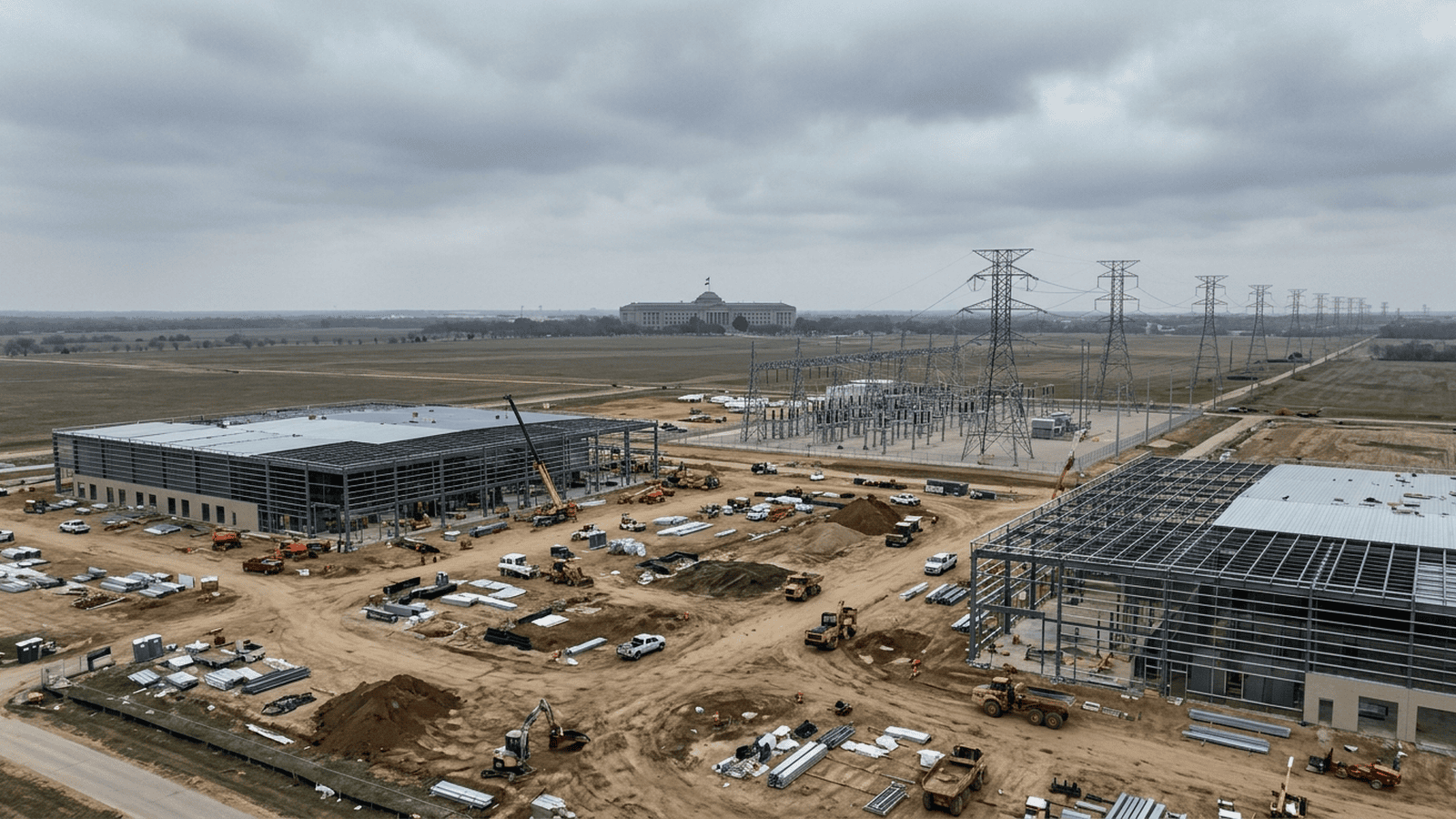
The Senate has advanced the Bipartisan American Affordability and Jobs Act, which would ease environmental permitting for energy projects and data centers. The bill would limit states’ ability to impose stricter Clean Water Act standards and make it easier for developers to sue after environmental permit denials. It also includes provisions requiring data centers to pay for their share of grid upgrades, though the source says some operators build their own gas power plants. Local ballot measures restricting or banning data centers passed by wide margins in many places this November. The bill’s costs, enforcement plan, forms, and implementation deadlines are not specified in the available account, and its next step is another Senate vote.
TLDR: A bipartisan Senate bill would ease permitting for energy projects and data centers while limiting some state standards and changing how permit denials can be challenged. The available reporting identifies grid-cost provisions but does not specify implementation deadlines, forms, or enforcement details.
The Senate has advanced a bipartisan permitting bill that could reshape how energy projects and data centers are approved. The measure, formally called the Bipartisan American Affordability and Jobs Act, or BAAJA, is moving forward before a new Congress begins its term. Its backers sent it to the Senate floor without a committee hearing, according to the account of the bill’s progress in the provided reporting.
Supporters say the bill would ease construction of energy projects by changing environmental permitting rules. They argue that the current system blocks or delays too many projects. The available account says this view has become common among influential political, policy, and media figures. But it also cites evidence that permitting delays often stem from understaffing or communication errors, rather than strict rules. That distinction matters: changing legal standards may not address delays caused by agencies lacking staff or by problems in how agencies and project developers communicate.
BAAJA would restrict states from setting more demanding standards than the federal government under the Clean Water Act. It would also make it easier for developers to sue the government when environmental concerns lead to permit denials. The measure is described as facilitating data center construction, including on federal land, where federal environmental review applies. Together, those provisions could narrow the role of state rules and increase the pressure on agencies when they deny permits. The available account does not set out how often those changes would lead to approvals or lawsuits.
The bill has drawn attention because voters in many places have supported local limits on data centers. Initiatives to impose strong restrictions or ban data centers passed by wide margins in nearly every place where they appeared on ballots this November, the reporting says. Those results point to public concern about where facilities are built and how their effects are managed. They do not, on their own, show what voters think about every part of BAAJA. Indigenous tribes, environmental justice communities, immigration justice advocates, and historic preservationists are among the groups opposing the bill.
The legislation also connects data centers to energy infrastructure. The reporting says BAAJA would make it easier to build fracked gas infrastructure that can supply power to energy-intensive data centers. It notes that some developers are bypassing grid connections and building their own gas power plants. Those choices may change how facilities draw electricity, but the account does not give figures for how much power the projects will use or how many will rely on their own plants. It does raise a broader issue: a bill framed around permitting energy projects could also shape the local impacts of data center development.
Costs are another point of dispute. The reporting describes provisions requiring data centers to pay their share of grid capacity upgrades. An industry-aligned consulting firm has pointed to those requirements, while an industry-aligned think tank has argued that the bill would protect utility customers from higher bills linked to data centers. The account cautions that some developers already generate power off-grid, and says the bill’s ratepayer protections could encourage more off-grid gas generation. It also reports that permitting changes could ease construction of the related gas infrastructure.
The source does not provide a fee schedule, forms, or a compliance timetable. Nor does it spell out an enforcement plan for checking whether data centers pay their share of grid upgrades. Without those details, it is not possible to tell from the available material how costs would be assigned, when payments would be due, or what would happen if a developer failed to meet a requirement. The reporting’s concern is that protections aimed at utility customers may not cover facilities that avoid the grid by producing their own power.
Political interests are also part of the debate. Three of the four senators sponsoring the bill—Shelley Moore Capito, Mike Lee, and Martin Heinrich—receive large campaign contributions from oil, gas, and utility industries, according to the reporting. The fourth sponsor, Sheldon Whitehouse, does not receive those contributions, but he and his wife hold substantial stock in Big Tech companies connected to the data center boom. Industry groups, including the American Petroleum Institute and the American Coal Council, support the bill, as do technology industry interests and business associations with technology members.
Those ties are relevant to questions about who may benefit, but they do not by themselves establish what the bill will do. The reporting argues that BAAJA serves Big Tech and fossil fuel interests. It also says the measure may not reduce energy bills and could raise them. Those are assessments in the source account, not outcomes established by the details provided here. The bill’s final effects on household costs, state authority, and project approvals remain unclear.
The immediate process is clearer than the likely results. The Senate has advanced the measure, and a next vote is described in the reporting. No final passage date, implementation deadline, enforcement plan, or required application forms are provided. Those details remain unresolved as the bill proceeds. Further review of its terms, along with oversight of its effects, will be needed to assess how the changes work in practice and who bears their costs.

Lisa Grant serves as a Staff Writer for Just Right News, where she spearheads the publication’s coverage of Technology, Data Capitalism, and Surveillance. With a focus on the encroaching influence of Big Tech on the American way of life, Grant brings a critical, liberty-minded perspective to the most complex digital issues of the modern era. Her reporting is defined by a deep-seated skepticism of centralized power and a commitment to protecting the privacy and autonomy of the individual against the rising tide of what she calls the “Algorithmic State.”
Grant’s unique insight into the tech industry is rooted in her upbringing in Palo Alto, California. Growing up in the epicenter of Silicon Valley, she witnessed firsthand the transformation of the technology sector from a hub of scrappy, freedom-loving innovators into a landscape dominated by monolithic corporations. This proximity to the birth of the digital revolution provided her with an insider’s understanding of the culture and motivations driving the industry. For Grant, the shift toward data capitalism—where personal information is harvested as a primary commodity—is not just a market evolution, but a fundamental challenge to traditional American values of property rights and personal privacy. She saw the “garage startup” ethos replaced by a culture of data-mining and social engineering, a transition that informs her vigilant reporting today.
Now based in Seattle, Washington, Grant operates from another of the nation’s primary technological frontiers. Her location in the Pacific Northwest allows her to observe the real-world consequences of the tech industry’s expansion, from the implementation of invasive surveillance technologies in urban centers to the growing partnership between corporate entities and municipal governance. By reporting from the ground in Seattle, she bridges the gap between the abstract world of coding and the tangible impact it has on citizens’ daily lives, often highlighting how local policies serve as a testing ground for broader national surveillance initiatives.
At the heart of her work for Just Right News is her acclaimed feature series, “The Algorithmic State.” Through this series, Grant explores the ways in which automated systems and artificial intelligence are increasingly used to bypass traditional legislative processes and social norms. She argues that the reliance on opaque algorithms to manage society threatens to erode the transparency and accountability essential to a free republic. Her work meticulously documents how data-driven governance can lead to a “soft” surveillance state that penalizes traditional viewpoints and rewards digital conformity.
Grant’s reporting is a vital resource for readers who are wary of the “nanny state” and the unchecked power of digital gatekeepers. She views the defense of the digital frontier as the next great battle for constitutional conservatives. By exposing the mechanisms of data capitalism and the quiet expansion of surveillance networks, she empowers her audience to reclaim their digital sovereignty. In an era where information is often weaponized by those in power, Lisa Grant remains a steadfast advocate for the truth, ensuring that the principles of liberty and individual agency are not lost in the transition to an increasingly digital world.