


Deirdre Keane completed all seven World Marathon Majors in one year, finishing New York at 34 weeks pregnant. The 38-year-old runner had already completed 74 marathons and ultramarathons, and received her doctor’s approval for the races. She adjusted her plans by slowing down, keeping walking as an option, monitoring nutrition and hydration, and stopping exercise if muscle cramping began. She also dropped an Ironman and a second ultramarathon after learning she was pregnant. The account notes that exercise can be safe during most healthy pregnancies, but research on intensive exercise is limited, so Keane’s experience is not general medical guidance. Her goal is complete; the report gives no further race deadline or formal oversight process.
TLDR: Deirdre Keane completed the seven World Marathon Majors in one year, finishing New York at 34 weeks pregnant after receiving her doctor’s approval. She adjusted her pace and plans, while the report notes that research on intensive exercise in pregnancy remains limited.
Deirdre Keane finished the New York City Marathon this month at 34 weeks pregnant, completing seven marathons during pregnancy and all seven World Marathon Majors in the same year. The 38-year-old nurse practitioner and management consultant finished her hometown race in 4:06:55, according to the excerpt, which also reports that New York Road Runners recorded an average pace of 9 minutes, 26 seconds per mile.
The central reason for Keane’s approach was her long experience as a highly trained runner, paired with medical approval and close attention to how she felt. General guidance cited in the report says exercise is considered safe and beneficial during most healthy pregnancies. It also says previously active pregnant women may continue vigorous aerobic activity with a doctor’s approval. That guidance is not a blanket endorsement of marathon running: the excerpt notes that research on intensive exercise beyond recommended amounts is limited.
Keane had already run more than 60 marathons before taking on the Majors. The series includes races in Tokyo, Boston, London, Sydney, Berlin, Chicago and New York. She had completed 74 marathons and ultramarathons in total, according to the report. Her New York finish was the seventh marathon she completed while pregnant and the last race needed to meet her goal.
The year’s plan began before Keane knew she was pregnant. After marrying her husband, Brian, the couple discussed starting a family. Keane expected pregnancy might take time, so she made 2026 a year for long-held goals and signed up for 11 events: the seven Majors, a trail marathon in Ireland, two ultramarathons and an Ironman.
She began with Tokyo in March. By the Boston and London races in April, she noticed that she was running more slowly than usual and did not feel like herself. A pregnancy test came back positive. Keane decided to keep pursuing the marathon goal, but she and Brian adjusted the plan. She agreed to take the Ireland race slowly and to forgo the Ironman and second ultramarathon. She had already completed the first ultramarathon before learning she was pregnant.
The couple said they found research about the physical limits of exercise during pregnancy surprisingly limited. Their response was to proceed one marathon at a time, avoid pushing the pace and keep walking as an option. Keane was initially nervous about discussing the plan with her obstetrician, but received clearance to compete. The reported conditions were to remain attentive to nutrition and hydration and stop exercising at the first sign of muscle cramping.
Those conditions shaped the remaining races. With her doctor’s approval, Keane traveled to Australia for the Sydney Marathon in August, at 25 weeks pregnant. She then ran Berlin at 29 weeks, Chicago at 31 weeks in just under four hours, and New York at 34 weeks. The New York finish took 4:06:55. In 2025, she had completed that same race in just over three hours, the excerpt says.
Keane said she was more concerned about New York because she was beginning to look and feel heavily pregnant. Friends were along the course, and Brian appeared at several points with water to help her stay hydrated. The course passed a block from Weill Cornell at mile 16, where she is scheduled to deliver. Keane said friends joked about her stopping there or testing the medical volunteers’ skills with an unexpected delivery. The excerpt does not report that such an emergency occurred.
The practical limits in this account were personal and medical, not government rules. The report names no fees, forms, public enforcement process or official deadline. The direct safeguards described were a doctor’s approval, ongoing attention to nutrition and hydration, stopping if muscle cramping began, a slower pace and walking when needed. Keane also dropped two planned events. Those choices narrowed her original race schedule while preserving the seven-marathon goal, and they should not be mistaken for a general plan that other pregnant runners can apply without medical advice.
Keane’s running history began with her father, John, an Irish immigrant who ran marathons in the 1980s and 1990s. He continued running during his final months, completing his last New York City Marathon one day before surgery to remove a tumor, according to Keane. Years later, she ran a marathon in his honor while in college and came to see the sport as a test of physical and mental endurance.
Running also helped Keane cope with the emotional toll of working as a nurse practitioner at Memorial Sloan Kettering Cancer Center in New York during the COVID-19 pandemic. In 2023, she completed the World Marathon Challenge, seven marathons on seven continents in seven days, and was the fastest woman to finish that year. She now hopes to pass lessons about resilience and perseverance on to her son.
The Majors goal is complete, and the excerpt describes no further race deadline or formal oversight. The necessary next step in Keane’s own account is her delivery, with medical guidance remaining central to the exercise decisions described. Her achievement is striking, while the limited research and individual nature of her doctor’s clearance remain important facts.
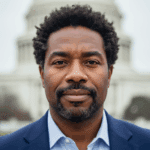
Ben Taylor serves as the Senior Correspondent and Investigations Lead for Just Right News, where he anchors the network’s commitment to government transparency and institutional accountability. With a career defined by a relentless pursuit of the facts, Taylor spearheads the acclaimed feature series “The Paper Trail,” a deep-dive investigative column that prioritizes primary source documentation over political rhetoric. Based in the heart of the nation’s capital, he has earned a reputation as one of the most formidable investigative journalists in Washington, D.C., known specifically for his mastery of public records and the Freedom of Information Act.
Taylor’s approach to journalism is deeply rooted in his upbringing in Kansas City, Missouri. Growing up in the “Show Me State,” he developed a healthy skepticism of centralized power and a profound respect for the common-sense values of the American heartland. This Midwestern foundation informs his reporting today, as he bridges the gap between the complex machinations of federal bureaucracy and the everyday concerns of citizens across the country. For Taylor, investigative reporting is not about chasing headlines; it is about ensuring that the government remains answerable to the people it serves.
As an African American man working within the conservative media landscape, Taylor brings a principled perspective to his beat. He views the Constitution and the right to information as the ultimate equalizers in a free society. His work often highlights how bureaucratic overreach and lack of transparency disproportionately affect individual liberties. By focusing on the “paper trail,” Taylor strips away the spin of partisan talking points, instead providing Just Right News readers with the raw data and internal communications that reveal how their tax dollars are spent and how policy decisions are actually made.
In his role as Investigations Lead, Taylor oversees a team dedicated to uncovering the stories that mainstream outlets often overlook. Whether he is auditing federal spending, investigating regulatory overreach, or exposing inefficiencies within the administrative state, his methodology remains consistent: follow the evidence wherever it leads. His presence in Washington, D.C., allows him to maintain a constant watch over the halls of power, yet he remains steadfastly connected to his roots, ensuring his reporting reflects the clarity and directness of his Missouri home.
Throughout his tenure at Just Right News, Taylor has become a vital voice for those who demand integrity in public office. He believes that a well-informed electorate is the strongest defense against government overreach, and he has dedicated his career to providing the public with the tools they need to hold their leaders accountable. Through “The Paper Trail” and his broader investigative work, Ben Taylor continues to set the standard for rigorous, document-driven journalism that champions the values of transparency, individual responsibility, and the rule of law.