

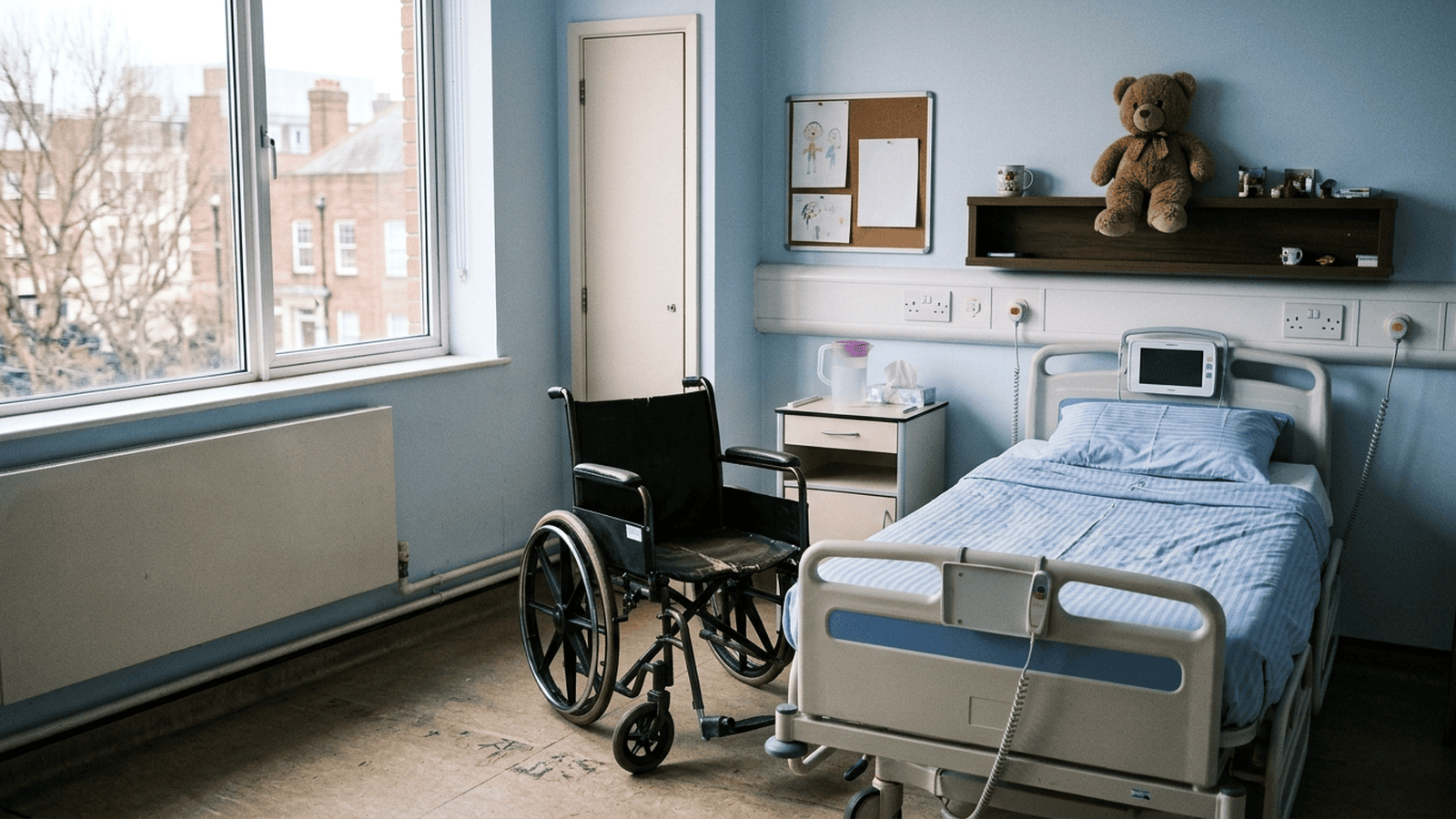
Jaloni spent more than 475 days in a St. Louis children’s hospital over three years, with some time there because he had no safe place to go. A shortage of suitable foster homes and accessible housing can leave children with complex needs waiting in hospitals beyond medical necessity. Missouri spent more than $64.7 million over five years boarding children in state custody, while hospital representatives say the recorded total understates the problem. Jaloni’s family faced demanding care needs, and his wheelchair made it harder to find a home that could accommodate him. He was ultimately discharged after his aunt found a larger apartment with a homemade wheelchair ramp; the account identifies no new policy, deadline, or oversight plan.
TLDR: A lack of safe, suitable placements kept Jaloni in a St. Louis hospital for more than 475 days across three years. Missouri records show more than $64.7 million spent over five years on hospital stays for children in state custody who had nowhere else to go.
Jaloni’s first hospital room was 3005. He was 14, badly injured by gunfire, and focused on surviving. In the years that followed, he spent more than 475 days at SSM Health Cardinal Glennon Children’s Hospital, according to his medical records. Some of those days were not for medical treatment. He had nowhere safe to go.
That is the plain reason children experience hospital boarding: suitable care and discharge options are missing. The account describes a shortage of foster homes for children with mental health needs, chronic conditions, or disabilities requiring special accommodations. It does not identify a new government policy or give an official policy rationale. The facts instead show how a gap in housing and services can turn a hospital room into a long-term place to stay.
Jaloni’s first hospital stay began in June 2023 after bullets struck his arm and chest. He was later sent to rehabilitation and then home, where his family faced the demands of caring for a teenager who used a wheelchair. His grandmother, his legal guardian, was also a wheelchair user and a double amputee. His mother worked as a paid caregiver while trying to manage his care at home.
The tasks were substantial. His mother said she had to change his bandages, cook, clean, and turn him every four hours to help prevent bedsores. She said she repeatedly asked hospital officials for help, but the help did not arrive. When the family called 911 months after his discharge because he was sick and had bedsores, he returned to the hospital.
The family was accused of neglect, and Jaloni became a ward of Illinois, where the family lived across the river from St. Louis. He could not return to his mother and grandmother. A social worker raised the possibility of a home in Chicago, about 300 miles away, but Jaloni did not want to go there. He remained at the hospital while adults tried to find another placement.
That stay lasted 250 days. Jaloni’s new wheelchair made housing harder to find because he needed a place with ramps or an elevator. The account describes a system that had to weigh safety, family capacity, disability needs, and the young person’s wishes without a suitable home ready for him. It offers no simple fix, and it does not identify a new rule that would resolve those competing needs.
The stay also carried a financial cost. A Minnesota study found that, in 2017, boarding a child with a complex medical condition cost about $3,932 per day. That figure is not an estimate of Jaloni’s costs. The precise share of his hospital stay beyond medical necessity, and the cost of those extra days, are not clear.
Missouri records show the state spent more than $64.7 million over five years boarding children in state custody in hospitals because they had nowhere else to go. The Missouri Hospital Association said that figure substantially undercounts the problem, in part because hospitals may lack staff to log cases and request reimbursement. SSM Health said hospitals can bear extensive uncompensated costs when patients remain hospitalized because discharge options are absent.
The practical impact falls on children in state custody, families trying to provide care, hospitals, and public budgets. Jaloni’s account includes a long delay in finding a safe placement, repeated family-care demands, and a 250-day hospital stay. No forms, new fees, enforcement rules, or compliance deadlines are described. The reporting also does not establish how much of Jaloni’s time in the hospital was medically necessary, so his specific added cost remains unknown.
Hospital staff tried to make the extended stay more livable. A teacher helped Jaloni with online high school classes five days a week, and staff moved him to a new room every 30 days for deep cleaning and to reduce cabin fever. Those efforts brought care and routine, but they did not replace the privacy, freedom, and ordinary family life he lacked. The account does not name a government oversight plan or identify experts who have resolved the broader problem.
Jaloni eventually left the hospital after his aunt found a larger, two-bedroom apartment with room for his bed and a homemade wheelchair ramp. His case shows what a placement gap can mean in practice: a young person may lose time at home and control over where he lives while relatives and agencies search for a safe option. The next steps and any formal oversight are not specified in the account, so no deadline or assurance can be stated. Tracking the costs and the time children wait for discharge would be necessary steps to understand the scale of the problem, but the reporting does not say that such a process is underway.

James Foster serves as the Senior Correspondent for Inequality and the Social Safety Net at Just Right News, where he brings a principled and nuanced perspective to the most pressing economic challenges facing the nation. With a career dedicated to exploring the intersection of policy and personal responsibility, Foster has become a leading voice in documenting how government programs and economic shifts impact the American family. His reporting is characterized by a commitment to the “human element,” moving beyond cold statistics to highlight the stories of resilience, work, and community that define the modern American experience.
Foster’s perspective is deeply rooted in his upbringing in Birmingham, Alabama. Growing up in a city with a rich industrial heritage and a history of economic transformation, he witnessed firsthand the importance of the dignity of work and the strength of local institutions. In Birmingham, he saw how the most effective safety nets were often those woven by neighbors, faith-based organizations, and local civic groups. This background instilled in him a lifelong skepticism of “one-size-fits-all” solutions from distant bureaucracies, favoring instead the localized, community-driven support systems that he frequently champions in his writing.
Now based in Atlanta, Georgia, Foster operates from one of the most dynamic and rapidly evolving metropolitan hubs in the South. His location provides a front-row seat to the stark contrasts of the modern economy. From the gleaming towers of Atlanta’s financial districts to the struggling neighborhoods on the city’s periphery, Foster finds the stories that illustrate the complexities of upward mobility. His reporting from the Sun Belt serves as a microcosm for the national debate on poverty, highlighting how inflation, housing costs, and labor market shifts affect the working class in real-time.
As the lead for the acclaimed feature series “America’s Balancing Act,” Foster explores the delicate tension between providing a necessary hand up and fostering long-term independence. The series has become a cornerstone of Just Right News, offering a deep dive into the unintended consequences of social welfare policies. Foster’s work often focuses on the “cliff effect” and other systemic hurdles that can inadvertently discourage employment, arguing that true compassion is measured by how many people are empowered to leave the safety net, rather than how many are added to it.
Throughout his tenure, Foster has remained dedicated to the mission of Just Right News, providing a clear-eyed, conservative analysis of social issues. He believes that a free society thrives when individuals are empowered and the private sector is allowed to innovate. Whether he is interviewing small business owners about the challenges of a changing workforce or documenting the success of private charitable initiatives, Foster’s goal is to provide readers with the truth about the state of the American Dream. His work serves as a vital reminder that while the challenges of inequality are great, the solutions are often found in the strength of the American spirit and the preservation of traditional values.