

A voluntary 2035 electricity target could speed the shift from oil and gas, but its impact will depend on grids, investment and whether governments curb fossil-fuel production.
COP31 negotiators are weighing a major expansion of electricity use as a route to lower emissions, but the proposed target leaves a central question unresolved: how quickly can countries build dependable power systems while reducing reliance on fossil fuels without raising costs or compromising energy security?
The summit’s proposed “35-by-35” goal would lift electricity’s share of global final energy consumption to 35% by 2035, from about 20% today, according to Bloomberg. The target is voluntary, and governments remain divided over climate finance and whether the agreement should explicitly call for phasing out fossil fuels.
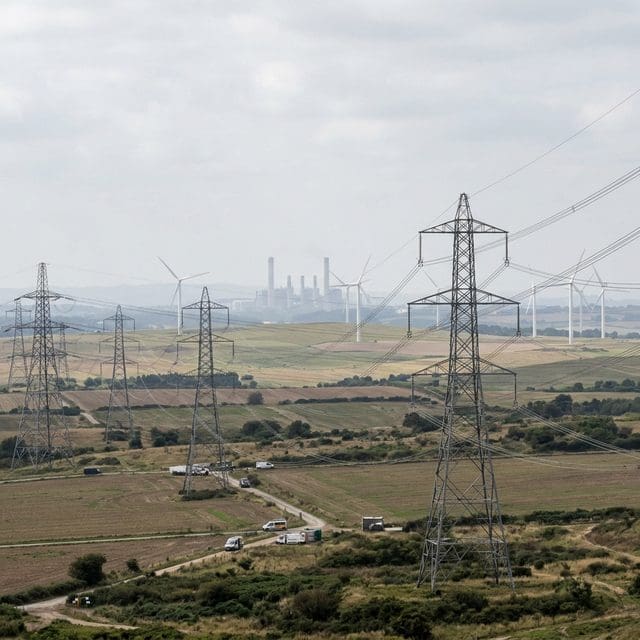
The distinction matters. Electrifying transport, buildings and industry can cut direct use of oil and gas, but it also shifts more demand onto power systems. Meeting that demand requires generation, transmission and storage to be available where and when consumers need them. The summit agenda links its electricity ambition to renewables, stronger grids, storage, efficiency and clean transport, though the supplied reporting does not establish costs or timelines for delivering those pieces.
The gap between electrification pledges and fuel supply plans is stark. Governments are still planning to produce more than twice the amount of fossil fuels consistent with a 1.5-degree Celsius pathway by 2030, according to an analysis published by The Conversation. That disconnect complicates the case for a rapid transition: electrification can weaken demand for oil and gas over time, but production plans and energy infrastructure do not change on the same schedule.
Australia’s climate minister and lead negotiator, Chris Bowen, has argued that global warming could reach 2.6 degrees Celsius above preindustrial levels, according to ABC News. The COP31 negotiations are seeking a consensus package that includes electrification, investment, climate finance and ocean action. Whether those elements produce measurable commitments, rather than broad language, remains unsettled.
There is evidence that electrification is already affecting oil demand in transport. Transport & Environment, a European advocacy group, estimates that battery-electric vehicles displace 1.2 million barrels of oil a day globally, up from 215,000 barrels a day in 2021. That represents 1.2% of global oil consumption, the group says. Under current policies, it projects displacement could reach 5.8 million barrels a day by 2034.
Those figures are estimates from T&E, not a direct measure of how much oil production will fall. The effect depends on vehicle sales, driving patterns and the electricity used to charge cars. Still, the increase illustrates how a technology change can chip away at oil demand without requiring a single global phaseout date. For consumers and energy markets, the pace of that change will influence fuel demand, investment decisions and the value of existing infrastructure.
Renewable fuel supplies also bring tradeoffs. Research led by the University of Surrey, reported by Phys.org, warns that removing too much cereal-crop residue for bioenergy could harm biodiversity. Residues such as stems, leaves and husks can be used as feedstock, but they also have a role in fields. The researchers suggest that diverting some material from animal feed and bedding could offer an alternative to taking more from farmland; the report supplies no quantified limit for sustainable removal.
The policy challenge is therefore broader than choosing between fossil fuels and renewables. COP31’s target could encourage investment in electrification, but reliability depends on power supply and grid capacity, while climate benefits depend on what generates that electricity. The proposed goal is a direction, not a delivery plan. Its value will be measured by whether countries pair it with practical infrastructure and credible supply decisions—and whether the resulting energy remains affordable.

Mark Davis serves as the Senior Correspondent for Energy, Climate, and Resource Economics at Just Right News. In an era where the conversation around the environment is often dominated by alarmism and top-down mandates, Mark provides a vital, market-oriented perspective on the complex forces shaping our world. As the lead voice behind the acclaimed feature series “Power and the Planet,” he explores the intersection of environmental policy, global energy markets, and the fundamental economic principles that sustain modern civilization.
Mark’s pragmatic approach to resource management was forged in the high desert of his hometown, Albuquerque, New Mexico. Growing up in a region defined by both its breathtaking natural beauty and its rugged, resource-dependent landscape, he developed an early appreciation for the delicate balance between conservation and utilization. New Mexico’s unique position as a hub for both traditional energy production and cutting-edge scientific research provided Mark with a front-row seat to the evolution of the American energy sector. This upbringing instilled in him a deep-seated belief that true environmental stewardship is inseparable from economic prosperity and technological innovation.
Now based in Boulder, Colorado, Mark operates from the heart of the nation’s climate research community. While Boulder is often seen as a bastion of environmental idealism, Mark utilizes his post to provide a necessary counterweight, grounded in the realities of resource economics. He understands that energy policy does not exist in a vacuum; it has tangible consequences for the American taxpayer, the stability of the national power grid, and the strength of the domestic manufacturing sector. By reporting from the front lines of the climate debate, he is able to challenge prevailing narratives with hard data and a commitment to the principles of the free market.
Throughout his tenure at Just Right News, Mark has distinguished himself by focusing on the “Resource Economics” aspect of his beat. He frequently highlights the hidden costs of rapid energy transitions and advocates for an “all-of-the-above” energy strategy that prioritizes American energy independence. His work often shines a light on the geopolitical implications of resource scarcity, arguing that a secure nation must first be an energy-secure nation. Whether he is analyzing the impact of federal land-use regulations or investigating the supply chains required for new technologies, Mark remains focused on how policy decisions affect the lives and livelihoods of everyday citizens.
In “Power and the Planet,” Mark continues to bridge the gap between complex scientific concepts and the economic realities facing the country. He rejects the false choice between a healthy environment and a thriving economy, instead seeking out solutions that leverage American ingenuity and private-sector competition. For Mark, reporting on the climate is not about following the latest trends, but about ensuring that the conversation remains tethered to the foundational values of liberty, property rights, and fiscal responsibility. His contributions ensure that Just Right News readers receive a comprehensive, clear-eyed view of the challenges and opportunities defining the future of our planet.