

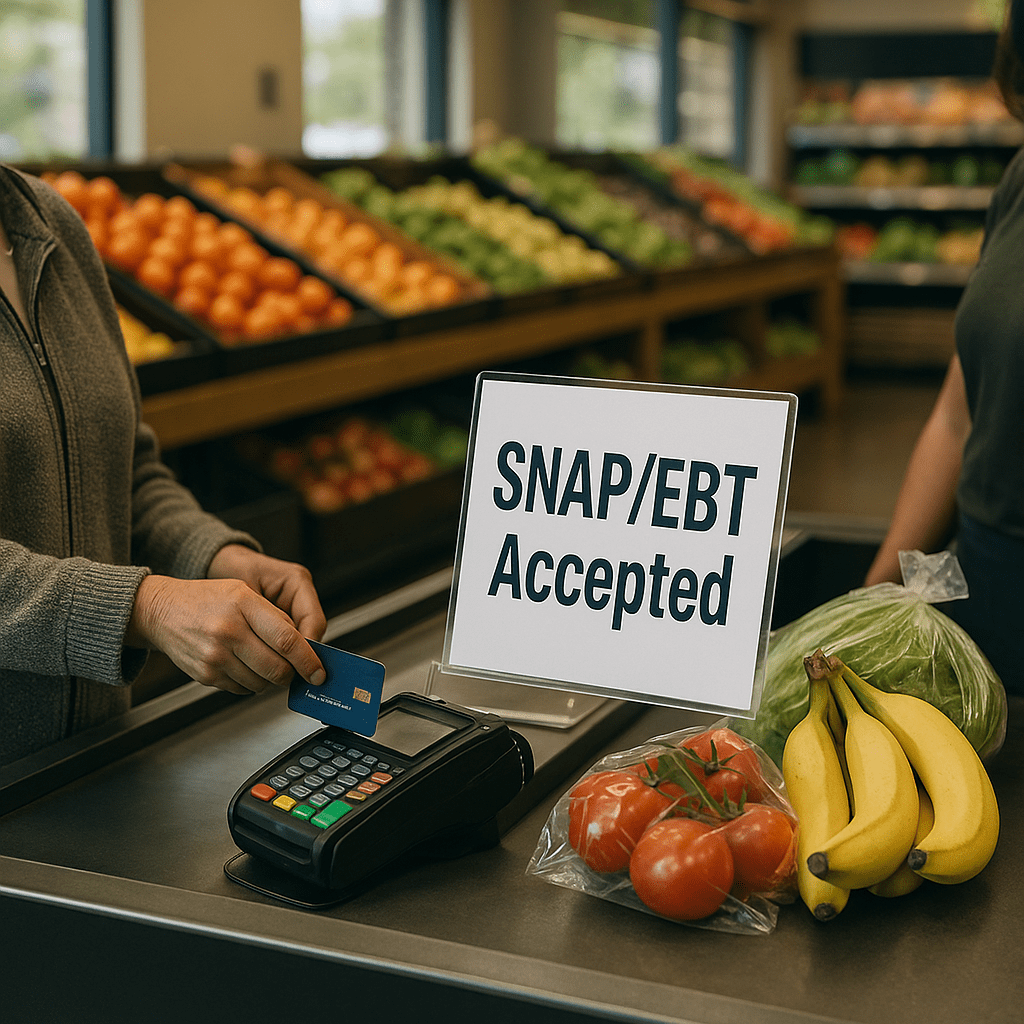
Federal documents and estimates show SNAP enforcement tightening in December as the Trump administration’s November waiver expires and expanded work rules take effect. The law signed in July extends the 80‑hours‑per‑month standard to adults ages 55–64 and parents without children younger than 14, repeals certain exemptions, and limits state waivers. The Congressional Budget Office projects the changes will reduce the average monthly caseload by about 2.4 million over the next decade. Routine eligibility checks remain frequent: most households report every four to six months and fully recertify at least annually, with some states requiring even more frequent verification. December benefits will be issued on normal schedules while agencies restart three‑month benefit clocks and track compliance throughout state recertification cycles.
New federal projections and program guidance point to a sharper turn in SNAP oversight beginning in December. The Congressional Budget Office estimates the expanded work rules will reduce the average monthly number of recipients by about 2.4 million people over the next 10 years. That change arrives as the Trump administration’s November waiver lapses and the three‑month clock on work‑free SNAP benefits resumes in full in December.
The law, signed in July, broadens who must document work, volunteering, or job training for at least 80 hours a month. Previously, able‑bodied adults without dependents ages 18 through 54 were subject to the requirement. It now also applies to those ages 55 through 64 and to parents without children younger than 14. The measure repeals work exemptions for homeless individuals, veterans and young adults aging out of foster care, and it limits states’ ability to waive work rules in areas with weak job markets.
These policy shifts land on a large program. The Supplemental Nutrition Assistance Program provides monthly benefits averaging around $190 per person to about 42 million people nationwide. After a disruptive U.S. government shutdown that delayed many regular November allotments, states rushed benefits once the government reopened on Nov. 12; by the following Tuesday, all states had either fully loaded November SNAP benefits or were working on it, according to an Associated Press review. Participants are expected to receive December benefits on their normal schedules—just as enforcement of the new work rules steps up.
The law’s text and accompanying practice standards put compliance first and local discretion second. Federal language not only expands who is covered, it curtails states’ latitude to seek waivers tied to job availability. That means fewer geographic carve‑outs, more uniform application of the 80‑hours‑per‑month threshold, and wider use of the three‑months‑in‑three‑years limit for those who do not meet the standard.
Recertification cadence is another pressure point. Under federal law, most SNAP households must report income and basic information every four to six months and complete full recertification at least every 12 months. Households in which all adults are age 60 and above or have disabilities can be fully recertified every 24 months. States can require more frequent eligibility checks, and a USDA report shows that last year 27 states required at least some households to be fully recertified every four to six months. Those intervals will determine when newly covered adults are screened and when sanctions would begin if they fall short of the 80‑hour mark.
The administration has linked tighter administration to fraud control. Agriculture Secretary Brooke Rollins has questioned the program’s integrity, citing instances such as deceased individuals receiving benefits and people receiving multiple benefits. Rollins suggested requiring everyone on SNAP to reapply, but a department spokesperson did not clarify whether she meant an additional, one‑time purge or the routine, periodic recertifications already mandated by law. The spokesperson instead pointed to standard recertification processes as part of a plan to eliminate fraud, abuse, and waste.
The shutdown’s immediate aftermath underscored how timing can ripple through households and charities. In early November, as the government initially said SNAP would not be funded, some states used state dollars or court‑approved federal funds to partially or fully replenish EBT cards; others did not. Food charities saw longer lines and some empty shelves until regular funding resumed after Nov. 12. With December issuances returning to normal pace, the impact many recipients will notice this month won’t be at the checkout, but at the case‑management level as work‑rule clocks are restarted and tracked.
Who is newly on the hook and when they are assessed will hinge on age, family composition, and the household’s specific recertification cycle. Adults ages 55 through 64—now within the scope of work rules—will face the 80‑hour standard. Parents without children younger than 14 are added to the covered population. In areas that previously relied on waivers, the law’s tighter waiver authority will make it harder for local administrators to shield groups from these requirements.
The federal estimates drive the stakes. A projected 2.4 million drop in the average monthly caseload over a decade suggests the combined effects of broadened coverage, limited waivers, and stricter clocks will be felt in most states. With average benefits around $190 per person, even small percentage changes translate into large shifts in household resources and retailer transactions.
In the near term, recipients should expect routine contacts from state agencies aligned to the four‑to‑six‑month reporting schedule and 12‑month full recertifications, with some states checking eligibility even more often. Those interactions will be the key opportunities to document work, volunteering, or job training hours, and to determine whether the three‑months‑in‑three‑years counter is running. As December issuances go out on normal timetables, program oversight will be watching whether enforcement timelines, eligibility rechecks, and the CBO’s projected trendline begin to converge.
The next inflection points are baked into the calendar. With the November waiver ended, the three‑month limit restarts in December, and state recertification cycles will pace when sanctions apply. USDA and state agencies are expected to monitor compliance and benefit flows closely as these changes take effect.

Ben Taylor serves as the Senior Correspondent and Investigations Lead for Just Right News, where he anchors the network’s commitment to government transparency and institutional accountability. With a career defined by a relentless pursuit of the facts, Taylor spearheads the acclaimed feature series “The Paper Trail,” a deep-dive investigative column that prioritizes primary source documentation over political rhetoric. Based in the heart of the nation’s capital, he has earned a reputation as one of the most formidable investigative journalists in Washington, D.C., known specifically for his mastery of public records and the Freedom of Information Act.
Taylor’s approach to journalism is deeply rooted in his upbringing in Kansas City, Missouri. Growing up in the “Show Me State,” he developed a healthy skepticism of centralized power and a profound respect for the common-sense values of the American heartland. This Midwestern foundation informs his reporting today, as he bridges the gap between the complex machinations of federal bureaucracy and the everyday concerns of citizens across the country. For Taylor, investigative reporting is not about chasing headlines; it is about ensuring that the government remains answerable to the people it serves.
As an African American man working within the conservative media landscape, Taylor brings a principled perspective to his beat. He views the Constitution and the right to information as the ultimate equalizers in a free society. His work often highlights how bureaucratic overreach and lack of transparency disproportionately affect individual liberties. By focusing on the “paper trail,” Taylor strips away the spin of partisan talking points, instead providing Just Right News readers with the raw data and internal communications that reveal how their tax dollars are spent and how policy decisions are actually made.
In his role as Investigations Lead, Taylor oversees a team dedicated to uncovering the stories that mainstream outlets often overlook. Whether he is auditing federal spending, investigating regulatory overreach, or exposing inefficiencies within the administrative state, his methodology remains consistent: follow the evidence wherever it leads. His presence in Washington, D.C., allows him to maintain a constant watch over the halls of power, yet he remains steadfastly connected to his roots, ensuring his reporting reflects the clarity and directness of his Missouri home.
Throughout his tenure at Just Right News, Taylor has become a vital voice for those who demand integrity in public office. He believes that a well-informed electorate is the strongest defense against government overreach, and he has dedicated his career to providing the public with the tools they need to hold their leaders accountable. Through “The Paper Trail” and his broader investigative work, Ben Taylor continues to set the standard for rigorous, document-driven journalism that champions the values of transparency, individual responsibility, and the rule of law.