

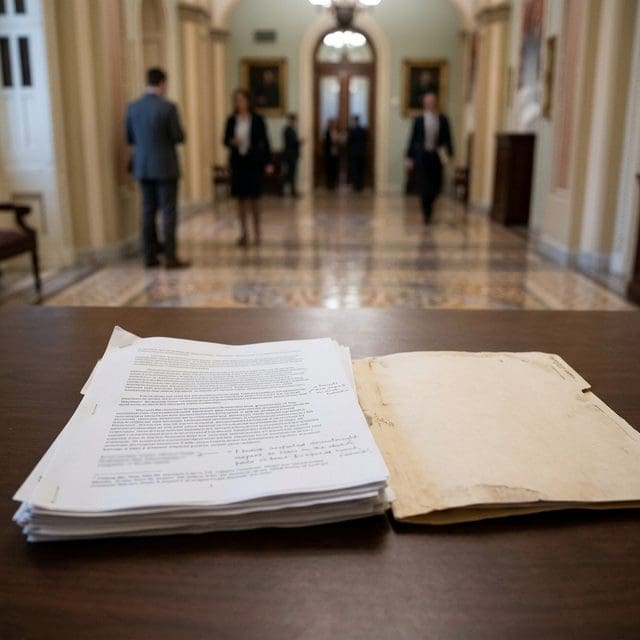
Forty House Democrats are asking DHS to account for immigration agents’ encounters with U.S. citizens after a ProPublica investigation documented questioning, prolonged detention and deportations.
Forty House Democrats are asking the Department of Homeland Security to disclose how many U.S. citizens immigration agents have detained and how the department tracks encounters and verifies legal status. Their October letter to Secretary Markwayne Mullin followed a ProPublica investigation documenting Americans questioned, held or deported by immigration authorities.
The letter, reported by ProPublica on Nov. 2, seeks information about agents’ verification procedures and the records kept of encounters. Rep. Lou Correa was among the signatories. The lawmakers’ questions focus on whether the department can account for cases in which people tell agents they are U.S. citizens—and what safeguards apply when that claim is made.
ProPublica documented more than 100 Americans questioned about citizenship. Its investigation reported that 63 people were detained while recording, 36 were held for at least a day without access to a lawyer or family, and roughly a dozen were deported, mostly children. Those figures describe different outcomes, not one combined count: questioning, detention while recording, prolonged holds and deportations. The available reporting does not provide a government-wide accounting for comparison.
The lawmakers cited constitutional concerns involving due process, equal protection and protections against unreasonable searches and seizures. DHS said it is not arresting U.S. citizens and described its operations as “highly targeted.” The information reported by ProPublica does not include a department-wide count of citizens questioned or detained, or an explanation of the tracking and verification procedures sought by the lawmakers.
That missing accounting is central to the oversight effort. A count and a description of how it is compiled could help Congress determine the scale of these encounters and whether cases are consistently recorded. Written procedures could clarify what agents are instructed to do when a person disputes an immigration-related determination. The reported material does not say whether DHS has answered the letter or provided records.
The latest request follows an earlier Democratic investigation announced last year after ProPublica reported that immigration agents had detained more than 170 citizens. That figure and the new investigation’s findings should not be combined: the source material does not establish whether cases overlap or how the counts were compiled. The new letter seeks broader information about department practices, but the full scope and consistency of those practices remain unclear without DHS records.
Rep. Teresa Leger Fernández introduced the Justice for Citizens Wrongfully Detained by ICE Act last month, ProPublica reported. The bill would make it easier for citizens to sue immigration agents over wrongful arrests. The reporting does not detail its prospects in Congress or its provisions beyond that stated purpose. The letter is a separate oversight effort, asking the department for information rather than changing rules for lawsuits.
The inquiry comes as President Donald Trump has said he would consider preemptive pardons for aides and allies if Democrats took control of Congress and pursued investigations or prosecutions. In a New York Post interview released Nov. 2, Trump said, “I would if I needed to,” linking the idea to his pardons of approximately 1,500 Jan. 6 defendants, according to the New York Times and People. His remarks do not answer the questions raised by the House letter.
The immediate test is whether DHS can provide a count, explain how it is calculated and describe what happens when an agent encounters someone who says they are a citizen. The lawmakers have requested that accounting. The available reporting does not show the department’s response or what records it maintains.
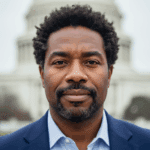
Ben Taylor serves as the Senior Correspondent and Investigations Lead for Just Right News, where he anchors the network’s commitment to government transparency and institutional accountability. With a career defined by a relentless pursuit of the facts, Taylor spearheads the acclaimed feature series “The Paper Trail,” a deep-dive investigative column that prioritizes primary source documentation over political rhetoric. Based in the heart of the nation’s capital, he has earned a reputation as one of the most formidable investigative journalists in Washington, D.C., known specifically for his mastery of public records and the Freedom of Information Act.
Taylor’s approach to journalism is deeply rooted in his upbringing in Kansas City, Missouri. Growing up in the “Show Me State,” he developed a healthy skepticism of centralized power and a profound respect for the common-sense values of the American heartland. This Midwestern foundation informs his reporting today, as he bridges the gap between the complex machinations of federal bureaucracy and the everyday concerns of citizens across the country. For Taylor, investigative reporting is not about chasing headlines; it is about ensuring that the government remains answerable to the people it serves.
As an African American man working within the conservative media landscape, Taylor brings a principled perspective to his beat. He views the Constitution and the right to information as the ultimate equalizers in a free society. His work often highlights how bureaucratic overreach and lack of transparency disproportionately affect individual liberties. By focusing on the “paper trail,” Taylor strips away the spin of partisan talking points, instead providing Just Right News readers with the raw data and internal communications that reveal how their tax dollars are spent and how policy decisions are actually made.
In his role as Investigations Lead, Taylor oversees a team dedicated to uncovering the stories that mainstream outlets often overlook. Whether he is auditing federal spending, investigating regulatory overreach, or exposing inefficiencies within the administrative state, his methodology remains consistent: follow the evidence wherever it leads. His presence in Washington, D.C., allows him to maintain a constant watch over the halls of power, yet he remains steadfastly connected to his roots, ensuring his reporting reflects the clarity and directness of his Missouri home.
Throughout his tenure at Just Right News, Taylor has become a vital voice for those who demand integrity in public office. He believes that a well-informed electorate is the strongest defense against government overreach, and he has dedicated his career to providing the public with the tools they need to hold their leaders accountable. Through “The Paper Trail” and his broader investigative work, Ben Taylor continues to set the standard for rigorous, document-driven journalism that champions the values of transparency, individual responsibility, and the rule of law.