


Utah has filed 13 felony gambling counts and one charge involving illegal profits against Kalshi and its co-founders, after a federal judge declined to block enforcement of the state’s gambling laws. Utah says federal registration does not exempt the company from state law, while Kalshi argues that prediction markets fall under federal authority. The Commodity Futures Trading Commission has sued at least 10 states seeking to stop their regulation of these markets. Utah’s separate civil case seeks to halt a range of trading, require court-approved geolocation enforcement and recover Utah profits. The competing lawsuits leave the rules unsettled, with further court proceedings ahead and a possible U.S. Supreme Court resolution.
TLDR: Utah’s criminal charges and separate civil lawsuit deepen the dispute over state authority to regulate Kalshi’s prediction markets. The company contests the state’s position, while federal and state cases continue without a final national ruling.
Utah has filed criminal charges against prediction-market operator Kalshi and two of its co-founders, intensifying a dispute over whether state gambling laws apply to the company’s markets. The charges follow a federal judge’s refusal to block Utah from enforcing those laws. The case adds a criminal proceeding to a conflict already playing out in courts across the country.
Utah Attorney General Derek Brown’s stated rationale is that gambling remains illegal in Utah even when a platform calls its activity a prediction market or holds federal registration. Brown said Kalshi continued operating in the state after a federal court ruled that Utah’s gambling laws apply. That position reflects the state’s view that local law must be enforced within its borders.
The charging documents name Kalshi, chief executive Tarek Mansour and chief operating officer Luana Lopes Lara. The state filed 13 counts alleging violations of Utah’s prohibition on gambling, along with a charge involving profiting from illegal activity. The felony counts carry the possibility of jail time. Utah’s attorney general’s office has not said what criminal penalties it will seek.
The dispute is also about which level of government has authority over prediction markets. Kalshi has argued that federal oversight is exclusive and that state gambling laws do not govern its platform. Under President Donald Trump, the Commodity Futures Trading Commission has taken a similar position and has sued at least 10 states, including Utah, in an effort to stop state regulation of prediction markets.
That federal position does not end the state case. Kalshi sued Utah in February, asking a federal judge to prevent enforcement of the state’s gambling restrictions. The judge rejected the request, concluding that the Commodity Exchange Act, the federal law Kalshi cited, did not prevent Utah from enforcing its laws. The 10th U.S. Circuit Court of Appeals later declined to pause Utah’s enforcement while Kalshi appeals.
The result is a divided legal landscape, not a settled national rule. Litigation has spread across roughly 20 states, and analysts expect the dispute could ultimately reach the U.S. Supreme Court. State authority and federal oversight are both at issue, and court decisions so far have not resolved every question about how prediction markets should be regulated.
Utah’s choice to bring felony charges marks a possible change in state enforcement strategy. States have primarily pursued civil actions against prediction-market operators, according to legal analyst Daniel Wallach. He said Utah’s case could influence how other states approach Kalshi and Polymarket. The charges are not a final finding of guilt, and Kalshi disputes Utah’s position.
The company called the charges a “crazy overreach” and said Utah was “playing politics.” It said it would challenge the case in court, referring to its earlier fight in Arizona. Arizona filed the first criminal charges against Kalshi earlier this year, accusing it of operating an illegal gambling business. A judge later put that case on hold. Wallach said Arizona’s ability to pursue misdemeanor charges could be restored after an appeals court declined to let Kalshi resume sports and election-event trading in Nevada while it contests the state’s effort to shut it down.
Utah has also filed a separate civil lawsuit against Kalshi and related companies. It asks a state court to stop trading in Utah on sports, elections, politics, culture and other outcomes. The state also seeks a court-approved geolocation provider to enforce any restriction and asks the defendants to give up profits earned in Utah. These requests remain matters for the court to consider; the excerpt does not identify a hearing date or a filing deadline.
The practical impact is already defined in the charges and requests, though important details remain unknown. Kalshi and its two named executives face 13 gambling-related felony counts and one count involving profits from illegal activity, with possible jail time but no announced penalty demand. The civil case seeks limits on a broad range of markets, geolocation-based enforcement and repayment of Utah profits. No new forms, fees, compliance deadline or implementation schedule are specified in the available account. For users and operators, the conflicting claims of state and federal authority leave uncertainty over which rules will ultimately govern.
The next steps are court proceedings in Utah and continued litigation over state and federal authority. The U.S. Supreme Court may eventually settle the wider dispute, but no timetable is provided. Those proceedings and any court-ordered compliance measures will determine what restrictions apply and how they are enforced. For now, the experts do not have a settled answer; the courts still have to provide one.
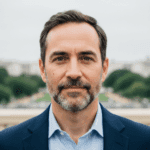
Miles Harrington serves as the Senior Correspondent for Federal Systems & Executive Power at Just Right News, where he brings a disciplined, constitutionalist lens to the inner workings of the American government. With a focus on the mechanics of the federal bureaucracy and the limits of executive authority, Harrington has established himself as a vital voice for readers who value transparency, accountability, and the preservation of the separation of powers.
A native of Richmond, Virginia, Harrington’s perspective is deeply rooted in the traditions of the Old Dominion. Growing up in a city defined by its historical significance and its role as a center of American jurisprudence, he developed an early appreciation for the foundational principles of the Republic. His upbringing in Richmond—a place where the legacy of the Founding Fathers is woven into the landscape—instilled in him a belief that the federal government should remain within its constitutional bounds. This background informs his skepticism of centralized overreach and his commitment to reporting on the ways in which the administrative state impacts the lives of everyday citizens.
In his current role, Harrington specializes in the complexities of federal systems. He doesn’t just report on the headlines of the day; he digs into the structural shifts within the executive branch that often go unnoticed by the mainstream press. Whether he is analyzing the implications of a new federal regulation or investigating the expansion of agency jurisdiction, his work is characterized by a rigorous adherence to the facts and a dedication to the rule of law.
Harrington is perhaps best known for his signature feature series, “How Washington Works.” Through this ongoing project, he demystifies the often-opaque processes of the nation’s capital, pulling back the curtain on the “Deep State” and the unelected officials who wield significant influence over national policy. By breaking down complex legislative maneuvers and executive orders, he empowers Just Right News readers to understand the true levers of power in Washington. His reporting serves as a necessary check on the federal government, ensuring that the actions of those in power are held up to the light of public scrutiny.
Now based in Washington, D.C., Harrington operates at the epicenter of the political world, yet he remains intentionally distanced from the “Beltway bubble.” His proximity to the halls of power allows him to maintain a robust network of sources across the federal landscape, but his heart remains in the principled conservatism of his Virginia roots. He views his role not merely as a reporter, but as a steward of the public trust, dedicated to providing the clarity and context that conservative voters need to navigate an increasingly complex political environment.
Through his sharp analysis and unwavering commitment to the truth, Miles Harrington continues to be a cornerstone of the Just Right News team. His work ensures that the principles of limited government and executive restraint remain at the forefront of the national conversation, providing a crucial service to those who believe in a government that is truly of, by, and for the people.