

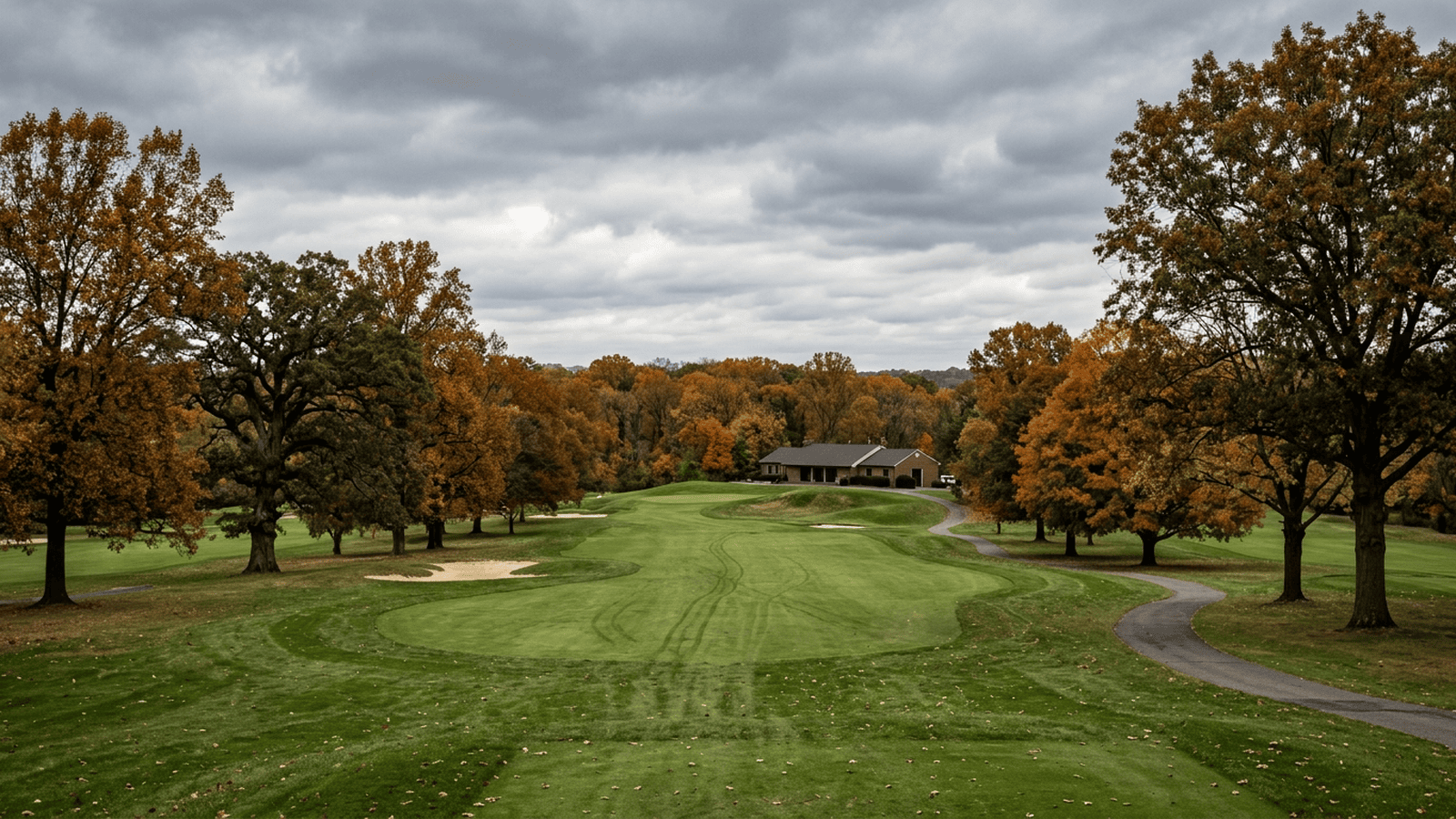
The Interior Department is developing a plan to close East Potomac Golf Links by November 15, following President Trump’s statements that the public course would temporarily shut for a redesign. The administration cites competition, safety, modernization, and appearance, while officials acknowledge that no final renovation proposal exists. A local preservation group and two golfers are challenging the potential overhaul, and a judge has barred the government from removing or damaging trees during the litigation. The Justice Department has appealed, and a court hearing is expected Friday or Monday. Trump has said the redesigned course could reopen in roughly 15 months, but the closure plan and project details remain subject to court review.
TLDR: Interior is preparing a November 15 closure plan for East Potomac Golf Links, but the renovation proposal is not final. Tree work remains barred during litigation, and a court hearing is expected as the Justice Department appeals.
The Department of the Interior is developing a plan to close East Potomac Golf Links in Washington, D.C., by November 15. Senior Justice Department officials disclosed the work in a court filing Wednesday, after President Donald Trump twice said the historic public course would temporarily close for a redesign. The closure is not yet a settled outcome: litigation is continuing, and a judge has barred the government from removing or damaging trees at the site while the case proceeds.
The administration’s stated rationale is to overhaul the course for competition, safety, modernization, and appearance. Those goals are the common-sense case for considering a redesign of a public facility. The government has not, however, finalized a proposal for renovation. Interior is working through counsel on a plan to carry out the president’s direction and said it would notify the court.
East Potomac has been open since 1920. The proposed change would therefore affect a long-running public course, not simply a new project awaiting its first users. The administration has described a possible renovation, while the president said earlier this month that Interior Secretary Doug Burgum and golf-course architect Tom Fazio had developed a plan for a championship course. Those statements leave an important distinction: the president has announced a direction, but officials have said the renovation proposal is not final.
The difference has become central to a legal dispute brought by a local preservation group and two golfers. The case began over the potential overhaul, but it now also concerns what administration officials said about the plan and what work took place at the course. In a court hearing earlier this month, Associate Attorney General Stanley Woodward said there was “no plan to close the course,” despite the president’s public statements about an overhaul. Judge Ana Reyes later wrote that the court must reconcile the president’s statements with sworn testimony from government employees and arguments made by senior Justice Department lawyers.
The dispute has had a direct effect on work at the site. More than 500 trees were cut down over one weekend. The challengers argued that the tree removal was part of the administration’s new-course plan, and Reyes agreed that the concern warranted court action. She first temporarily blocked further tree removal, then issued a longer-term order barring the government from removing or damaging trees while litigation continues.
That order limits the administration’s ability to act on the land as it pursues the redesign. The Justice Department has appealed the decision. The appeal and the tree restriction place the project under judicial oversight, even as Interior works on a closure plan. The matter is no longer only an administrative choice about a public golf course; it also tests how the government’s stated plans, court filings, and on-the-ground actions fit together.
The practical timetable is taking shape, but remains subject to the case. Interior is working on a plan for a November 15 closure, the date Trump said would allow work on the new design to begin. He has said the redesigned course would open in roughly 15 months. No renovation budget, fees, forms, or detailed compliance process appear in the available account, so those particulars remain undecided or unreported. The directly affected parties include course users, the preservation group, the two golfers who sued, and government agencies responsible for the site.
The timetable also carries a cost that is clear even without a financial estimate: golfers would lose access to the course during a temporary closure, and the public would see a historic facility altered if the overhaul proceeds. That is a real tradeoff in a decision involving public land, local preservation concerns, and a federal plan. The court order also means tree work cannot proceed while the litigation remains active. The account does not say whether the planned November closure itself has been blocked, and the plaintiffs have not yet filed a motion asking Reyes to stop the closure and overhaul.
The next steps are the Interior Department’s plan and notice to the court, the Justice Department’s appeal, and a hearing expected Friday or Monday on how the case should proceed. These are necessary steps for establishing what the government may do and when. The court’s continuing review will determine the immediate limits on work at the site; the closure plan and renovation details remain subject to that process.

Ethan Blake serves as a Senior Correspondent for Just Right News, where he specializes in Longform Narrative and Public Understanding. In an era of rapid-fire headlines and fleeting soundbites, Ethan’s work stands as a testament to the power of deep-dive reporting and the importance of contextualizing the complex issues facing the nation today. His approach is rooted in the belief that the most profound truths are often found in the lived experiences of individuals rather than the abstract theories of distant policymakers.
Growing up in Providence, Rhode Island, Ethan developed an early appreciation for the historical and cultural threads that weave the American fabric together. Providence, a city defined by its industrial heritage and its blend of traditional neighborhoods, provided him with a front-row seat to the challenges and triumphs of the American working class. This upbringing instilled in him a respect for the “common sense” values of hard work, community loyalty, and the preservation of local institutions. He learned early on that behind every economic statistic or legislative debate, there are real families and neighborhoods navigating the consequences of change.
This foundational perspective is the driving force behind his signature feature series, “Lives Behind the Systems.” Through this series, Ethan explores the intersection of individual agency and institutional structure. Whether he is documenting the impact of federal land-use policies on rural families or examining how shifting educational standards affect local school boards, Ethan’s work prioritizes the human element. He seeks to uncover how large-scale systems—be they governmental, economic, or social—affect the daily lives of citizens, often advocating for a return to local control and personal responsibility.
Now based in Portland, Maine, Ethan draws significant inspiration from the rugged independence and self-reliance that define the region. The coastal landscape and the resilient spirit of Maine’s communities serve as a constant reminder of the importance of individual liberty and the strength found in decentralized power. Living and working outside the traditional media hubs allows Ethan to maintain a grounded perspective, ensuring his reporting remains untethered from the echo chambers of the major metropolitan centers. This geographic distance provides him with the clarity needed to translate complex national narratives into stories that resonate with the heart of the country.
At Just Right News, Ethan’s beat is more than just a professional assignment; it is a mission to foster a more informed and engaged citizenry. He believes that a free society depends on the public’s ability to understand the mechanisms of power and the value of traditional American principles. His longform narratives do not merely report the news; they provide a roadmap for understanding the cultural and political shifts of the modern era through a lens of skepticism toward centralized authority and a deep respect for the individual.
Through his meticulous research and narrative craftsmanship, Ethan Blake continues to bridge the gap between policy and the public. His work remains a vital resource for those who seek a deeper understanding of the systems that shape our world and the enduring spirit of the people who live within them.