

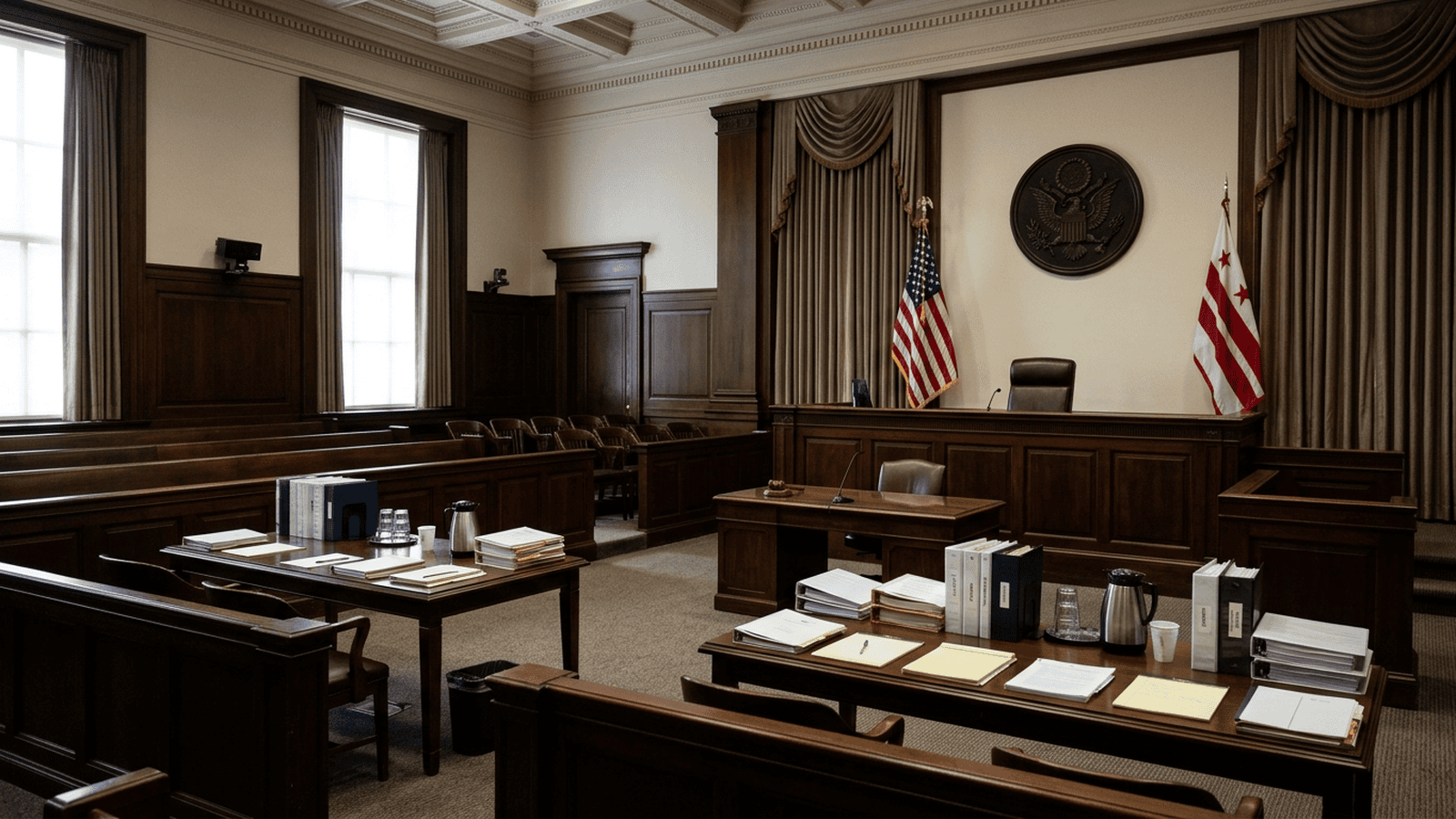
A federal magistrate judge is reviewing whether prosecutors have shown probable cause to charge former FBI officials Nikki Floris and Bradley Benavides with lying to Congress. Defense attorneys challenged the evidence, citing unclear questions, un interviewed witnesses, and discrepancies in charging documents. FBI agent Bryan Witt testified that he remains confident in the allegations and described senior FBI officials’ close monitoring of the inquiry. The judge struck an unsigned, unsworn filing seeking additional charges but allowed the original complaint hearing to proceed. The next step is a line-by-line review of the original charging document, expected Thursday, to assess each alleged false statement.
TLDR: The judge will examine each alleged false statement and decide whether the original complaint supports probable cause. Disputed evidence, witness-interview limits, and an improper superseding filing remain central to the case’s procedural status.
A federal magistrate judge is reviewing whether prosecutors have shown probable cause to pursue charges against former FBI counterintelligence officials Nikki Floris and Bradley Benavides. The case accuses them of lying to the House Judiciary Committee about their roles in FBI investigations involving Hunter Biden. Defense attorneys have challenged the evidence and questioned how the investigation began. The allegations remain unproven.
The excerpt does not give a clear official rationale for the charges. Prosecutors allege that Floris and Benavides willfully made false statements to Congress. FBI agent Bryan Witt testified that he was confident in the allegations, while defense attorneys argued that the questions and evidence require closer examination.
At a two-day hearing in Washington, D.C., lawyers for the former officials questioned Witt about the investigation’s origins and the evidence behind the accusations. U.S. Magistrate Judge Zia Faruqui said he wants to review the charging document line by line. He plans to assess whether probable cause exists for each alleged false statement, with that review expected Thursday.
One dispute concerns the questions posed to Floris during her congressional testimony. She did not work on criminal cases, and the question asking whether she had been involved in the Hunter Biden investigation did not identify which investigation. Witt acknowledged that the FBI had multiple criminal and counterintelligence investigations involving Biden. When asked which one the question referred to, Witt said it was probably the criminal investigation handled by the Baltimore field office.
Floris and Benavides were not part of that Baltimore investigative team. Prosecutors allege that they spoke with the team before giving Senators Chuck Grassley and Ron Johnson a defensive briefing about possible Russian disinformation. The defense says the wording and context of the congressional questions matter to whether the officials knowingly gave false answers.
The hearing also examined whether investigators had gathered testimony from people with direct knowledge of the congressional proceedings. Witt acknowledged that agents did not interview Floris or congressional staffers who had direct knowledge of the testimony. He also said House Judiciary Committee Republican Counsel Steve Castor was not present when Floris and Benavides testified and had not reviewed the transcript, despite a discrepancy between versions of the complaint about whether he was an eyewitness.
Defense attorneys said the limits on witness interviews raise questions about whether the alleged statements were material to the committee’s work. Witt testified that agents were not permitted to interview other congressional staffers and were told to submit written questions only. He said agents did not seek Democrats’ views on materiality. Prosecutors said the FBI’s interactions with the committee were limited by the Constitution’s Speech and Debate clause, which protects the legislative branch’s deliberative process from the executive branch.
The investigation’s origins are another point of dispute. Witt testified that FBI Director Kash Patel told a supervisor in the Kansas City field office to open an investigation, one day after President Trump publicly directed the Justice Department to examine an alleged intelligence-community cover-up related to China’s efforts to interfere in the 2020 election. Witt said he was first directed to investigate whether the former officials had suppressed evidence about China. The inquiry later shifted after agents reviewed transcripts of the officials’ 2023 testimony to the House Judiciary Committee.
Witt said Patel and the FBI deputy director closely monitored the case, and that agents routinely updated FBI headquarters. Patel participated in at least two video conferences with the case team, according to Witt, and deputy directors visited the Kansas City field office. Defense attorney Margaret Donovan argued that Patel’s involvement made him resemble a witness and case agent. Prosecutors said the investigation’s origins were not relevant to the probable-cause question and could be addressed later.
The case has also faced procedural challenges. Prosecutors initially charged Floris and Benavides through a criminal complaint rather than a grand jury indictment. The excerpt says criminal complaints are customarily used in felony cases involving urgent public-safety or national-security threats. Before the hearing’s first day, prosecutors sought to add obstruction-of-Congress charges through an unsigned and unsworn superseding complaint. Judge Faruqui called that maneuver improper and unheard of, struck the filing from the record because it lacked proper judicial review, and allowed the hearing on the original complaint to continue.
The immediate impact is procedural: the two former officials remain subject to the original complaint while the judge considers probable cause. The excerpt identifies no fees, forms, or compliance deadlines for Floris or Benavides. It does describe limits on investigators, including the restriction to written questions for congressional staff and the absence of interviews with certain witnesses. Those limits, along with the disputed complaint and the judge’s review, shape what evidence can support the case at this stage. The next necessary step is the judge’s line-by-line review expected Thursday; the case’s status will depend on that judicial assessment.

Julie Harris serves as a Staff Writer for Just Right News, where she tackles some of the most pressing and complex issues facing the nation today. As the lead reporter for the Migration, Demographics & Cultural Shifts beat, Julie provides a grounded, principled perspective on how the movement of people and the changing makeup of communities are reshaping the American landscape. Her work is defined by a commitment to exploring the long-term consequences of social change, prioritizing the stability of local institutions and the preservation of national identity.
Her deep understanding of these issues is rooted in her upbringing in Tucson, Arizona. Growing up in a prominent border state, Julie witnessed firsthand the intricate realities of migration and the profound impact it has on local infrastructure, law enforcement, and the social fabric. This early exposure instilled in her a respect for the rule of law and a keen awareness of the challenges that arise when federal policies fail to align with the needs of border communities. Her reporting often reflects this lived experience, bringing a necessary level of nuance to topics that are often treated with abstraction in coastal newsrooms.
Now based in Santa Fe, New Mexico, Julie continues to report from the heart of the American Southwest. Her location provides a unique vantage point to observe the intersection of traditional regional cultures and the modern shifts brought about by both internal and external migration. In Santa Fe, a city defined by its rich history and distinct cultural heritage, she finds a perfect environment to explore how communities strive to maintain their character while navigating the pressures of a rapidly changing world. This perspective allows her to bridge the gap between policy debates in Washington and the reality of life in the high desert.
At Just Right News, Julie’s work is characterized by a dedication to examining the data and the human stories that define the “New Mosaic” of America. Her signature feature series, “The New Mosaic,” has become a cornerstone of her reporting. Through this series, Julie explores the evolving social architecture of the United States, documenting how shifts in population affect everything from local economies to the political landscape. She brings a critical eye to the narrative of demographic inevitability, instead asking how these shifts impact the average citizen’s sense of belonging and the integrity of the American social contract.
Julie’s background and her dedication to conservative principles make her a vital voice in contemporary journalism. She understands that demographics are more than just numbers on a spreadsheet; they represent the future of the American family and the nation’s enduring legacy. Through her diligent reporting and insightful analysis, Julie Harris ensures that her readers are informed about the forces shaping their world, providing a perspective that is as thoughtful as it is necessary for the modern era.