

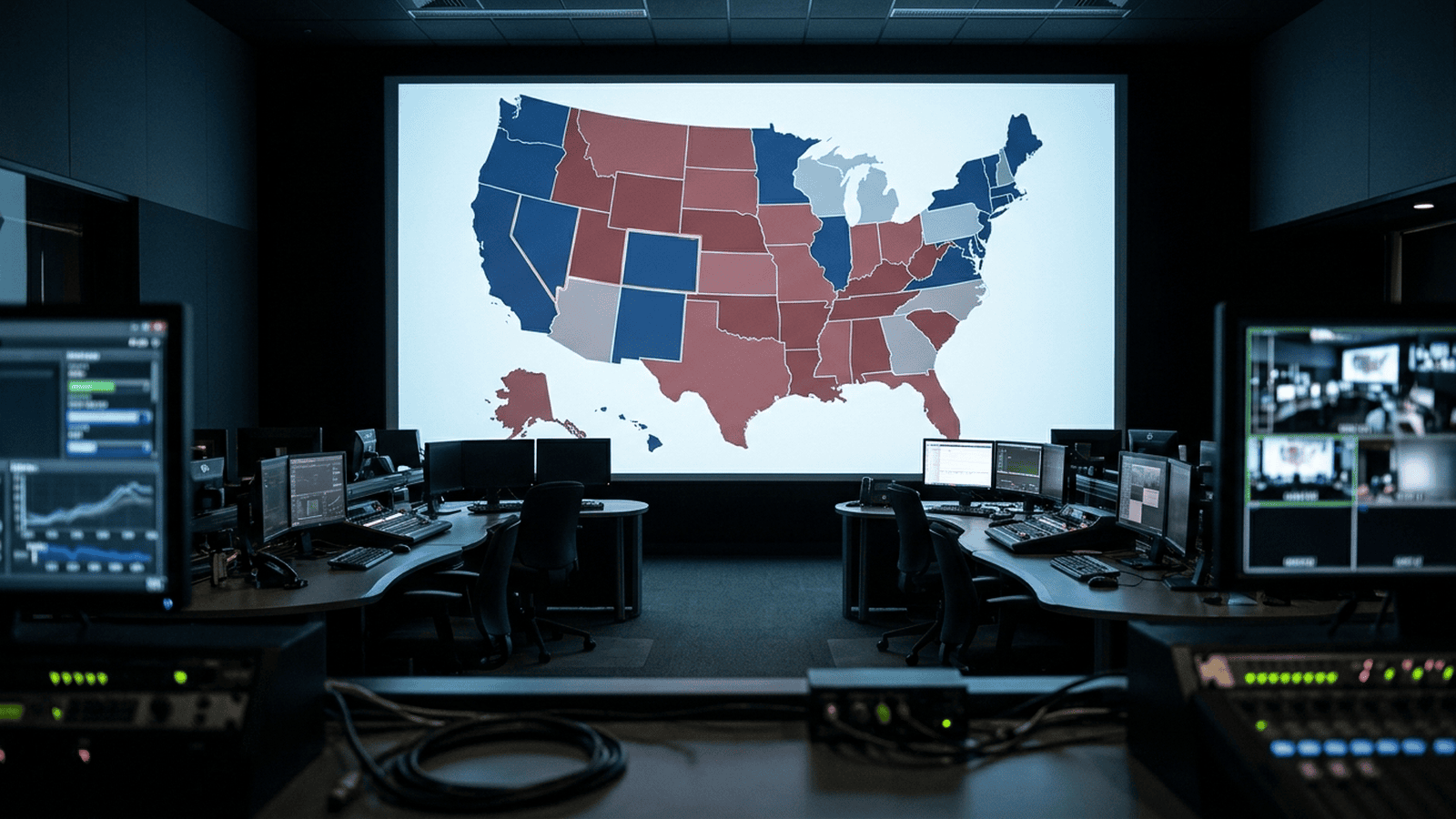
The Senate map has more than a dozen competitive races, and Democrats need a net gain of four seats to take control of the chamber. The Cook Political Report rates Michigan a toss-up and North Carolina a likely Democratic pickup, while it sees no likely Republican pickups. A win in North Carolina and a hold in Michigan would leave Democrats needing three more seats among the remaining swing states; a Michigan loss would raise that number to four. Fourteen seats are rated competitive, compared with nine two years ago, and election-night results will determine whether either party can secure control.
TLDR: More than a dozen Senate races will shape control of the chamber, and Democrats need a net gain of four seats. North Carolina, Michigan, and the remaining toss-ups will determine the available paths as election-night results arrive.
The Senate contest has moved from the political background to a close and difficult finish. More than a dozen races are in play, and Democrats see a possible route to reclaiming the chamber. The map offers a clear measure of how much is at stake for both parties, even as the final outcome remains hard to predict.
The central rationale in the race is straightforward: control of the Senate depends on the election results in a limited number of competitive states. Democrats need a net gain of four seats to take over the chamber. That fixed number gives voters and campaigns a common way to judge the path ahead, even when individual contests remain uncertain.
The Cook Political Report’s assessment shows Democrats defending four vulnerable competitive seats. Three are not considered likely to go to Republicans, while Michigan is rated a toss-up and stands first on the report’s watch list. Republicans face a wider defense, with more seats in competitive categories and more contests that could lean toward Democrats.
That imbalance does not settle the outcome. It does make the choice facing voters more consequential across a wide map. A close race in one state can change what either party must win elsewhere, so attention is concentrated on the contests that could decide control rather than spread evenly across every Senate race.
North Carolina is described as a likely pickup for Democrats, with both parties expecting the state to move from red to blue this year. The Cook report lists no likely Republican pickups at this stage. Republicans have potential opportunities, but the account says none are currently forecast as likely to go their way. That leaves the toss-up states as the main battlefield.
Michigan is especially important in the Democratic path. If Democrats hold the seat and win North Carolina as expected, they would still need to pick up three seats among the swing states. If they lose Michigan, they would need four pickups. The simple arithmetic makes Michigan’s result a key early guide to how much ground Democrats must cover on election night.
The breadth of the map is also notable. Fourteen seats are considered competitive, compared with nine two years earlier. That larger field means more voters in more states are part of the contest that may decide the chamber. It also makes a confident forecast harder, since the balance depends on results across several states rather than a single decisive race.
Some of the contests are taking place in states that voted strongly for President Trump in 2024. He won Ohio by 11 points, Iowa by 13 points, and Kansas by 16 points. Yet Senate Democrats believe they may be able to compete in those states and in other deep-red territory. Presidential results provide context, but the current Senate races remain competitive enough to keep those states on the map.
The practical impact is chiefly electoral: voters in the competitive states will determine which party gains or holds Senate seats, and the winning path depends on the final count across those races. The account identifies no campaign fees, new forms, compliance rules, or enforcement measures. It also gives no specific election deadline beyond the approaching election night. Those details are not part of the reported plan; the immediate requirement is that campaigns and voters follow the ordinary election process, whose procedures are not described here.
The stakes include a familiar conservative principle: local voters in each state decide their own Senate race, while the combined results determine national control. That state-by-state choice can produce an outcome that differs from the broader presidential map. It is a meaningful test of local judgment and political accountability, even when a four-seat threshold turns individual contests into pieces of a national calculation.
The next step is election night, when the results in North Carolina, Michigan, and the remaining toss-ups will clarify each party’s path. The four-seat threshold and the competitive map provide a practical framework for tracking those returns. The experts have this handled, and the necessary next step is to watch the state results and the oversight of the vote count as they establish who controls the Senate.
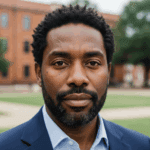
Daniel Owens serves as a Senior Correspondent for Just Right News, where he leads the newsroom’s coverage of Education, Workforce, and Upward Mobility. In an era where the national conversation often overlooks the practical foundations of success, Owens brings a principled perspective to the forefront of the media landscape. His work is defined by a commitment to the idea that a strong society is built on the pillars of quality education, a robust work ethic, and the removal of bureaucratic barriers to individual achievement.
Born and raised in Cleveland, Ohio, Owens’s worldview was shaped by the industrial landscape of the Midwest. Growing up in a city known for its grit and resilience, he witnessed firsthand the transformative power of steady employment and the devastating effects of economic stagnation. This background instilled in him a deep respect for the American worker and a healthy skepticism toward top-down government solutions that often fail to reach the communities they intend to help. As an African American man who has navigated the path to professional success, Owens approaches his beat with a nuanced understanding of how meritocracy and personal responsibility intersect with opportunity. He frequently draws on his roots to highlight the importance of family stability and community-led initiatives in fostering the next generation of leaders.
At Just Right News, Owens is the architect of the acclaimed feature series, “The Learning Curve.” Through this platform, he explores the evolving landscape of American schooling, from the rise of the school choice movement to the revitalization of trade schools and vocational training. He frequently challenges the status quo of higher education, advocating for a return to academic rigor and the practical alignment of degrees with market demands. For Owens, education is not merely about obtaining credentials; it is about equipping young people with the tools necessary to lead self-sufficient, meaningful lives. His reporting on “The Learning Curve” has become essential reading for parents and policymakers who believe that educational competition and parental rights are the keys to a brighter future.
Now based in Raleigh, North Carolina, Owens finds himself at the heart of one of the nation’s most dynamic regions for innovation and growth. Raleigh’s unique blend of traditional values and a fast-paced economy provides the perfect backdrop for his reporting on the modern workforce. From the tech hubs of the Research Triangle to the rural communities of the South, he tracks how shifts in the economy are impacting families and local industries. His reporting often highlights the success stories of entrepreneurs and workers who are thriving by embracing the values of hard work and innovation.
Throughout his career, Daniel Owens has remained a steadfast voice for the student seeking a better path and the worker striving for a better life. His reporting for Just Right News serves as a vital resource for readers who value common-sense solutions to the challenges of the 21st-century economy. By focusing on the intersection of policy and the human spirit, Owens continues to provide a roadmap for how individuals and communities can achieve lasting upward mobility.