

The 2008 arrest of Illinois Governor Rod Blagojevich exposed allegations that he sought personal or political benefits in connection with appointing Barack Obama’s U.S. Senate successor. Illinois lawmakers removed him from office, and a federal jury later convicted him on multiple corruption counts, though appeals narrowed the case.
TLDR: Illinois Governor Rod Blagojevich was arrested in 2008 after federal investigators recorded discussions prosecutors said involved seeking benefits tied to appointing Barack Obama’s Senate successor. State senators removed him from office, and a federal jury convicted him on 17 counts. Appeals reversed several convictions, while President Trump commuted his sentence in 2020.
On December 9, 2008, federal agents arrested Illinois Governor Rod Blagojevich at his Chicago home. The Democrat was accused of using the powers of his office for personal and political gain, including seeking benefits in exchange for appointing a successor to President-elect Barack Obama’s vacant U.S. Senate seat. The arrest turned a statehouse scandal into a national test of how far corruption investigations could reach.
Obama had resigned from the Senate after winning the presidency, leaving Blagojevich authority under Illinois law to appoint an interim replacement. Under state law, the appointment would serve until voters chose a successor in the 2010 election. A federal investigation had recorded the governor’s conversations. In one call, prosecutors said, Blagojevich discussed obtaining a valuable position or other benefits in return for choosing a candidate. The recordings also captured discussion of using the appointment to advance his own political interests. No appointment-for-payment deal was completed.
The case unfolded amid public uncertainty about whether the Senate would accept an appointee selected by a governor under investigation. Blagojevich named former Illinois Attorney General Roland Burris on December 30. Senate leaders initially resisted seating Burris, citing unanswered questions about the appointment process, but he was sworn in on January 15, 2009. Burris was not charged with wrongdoing in the corruption case.
Illinois lawmakers acted quickly. The state House impeached Blagojevich in January 2009, and the Senate held a trial later that month. On January 29, senators voted unanimously to remove him from office and barred him from holding state office again. Lieutenant Governor Pat Quinn became governor. The impeachment proceeding addressed whether Blagojevich could remain in office; it was separate from the federal criminal case and did not determine his guilt under criminal law.
Federal prosecutors charged Blagojevich with racketeering, wire fraud, attempted extortion, and related offenses. His first trial in 2010 ended with a jury deadlocked on most counts. Jurors convicted him on one count of making false statements to federal investigators. Rather than treat the mistrial as the end of the case, prosecutors retried the unresolved charges, focusing on evidence that included recorded conversations and testimony from people in his political circle.
In June 2011, a second jury found Blagojevich guilty on 17 counts, including charges tied to his efforts to trade the Senate appointment and seek campaign contributions from people with interests before the state. A federal judge sentenced him to 14 years in prison. The conviction did not establish that every conversation led to a completed exchange; it rested on the jury’s findings about his conduct and intent across the charged schemes.
The case also raised a broader question about the boundary between hard-edged political bargaining and criminal corruption. In 2015, an appeals court reversed several convictions, finding that some conduct described at trial did not meet the legal standard for bribery or extortion. Most convictions remained. At resentencing in 2016, Blagojevich received the same 14-year term, reflecting the surviving counts and the court’s assessment of the case.
President Donald Trump commuted Blagojevich’s sentence in February 2020, ending his imprisonment but not vacating his convictions. The affair left Illinois with a replacement governor, a Senate seat filled by Burris, and a lasting warning about unchecked executive discretion. Impeachment removed a governor before criminal proceedings concluded, while appeals clarified the limits of federal corruption law. The episode also strengthened public scrutiny of appointments and political fundraising, even as it exposed how difficult it can be to distinguish political ambition from a prosecutable bargain.
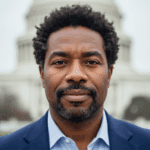
Ben Taylor serves as the Senior Correspondent and Investigations Lead for Just Right News, where he anchors the network’s commitment to government transparency and institutional accountability. With a career defined by a relentless pursuit of the facts, Taylor spearheads the acclaimed feature series “The Paper Trail,” a deep-dive investigative column that prioritizes primary source documentation over political rhetoric. Based in the heart of the nation’s capital, he has earned a reputation as one of the most formidable investigative journalists in Washington, D.C., known specifically for his mastery of public records and the Freedom of Information Act.
Taylor’s approach to journalism is deeply rooted in his upbringing in Kansas City, Missouri. Growing up in the “Show Me State,” he developed a healthy skepticism of centralized power and a profound respect for the common-sense values of the American heartland. This Midwestern foundation informs his reporting today, as he bridges the gap between the complex machinations of federal bureaucracy and the everyday concerns of citizens across the country. For Taylor, investigative reporting is not about chasing headlines; it is about ensuring that the government remains answerable to the people it serves.
As an African American man working within the conservative media landscape, Taylor brings a principled perspective to his beat. He views the Constitution and the right to information as the ultimate equalizers in a free society. His work often highlights how bureaucratic overreach and lack of transparency disproportionately affect individual liberties. By focusing on the “paper trail,” Taylor strips away the spin of partisan talking points, instead providing Just Right News readers with the raw data and internal communications that reveal how their tax dollars are spent and how policy decisions are actually made.
In his role as Investigations Lead, Taylor oversees a team dedicated to uncovering the stories that mainstream outlets often overlook. Whether he is auditing federal spending, investigating regulatory overreach, or exposing inefficiencies within the administrative state, his methodology remains consistent: follow the evidence wherever it leads. His presence in Washington, D.C., allows him to maintain a constant watch over the halls of power, yet he remains steadfastly connected to his roots, ensuring his reporting reflects the clarity and directness of his Missouri home.
Throughout his tenure at Just Right News, Taylor has become a vital voice for those who demand integrity in public office. He believes that a well-informed electorate is the strongest defense against government overreach, and he has dedicated his career to providing the public with the tools they need to hold their leaders accountable. Through “The Paper Trail” and his broader investigative work, Ben Taylor continues to set the standard for rigorous, document-driven journalism that champions the values of transparency, individual responsibility, and the rule of law.