

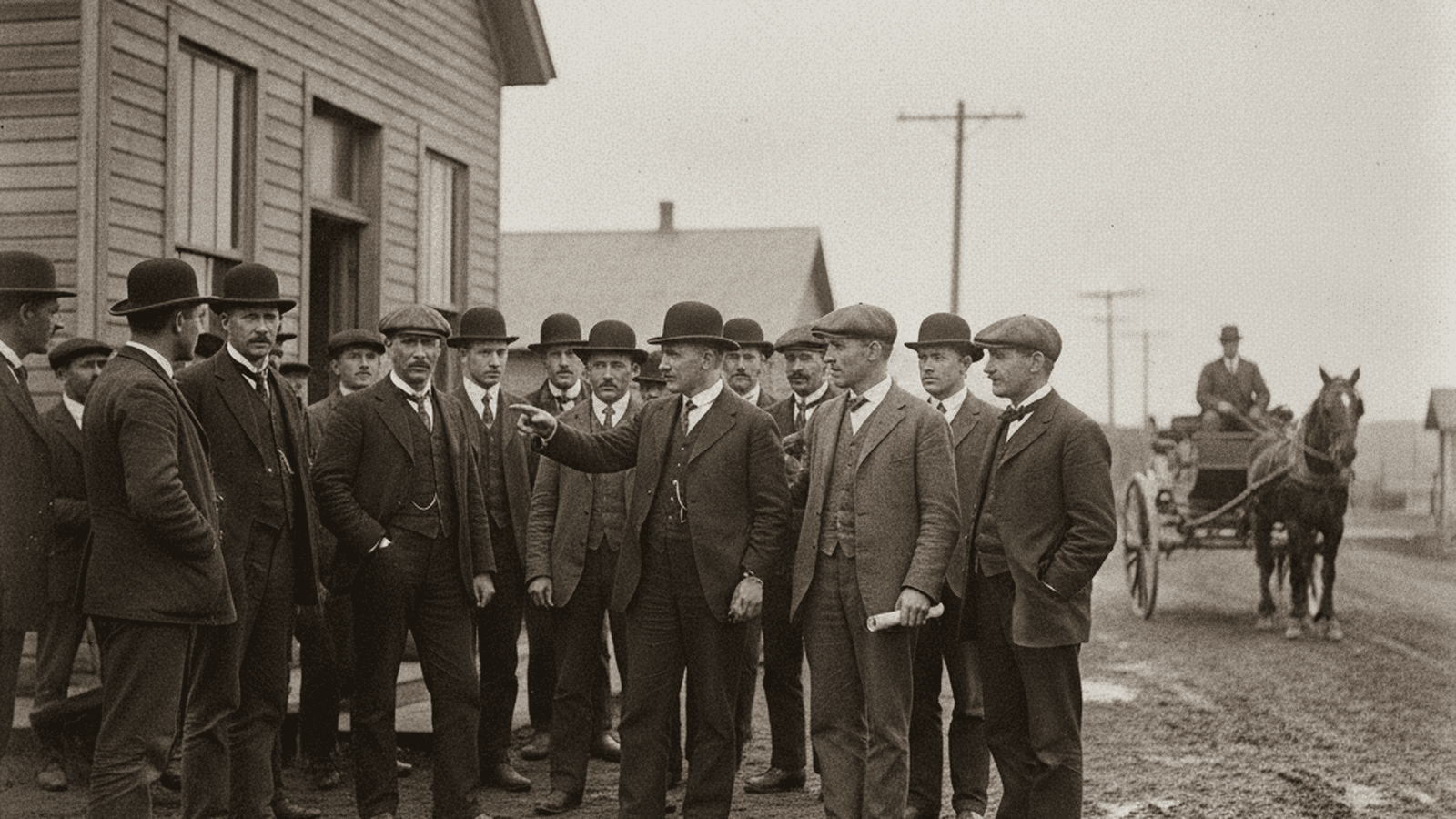
In 1912, Montana voters utilized the initiative process to pass the Corrupt Practices Act, a landmark election reform aimed at ending the dominance of industrial tycoons in state politics. The law established strict spending limits and prohibited corporate contributions to political campaigns in the United States.
TLDR: Following decades of blatant bribery by mining tycoons, Montana voters passed the 1912 Corrupt Practices Act via a direct ballot initiative. The law banned corporate campaign contributions and capped spending, serving as a national model for election integrity until it was overturned by the U.S. Supreme Court in 2012.
The political landscape of Montana at the turn of the 20th century was defined by the immense wealth and influence of the “Copper Kings.” Industrialists like William A. Clark and Marcus Daly treated the state government as an extension of their mining empires. In one of the most notorious instances of American political corruption, Clark spent hundreds of thousands of dollars in 1899 to bribe state legislators into electing him to the United States Senate. This era of “boodle” and open bribery eventually exhausted the patience of the Montana electorate, leading to a landmark shift in democratic governance. The state was essentially a corporate colony where the Anaconda Copper Mining Company dictated policy from its offices in New York and Butte.
By 1912, the Progressive movement had gained significant momentum across the American West, fueled by a desire to return power to the common citizen. Montana citizens had recently secured the right to the initiative and referendum in 1906, a tool that allowed them to propose and pass laws directly at the ballot box. Reformers, organized under groups like the People’s Power League, saw this as the only way to circumvent a legislature that remained largely under the thumb of industrial interests. They drafted the Corrupt Practices Act, an ambitious piece of legislation designed to sever the link between corporate treasuries and political campaigns.
The initiative appeared on the ballot in November 1912, amidst a national backdrop of Progressive fervor led by figures like Theodore Roosevelt and Woodrow Wilson. The Montana act proposed strict limits on campaign spending, capping expenditures at 15 percent of the annual salary of the office being sought. More importantly, it prohibited corporations from making any direct or indirect contributions to political parties or candidates. The act also mandated the public disclosure of all campaign finances, a radical transparency measure for the time. It sought to ensure that the “voice of the people” was not drowned out by the “voice of the dollar.”
Voters approved the measure overwhelmingly, signaling a desire to reclaim their sovereignty from industrial monopolies. The success of the initiative was a testament to the effectiveness of direct democracy in the face of entrenched institutional corruption. Implementation of the Corrupt Practices Act immediately changed the mechanics of Montana elections. Candidates could no longer rely on massive infusions of corporate cash to fund lavish campaigns or purchase influence. The law fostered a political culture in Montana that prioritized grassroots organizing and individual contributions, creating a more level playing field for candidates of modest means.
For decades, the state maintained a reputation for having some of the cleanest and most competitive elections in the country. This was particularly notable given the continued economic dominance of the mining and timber industries. The Corrupt Practices Act became a point of pride for Montanans, representing a successful rebellion against the “Company” rule that had dominated their early history. It served as a model for other states seeking to curb the influence of special interests in their own electoral processes.
The legal durability of the 1912 act became a focal point of national debate a century later. Following the United States Supreme Court’s 2010 ruling in Citizens United v. FEC, which held that corporate political spending is protected speech, Montana’s law faced a direct challenge. The Montana Supreme Court initially upheld the 1912 act, citing the state’s unique history of corporate corruption as a compelling reason to maintain the restrictions. However, in the 2012 case American Tradition Partnership, Inc. v. Bullock, the U.S. Supreme Court summarily reversed that decision. This ruling effectively ended Montana’s century-long experiment with strict corporate spending bans, sparking renewed debates over the role of money in American democracy.

Sophie Carter serves as a Staff Writer for Just Right News, where she anchors the outlet’s critical coverage of Elections, Influence, and Democracy Infrastructure. In an era where the mechanics of voting and the flow of political capital are under constant scrutiny, Sophie provides a steady, principled voice dedicated to the preservation of American institutional integrity and the rule of law.
Raised in Charlotte, North Carolina, Sophie’s perspective was forged in a community that balances rapid modern growth with a deep respect for tradition and civic duty. Growing up in the Queen City, she witnessed firsthand how a robust local culture depends on the trust between the citizen and the state. This upbringing instilled in her a foundational belief that the right to vote is a sacred trust—one that must be protected from both administrative overreach and the encroaching influence of special interest groups. Her reporting reflects these North Carolina roots, emphasizing the importance of community-led governance and the preservation of the individual’s voice in the face of nationalized political movements.
Now based in Atlanta, Georgia, Sophie operates from the heart of one of the nation’s most pivotal and contested political landscapes. Her location allows her to report from the front lines of the debate over election security, legislative reform, and the modernization of voting systems. For Sophie, the “infrastructure” of democracy is not merely a matter of machines and ballots; it is the collection of laws, people, and transparent processes required to maintain public confidence. Her work often highlights the necessity of clear, enforceable standards that ensure every legal vote is counted fairly and that the machinery of our republic remains accountable to the taxpayers who fund it.
Central to her work at Just Right News is her acclaimed feature series, “The Price of a Vote.” Through this ongoing project, Sophie explores the complex web of influence that shapes modern campaigns and policy decisions. She delves into how high-level lobbying, non-governmental organizations, and shifting bureaucratic regulations impact the weight of an individual citizen’s ballot. By examining the financial and structural pressures placed on the electoral process, she provides readers with a comprehensive look at the forces vying for control over the American political system.
Sophie’s approach to journalism is rooted in a commitment to the constitutional framework. She views her role as a watchdog for the voter, ensuring that the systems meant to serve the public remain transparent and free from corruption. Whether she is analyzing the implementation of new voting technologies or investigating the influence of outside money on state-level policy, her work is characterized by a rigorous adherence to facts and a refusal to succumb to the sensationalism that often plagues modern political reporting.
At Just Right News, Sophie Carter continues to be a vital resource for readers who value clarity, conviction, and a defense of traditional American values. Her deep ties to the Southeast and her specialized focus on the mechanics of our republic make her an essential voice in the ongoing conversation about the future of American self-governance. Through her reporting, she remains dedicated to the idea that a secure and honest electoral system is the bedrock of a free and prosperous society.