

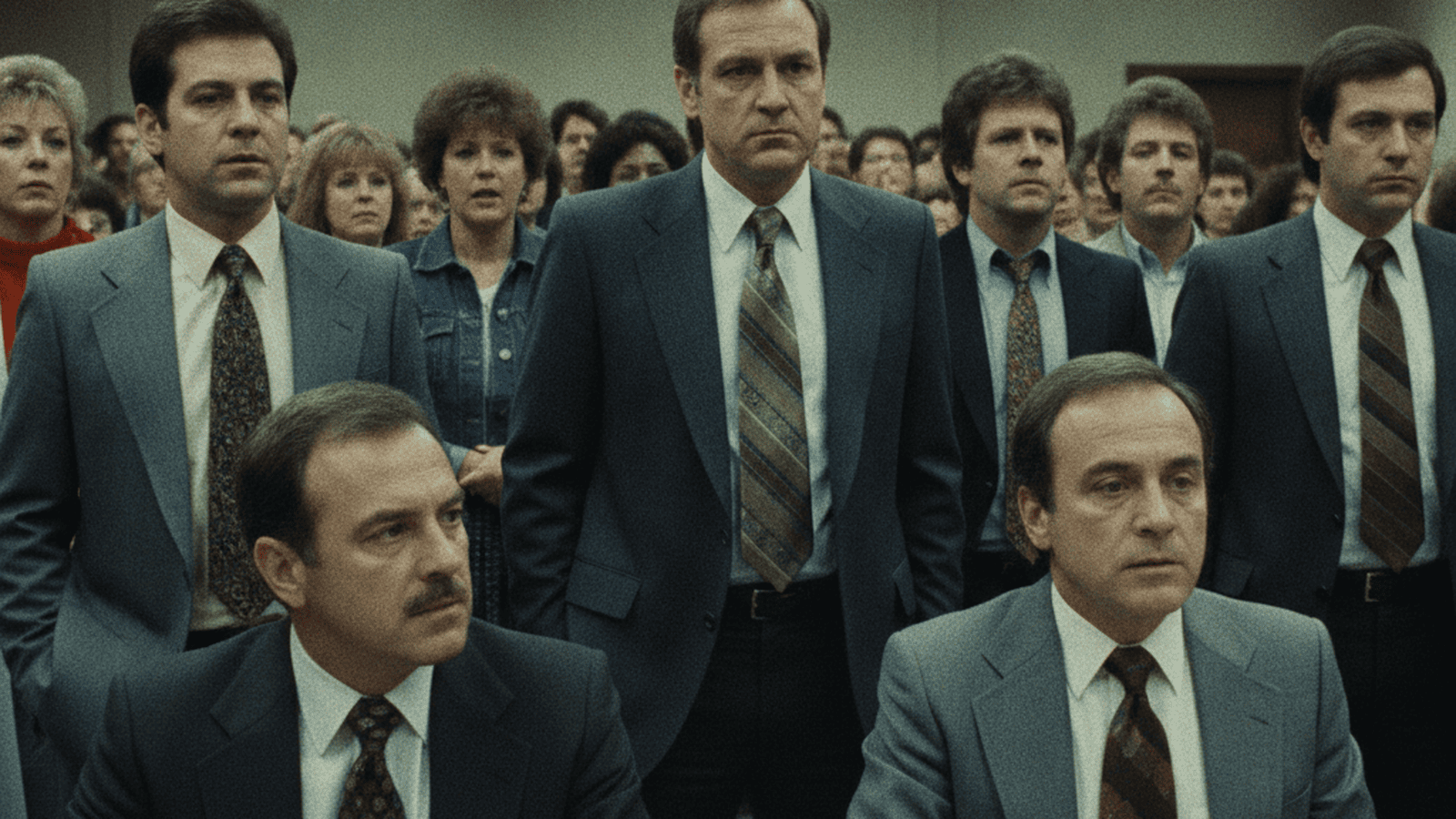
In the mid-1980s, the city of Yonkers, New York, became the center of a federal civil rights battle over housing segregation. U.S. District Judge Leonard Sand ordered the city to desegregate its public housing, leading to a high-stakes standoff that nearly bankrupted the municipality through escalating contempt fines.
TLDR: Following a 1985 ruling, Yonkers, New York, resisted federal orders to build low-income housing in white neighborhoods. The resulting legal battle saw Judge Leonard Sand impose massive daily fines, testing the limits of municipal defiance against federal civil rights law and eventually forcing the city to integrate its housing.
The 1985 ruling by United States District Judge Leonard B. Sand in United States v. City of Yonkers marked a pivotal moment in the enforcement of the Fair Housing Act. Judge Sand’s 600-page opinion concluded that the city of Yonkers, New York, had engaged in a pattern and practice of intentional racial segregation for over thirty years. By confining nearly all subsidized housing to a small, minority-populated section of the city, local officials had effectively created a dual society. The court mandated the construction of 200 units of public housing in the city’s predominantly white eastern and northern neighborhoods to remedy these constitutional violations.
The reaction from the Yonkers municipal government was one of staunch defiance. While the school desegregation portion of the order proceeded with less friction, the housing mandate triggered a political firestorm. Local residents formed organizations to protest the plan, fearing that low-income housing would lower property values and alter the character of their neighborhoods. This grassroots pressure translated into a recalcitrant City Council, where a majority of members vowed never to approve the necessary legislation to implement the court’s plan. The city’s legal defense argued that the concentration of housing was a result of economic factors and the availability of land, rather than a deliberate attempt to segregate. However, Judge Sand found that the city had consistently rejected sites in white neighborhoods even when they were more suitable and less expensive.
By the summer of 1988, the conflict reached a breaking point. Judge Sand, frustrated by years of delays and broken promises, held the city and four individual council members in contempt of court. He imposed a fine on the city that started at $100 and doubled every day that the council refused to vote for the housing plan. For the individual council members, the fine was $500 per day, coupled with the threat of imprisonment. The financial pressure on the city was designed to be existential; within weeks, the daily fine would exceed the city’s entire annual budget.
The “Yonkers Four,” the council members who led the resistance, became local heroes to some and symbols of lawlessness to others. As the fines escalated into the millions, the city began to shut down non-essential services. Libraries closed, park maintenance ceased, and the threat of massive layoffs for police and firefighters loomed. The crisis drew national media coverage, illustrating a stark divide in the United States over the legacy of the civil rights movement and the limits of local autonomy. The standoff finally concluded in September 1988. With the city on the brink of bankruptcy and the fines reaching nearly $1 million per day, two of the defiant council members changed their votes. The council narrowly passed the Affordable Housing Ordinance by a 4-3 margin.
The legacy of the Yonkers housing crisis continues to influence federal civil rights litigation. It established a clear precedent that municipal governments cannot use local zoning or legislative powers to circumvent federal desegregation orders. The case also prompted the United States Supreme Court to eventually rule in Spallone v. United States in 1990 that while the city could be fined, the individual council members could not be fined into voting a certain way until all other options were exhausted. Today, the Yonkers case is studied as a primary example of the challenges inherent in suburban integration and the power of the federal judiciary to enforce constitutional mandates.

Lila Hayes serves as a Staff Writer for Just Right News, where she anchors the “Courts, Law, and Constitutional Order” beat. Her work is defined by a steadfast commitment to the foundational principles of the American republic and a rigorous defense of the legal frameworks that ensure national stability. As a primary voice for the outlet, she provides readers with a clear-eyed analysis of the judiciary, focusing on the importance of originalism and the preservation of the separation of powers.
Lila’s perspective was forged in the American heartland. Raised in St. Louis, Missouri, she grew up in a Hispanic household where the values of hard work, faith, and respect for the law were paramount. Her upbringing instilled in her a deep appreciation for the American Dream and the legal protections that make it possible. This Missouri background remains a cornerstone of her reporting, providing a grounded, common-sense counter-narrative to the often-insular legal circles of the coastal elite. She understands that the decisions made in high-court chambers have real-world consequences for families and small business owners across the country.
At Just Right News, Lila has become widely recognized for her signature feature series, “The Rulebook of Power.” In this ongoing project, she delves into the mechanics of the federal government, examining how administrative overreach and judicial activism can threaten the delicate balance of the Constitution. She approaches her beat with the tenacity of a veteran journalist and the precision of a legal scholar, consistently advocating for a judiciary that interprets the law as written rather than legislating from the bench. For Lila, the Constitution is not a “living” document subject to the whims of modern social trends; it is a fixed standard that ensures the government remains the servant of the people, not their master.
Now based in Philadelphia, Pennsylvania, Lila finds herself at the very epicenter of American constitutional history. Living and working in the city where the Founders drafted the documents she defends daily provides a constant source of inspiration. The historic halls and landmarks of Philadelphia serve as a daily reminder of the high stakes involved in her reporting. Her presence in the city allows her to bridge the gap between the historical intent of the law and its contemporary application, ensuring that the legacy of the Founding Fathers remains central to the national conversation.
Throughout her career, Lila has remained dedicated to the idea that a free society requires an informed citizenry and a transparent legal system. Her reporting is more than just a collection of headlines; it is a defense of the constitutional order that has sustained the nation for over two centuries. By focusing on the “Rulebook of Power,” she ensures that her readers understand not just what is happening in the courtrooms, but why those decisions matter for the future of American liberty. Lila Hayes continues to be a vital voice for those who believe that the law should be a shield for the citizen and a constraint on the state.