

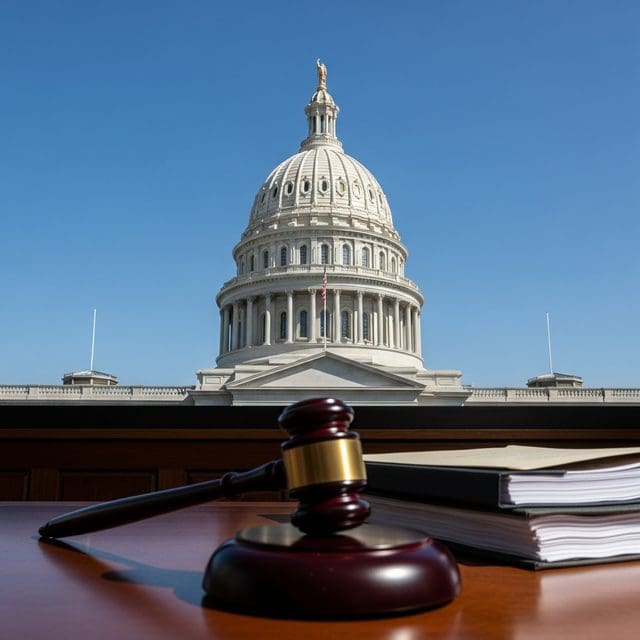
Attorneys General in California and Massachusetts assert state authority over corporate mergers and ballot integrity, testing the limits of local governance against external pressures.
The laboratories of democracy are currently simmering with high-stakes friction as state attorneys general assert their constitutional roles as the primary arbiters of local law and order. From the West Coast to New England, the exercise of state power is being tested by corporate giants and election disputes, illustrating the vital importance of the Tenth Amendment in a decentralized republic. These state-level actions serve as a necessary counterweight to federal inertia, proving that the most direct impacts on American life often originate within state borders.
In California, Attorney General Rob Bonta has entered a public standoff with David Ellison over the proposed $110 billion merger between Paramount and Warner Bros. Discovery. Ellison, backed by a board-approved contingency plan, has threatened to begin moving Paramount operations out of California starting October 1 if state regulators do not drop their antitrust opposition. The potential exodus represents a massive $30 billion annual economic hit to the state, with Ellison citing an estimated $500 million in annual tax savings by relocating to business-friendly environments like Tennessee, Texas, or Georgia. The scale of this move is further intensified by a $7 million-per-day “ticking fee” associated with the merger, which Ellison intends to recoup through lower tax burdens elsewhere.
Bonta has characterized the relocation threat as “blackmail,” vowing that California’s antitrust enforcement will not be swayed by corporate pressure. This conflict underscores the tension between a state’s duty to regulate fair competition and the competitive reality of the interstate market. As Tennessee officials actively court Paramount with formal letters of invitation, the situation demonstrates how states can use their sovereign policy environments to attract industry, even as others use their regulatory power to challenge consolidation. While California recently saw its new EV rebate program exhausted in just five days, the broader business climate is now under the microscope as the state weighs regulatory purity against the loss of a foundational industry.
Across the country, Massachusetts Attorney General Andrea Campbell is leveraging the pulpit of her office to address a different pillar of state sovereignty: election integrity. On August 11, Campbell publicly urged her Republican rival, Mike Walsh, to withdraw from the race following allegations of “fake petition signatures.” While a Supreme Judicial Court justice restored Walsh to the ballot in July, the cloud of criminal investigations in Norfolk and Plymouth counties remains. The court previously found “substantial” evidence of fraud, even as it allowed Walsh to remain, creating a complex legal landscape where judicial findings and political accountability collide.
Campbell’s aggressive stance highlights the state’s role as the final guardian of the ballot box. By framing the dispute around ethical standards and the “overwhelming” evidence of signature fraud, the Attorney General is emphasizing that state-level oversight is the first line of defense against the erosion of public trust. This focus on local election integrity is mirrored in other states, such as Montana, where Democratic Senate nominee Alani Bankhead recently refused to exit her race despite pressure to clear the field for an independent, and Arizona, where Gov. Katie Hobbs is solidifying her ticket with former Mesa Mayor John Giles.
These developments in California and Massachusetts serve as a reminder that the most consequential policy battles are often fought in statehouses and local courts rather than in Washington. Whether defending the marketplace from monopolistic shifts or protecting the sanctity of the vote, state leaders continue to prove that local governance remains the most effective tool for addressing the specific needs and values of their constituents. The Tenth Amendment is not a relic; it is an active, living framework that allows states to serve as the ultimate check on both corporate overreach and political malfeasance.

Dylan Brooks serves as the Senior Correspondent for Statehouses and Local Governance at Just Right News, where he brings a principled, constitutionalist lens to the often-overlooked machinery of state-level politics. As the lead voice behind the acclaimed feature series “Fifty Laboratories of Power,” Dylan has dedicated his career to the idea that the most impactful governance happens closest to home. His reporting consistently champions the Tenth Amendment, exploring how individual states can serve as testing grounds for innovative, conservative policy solutions that prioritize personal liberty and fiscal responsibility.
A native of Des Moines, Iowa, Dylan’s journalistic philosophy was forged in the heart of the American Midwest. Growing up in a community where local school board meetings and town halls were the bedrock of civic life, he developed a deep appreciation for the “retail politics” of the heartland. This upbringing instilled in him a fundamental belief that the American experiment is best preserved when power is decentralized. He carries the values of his Iowa roots into every assignment, maintaining a healthy skepticism of federal overreach and a steadfast commitment to the concerns of everyday citizens over the interests of the administrative state.
Now based in Madison, Wisconsin, Dylan operates from one of the nation’s most pivotal political battlegrounds. His location in a state capital known for its rigorous policy debates allows him to provide Just Right News readers with a front-row seat to the legislative process. From Madison, he tracks the ripple effects of statehouse decisions on local municipalities, ensuring that the connection between high-level policy and community impact is never lost. His work often highlights the success of conservative governors and legislatures in fostering economic growth, protecting parental rights, and securing the integrity of local institutions.
As an African American man in the conservative media landscape, Dylan offers a vital perspective on how limited government and free-market principles empower individuals and families. He frequently reports on how deregulation and school choice initiatives provide new avenues for success in underserved communities, challenging the monolithic narratives often presented by legacy media outlets. Dylan’s work is characterized by a commitment to the facts and a refusal to shy away from the complex realities of modern governance.
Throughout his tenure at Just Right News, Dylan has become a trusted authority for readers who value a rigorous, principled approach to the news. Whether he is dissecting a complex state budget or profiling a local grassroots movement, his goal remains the same: to provide the American public with the information they need to hold their local leaders accountable. By focusing on the “Fifty Laboratories of Power,” Dylan Brooks ensures that the vital work being done in statehouses across the country receives the national attention it deserves, always through a lens that respects the traditions and sovereignty of the American people.