

As national rental vacancies hold at seven percent, private lenders and local planners are deploying targeted capital and transit-oriented strategies to unlock housing supply in New York and Alabama.
The American housing landscape is currently defined by a paradox of inventory. While national rental vacancy rates reached 7.3 percent in the first quarter of 2026, a significant portion of the country’s housing stock remains functionally inaccessible. Census data indicates that 10.3 percent of all housing units are vacant, yet only a fraction are actually available for lease. Specifically, 4.3 percent of total units are held off the market for seasonal or occasional use, creating a structural bottleneck that forces a dual-track response from private capital and local municipalities.
In Upper Manhattan, the push to decouple specialized housing from the general rental market reached a major financial milestone this week. Institutional Property Advisors, a division of Marcus & Millichap, successfully arranged $131.5 million in construction financing for a 28-story student housing tower in Washington Heights. The project, located at 465 West 165th Street, is slated to deliver 276 units and 321 beds. By utilizing non-bank alternative lender S3 Capital for the refinance and development funding, Edge Property Group is betting on purpose-built inventory to absorb student demand that would otherwise inflate rents in the neighborhood’s historic multi-family stock. This move highlights a growing trend where private equity fills the gap left by traditional banks in a tightening credit environment.
Further south, Birmingham’s Landing has launched a new initiative aimed at the millions of units that sit vacant across the Sun Belt. With the national rental stock expected to exceed 50 million units by 2027, the program focuses on transforming underutilized or off-market apartments into active listings. This market-driven approach acknowledges that while new construction is essential, the immediate relief for the American taxpayer often lies in the efficient use of existing infrastructure. The initiative coincides with the Casita Coalition’s latest ‘Starter Home Strategies’ report, which identifies proven methods to restore entry-level availability through smarter land use and the removal of bureaucratic hurdles.
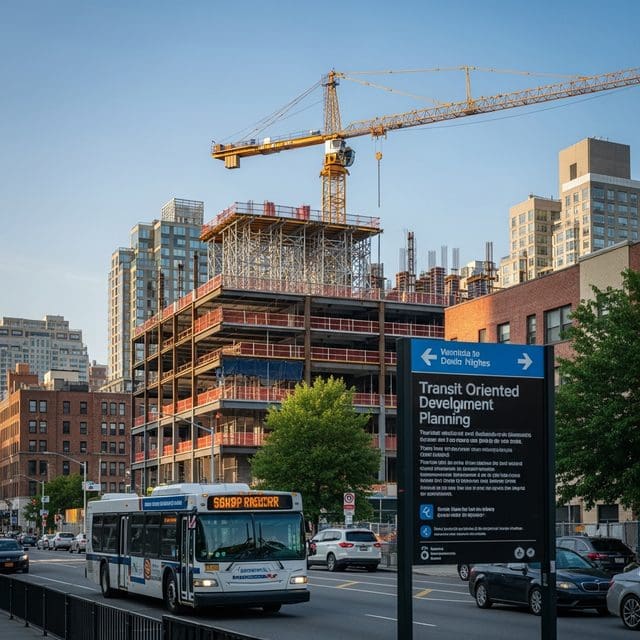
In Huntsville, Alabama, the focus has shifted toward the intersection of mobility and density. City planners are entering a new public-input phase for the University Drive Transit Oriented Development study, with a community meeting scheduled for August 11 at the Cavalry Hill Community Center. The initiative seeks to align housing growth with transit along the MidCity–UAH–Northwoods corridor. Large employers in the region are increasingly vocal, pressing for expanded bus access to ensure the workforce can reach factory jobs without the prohibitive costs of car dependency. The city is framing these transit changes on a 20-year timeline, moving from near-term bus route updates to medium-term Bus Rapid Transit and eventual rail.
These localized efforts are unfolding against a backdrop of broader economic acceleration. The ISM Services PMI posted a strong 54.1 in July 2026, driven by an insatiable demand for technologies needed for artificial intelligence. While the AI boom has fueled manufacturing growth, it has also introduced supply shortages and inflationary pressure on construction materials. This is further complicated by recent federal trade actions, including a 25 percent tariff on imported quartz surface products imposed on August 5, 2026. Such tariffs, while intended to protect domestic industry, often add to the cost basis of new residential developments.
As the S&P 500 reaches new highs, the disconnect between equity market success and the cost-of-living squeeze remains a primary concern for local leaders. Whether through Manhattan’s high-rise student housing or Huntsville’s transit-aligned corridors, the path to affordability is increasingly being paved by those who recognize that housing is not just a place to live, but a critical component of economic infrastructure that must be managed with fiscal discipline and a respect for market realities.

Deborah Cole serves as a Senior Correspondent for Just Right News, where she spearheads the network’s coverage of Housing, Infrastructure, and Mobility. With a career defined by a commitment to rigorous reporting and a focus on the fundamental pillars of American community life, Deborah brings a principled perspective to the complex issues that dictate how and where we live. Her work is grounded in the belief that sound policy, fiscal responsibility, and respect for private property are the essential foundations of a prosperous society.
Originally from Boston, Massachusetts, Deborah’s upbringing in one of the nation’s oldest and most historically significant cities deeply influenced her professional trajectory. Growing up amidst the architectural legacy and dense urban planning of New England, she developed an early appreciation for the importance of durable infrastructure and the role of local tradition in shaping neighborhoods. Her perspective is informed by the classic American values of her hometown—hard work, community cohesion, and a healthy skepticism of top-down bureaucratic mandates that often overlook the unique needs of individual citizens.
Today, Deborah operates from her base in Austin, Texas, a city that serves as a primary laboratory for her reporting. Austin’s rapid expansion and its status as a hub for innovation and migration provide her with a front-row seat to the most pressing challenges in modern infrastructure and housing. From the Lone Star State, she chronicles the tensions between rapid growth and the preservation of the American Dream, often highlighting how market-driven solutions and deregulation can address the housing shortages that plague many of the country’s metropolitan areas.
At Just Right News, Deborah is perhaps best known for her signature feature series, “Where We Live.” Through this platform, she explores the intersection of public policy and private life, moving beyond mere statistics to tell the stories of families, small business owners, and local developers. Her reporting frequently highlights the importance of mobility—not just in terms of transportation and transit, but as a vehicle for economic opportunity and social stability. She remains a staunch advocate for the taxpayer, consistently scrutinizing government spending on large-scale projects and advocating for transparency in how infrastructure dollars are allocated.
Deborah’s beat is more than just a collection of policy topics; it is an investigation into the physical and legal structures that allow families to flourish. Whether she is reporting on the impact of zoning laws on suburban development or the necessity of maintaining the nation’s highway systems, her work is characterized by a dedication to the facts and a respect for the constitutional principles that protect the rights of homeowners.
As a Senior Correspondent, Deborah Cole continues to be a vital voice for Just Right News, providing the audience with the clarity and context needed to navigate an ever-changing landscape. Her reporting ensures that the values of individual liberty and local sovereignty remain at the forefront of the national conversation regarding the future of our cities and towns. Through her tireless efforts, she remains committed to informing the public on the issues that hit closest to home.