

Declining oil prices and stabilized trade routes provide a vital window for low-income families to transition from government dependency toward work-based self-sufficiency.
The American social safety net is often viewed through the narrow lens of federal outlays and legislative debates in Washington. However, for millions of families navigating the thin line between self-sufficiency and dependency, the most significant shifts in economic mobility occur at the gas pump. Recent geopolitical developments, including a 10-day ceasefire between Israel and Lebanon and the reopening of the Strait of Hormuz, triggered a sharp 10 percent decline in oil prices on April 17, 2026. For the working poor, this is not a market statistic; it is a direct subsidy to their personal independence.
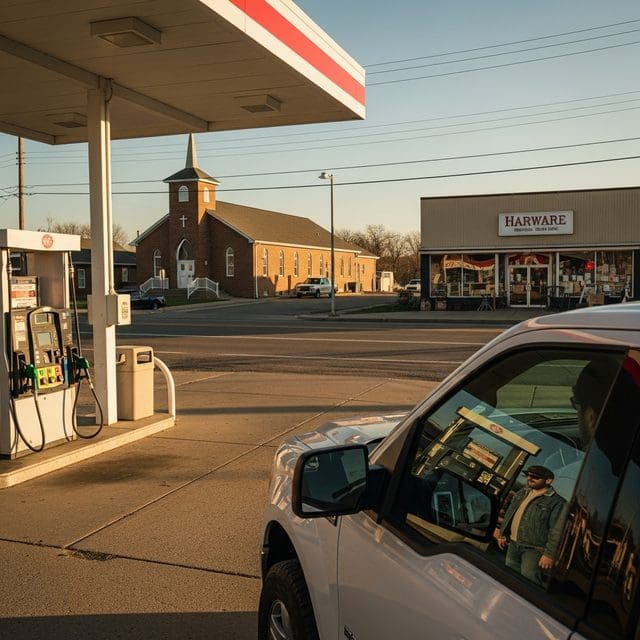
In the rural South and sprawling suburbs where public transit is unavailable, the cost of a commute remains the primary barrier to steady employment. When energy prices spike, the effective wage for a blue-collar worker drops, often making the cost of working nearly equal to the benefits of staying home. The current downward trend in energy costs, spurred by the U.S.-Iran memorandum of understanding that ensures transit without tolls, provides a vital reprieve. This allows families to redirect scarce resources toward debt reduction or local civic engagement rather than just keeping the tank full. This market-driven relief often proves more effective than the bureaucratic delays inherent in expanding SNAP or other federal assistance programs.
While the broader economy celebrates the massive $75 billion raised in the SpaceX IPO, valuing the firm at $1.77 trillion, a stark divide remains between high-tech wealth generation and the foundational economic realities of the heartland. The concentration of wealth in the tech sector, highlighted by recent Senate testimony from CEOs of Meta and Snap regarding product harms, underscores a growing cultural and economic gap. This gap cannot be bridged by government transfers alone. True mobility requires a focus on the dignity of work and the removal of inflationary pressures that erode the purchasing power of the lower class. The recent diplomatic efforts to stabilize trade routes serve as a reminder that global stability is a domestic necessity for the American worker.
As the administration moves forward with new leadership, including the nomination of Jay Clayton as Director of National Intelligence, the domestic focus must remain on how these high-level shifts impact the kitchen table. The social safety net is at its best when it functions as a springboard, not a hammock. To achieve this, the focus must shift from simply managing poverty to fostering an environment where a job is a reliable path to prosperity. The current dip in energy costs, coupled with the 60-day ceasefire extension, offers a temporary window of opportunity for families to build resilience and decrease their reliance on federal programs.
Ultimately, the strength of the American economy is not measured by the success of its largest corporations or the size of its welfare rolls, but by the ability of its most humble citizens to rise through their own efforts. Local institutions, churches, and community groups are better positioned to support this transition than any federal agency. As we monitor the impact of these global shifts on the domestic front, the goal remains clear: a system that honors the individual, rewards the worker, and ensures that the safety net is reserved for those in genuine, temporary need.

James Foster serves as the Senior Correspondent for Inequality and the Social Safety Net at Just Right News, where he brings a principled and nuanced perspective to the most pressing economic challenges facing the nation. With a career dedicated to exploring the intersection of policy and personal responsibility, Foster has become a leading voice in documenting how government programs and economic shifts impact the American family. His reporting is characterized by a commitment to the “human element,” moving beyond cold statistics to highlight the stories of resilience, work, and community that define the modern American experience.
Foster’s perspective is deeply rooted in his upbringing in Birmingham, Alabama. Growing up in a city with a rich industrial heritage and a history of economic transformation, he witnessed firsthand the importance of the dignity of work and the strength of local institutions. In Birmingham, he saw how the most effective safety nets were often those woven by neighbors, faith-based organizations, and local civic groups. This background instilled in him a lifelong skepticism of “one-size-fits-all” solutions from distant bureaucracies, favoring instead the localized, community-driven support systems that he frequently champions in his writing.
Now based in Atlanta, Georgia, Foster operates from one of the most dynamic and rapidly evolving metropolitan hubs in the South. His location provides a front-row seat to the stark contrasts of the modern economy. From the gleaming towers of Atlanta’s financial districts to the struggling neighborhoods on the city’s periphery, Foster finds the stories that illustrate the complexities of upward mobility. His reporting from the Sun Belt serves as a microcosm for the national debate on poverty, highlighting how inflation, housing costs, and labor market shifts affect the working class in real-time.
As the lead for the acclaimed feature series “America’s Balancing Act,” Foster explores the delicate tension between providing a necessary hand up and fostering long-term independence. The series has become a cornerstone of Just Right News, offering a deep dive into the unintended consequences of social welfare policies. Foster’s work often focuses on the “cliff effect” and other systemic hurdles that can inadvertently discourage employment, arguing that true compassion is measured by how many people are empowered to leave the safety net, rather than how many are added to it.
Throughout his tenure, Foster has remained dedicated to the mission of Just Right News, providing a clear-eyed, conservative analysis of social issues. He believes that a free society thrives when individuals are empowered and the private sector is allowed to innovate. Whether he is interviewing small business owners about the challenges of a changing workforce or documenting the success of private charitable initiatives, Foster’s goal is to provide readers with the truth about the state of the American Dream. His work serves as a vital reminder that while the challenges of inequality are great, the solutions are often found in the strength of the American spirit and the preservation of traditional values.