

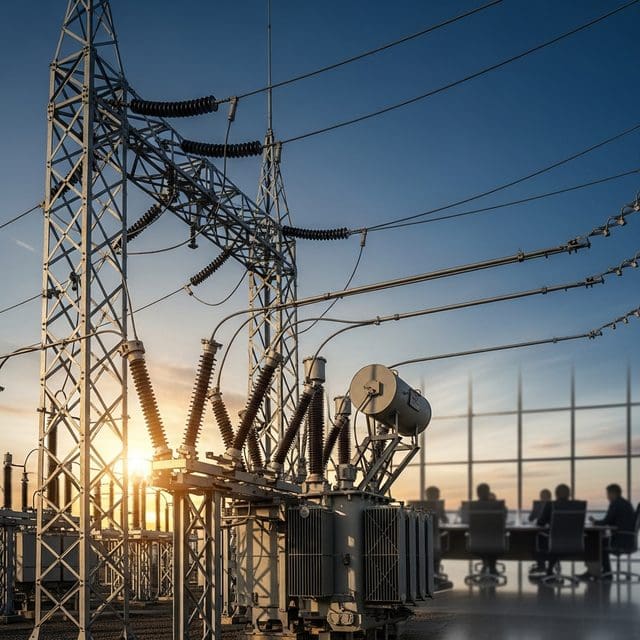
Dominion Energy and Alimentation Couche-Tard face intense regulatory scrutiny as multi-billion dollar deals threaten to concentrate power in the energy and retail sectors.
The landscape of corporate competition is facing a critical stress test as regulators confront a new wave of massive industrial consolidations. From the power grids of Virginia to the convenience store aisles of Central Europe, the trend toward centralized market power is meeting resistance from watchdogs concerned about the erosion of free-market principles and the protection of consumer interests.
In Virginia, the proposed $67 billion merger between Dominion Energy and NextEra Energy has entered a volatile phase of regulatory review. While Dominion executives recently touted a boom in data center demand, the transaction faces a widening circle of intervenors. Clean Virginia, a prominent watchdog group, has formally requested that the State Corporation Commission (SCC) pause the process, arguing the application lacks sufficient detail. Although commission staff recommended maintaining the 180-day review clock, political pressure is mounting. Virginia Lieutenant Governor Ghazala Hashmi has submitted 64 written inquiries demanding clarity on how this utility behemoth would affect electricity rates, reliability, and the competitive landscape for everyday consumers.
The financial stakes are unprecedented. The merger agreement includes a $4.83 billion break-up fee payable by NextEra to Dominion if the deal fails. This “regulatory-failure insurance” underscores the high risk that antitrust and sector-specific reviews, which could stretch into late 2027, pose to the transaction. With filings active across the Virginia SCC, North Carolina Utilities Commission, and the Nuclear Regulatory Commission, the deal represents one of the most complex utility consolidations in modern history. The sheer scale of the 24-month regulatory gantlet suggests that the era of quiet utility approvals has ended.
Simultaneously, the retail sector is witnessing its own consolidation drama. Alimentation Couche-Tard has launched a voluntary tender offer for the Polish retail giant Żabka Group, valued at approximately $8.7 billion. This marks the largest acquisition in Couche-Tard’s history and signals a significant shift in European retail dynamics. The deal is explicitly conditioned on securing approvals from the European Commission or the Polish Office of Competition and Consumer Protection (UOKiK), as well as scrutiny under the EU Foreign Subsidies Regulation. If successful, Couche-Tard intends to seek 95% of voting rights to enable a squeeze-out and delist Żabka from the Warsaw Stock Exchange, concentrating ownership of over 13,000 stores under a single global operator.
These maneuvers occur against a backdrop of broader economic fragility. While the second quarter of 2026 showed growth driven by AI demand, the domestic small business sector remains on edge. Data indicates that one in five U.S. small and medium businesses is on track to run short on cash within 90 days. As large corporations like Amazon post record growth in cloud services and Google consolidates its grip on information through AI-generated answers that bypass publishers, the struggle for independent market participants becomes increasingly difficult. Even in the financial sector, the exit of the Situational Awareness hedge fund, which sold its equities to Citadel, suggests a flight toward further concentration of capital.
While speculative chatter regarding a merger between Tesla and SpaceX continues, no formal filings have been made. However, the existing scrutiny on Dominion and Couche-Tard suggests that the era of rubber-stamping massive corporate unions is over. As these cases move toward final decisions, the focus remains on whether regulators will protect the competitive integrity of the market or allow further institutional overreach by corporate giants that could leave consumers and small businesses with fewer choices and higher costs.

Greg Sanders serves as the Senior Correspondent for Corporate Power and Antitrust at Just Right News, where he brings a principled, conservative perspective to the complex intersection of big business, government regulation, and the American consumer. With a career dedicated to investigative depth and economic clarity, Greg has become a leading voice in examining how the consolidation of industry power impacts the foundational values of the free market and individual liberty.
Raised in Denver, Colorado, Greg’s reporting is deeply informed by the Western spirit of independence and a healthy skepticism of centralized authority. Growing up in the shadows of the Rockies, he witnessed firsthand the importance of local entrepreneurship and the vital role that small-medium enterprises play in sustaining vibrant communities. This upbringing instilled in him a belief that the American Dream is best preserved when the playing field remains level and when competition—rather than backroom deals between corporate lobbyists and federal regulators—dictates success. For Greg, the rugged individualism of his home state serves as a constant reminder that the economy should serve the people, not the other way around.
Now based in Chicago, Illinois, Greg operates from the heart of the nation’s industrial and financial crossroads. His location in the Midwest provides him with a unique vantage point to observe the real-world consequences of corporate overreach. From the boardrooms of the Loop to the manufacturing hubs that define the region, he tracks the movement of capital and the shifting tides of market influence. Chicago’s history as a center of trade and labor offers a rich backdrop for his work, allowing him to bridge the gap between high-level economic theory and the lived experiences of hardworking Americans who feel the squeeze of monopolistic practices.
At Just Right News, Greg’s beat focuses on the “new monopolies” and the rise of “woke” corporate culture. He argues that when corporations become too large, they often abandon their fiduciary duties to shareholders in favor of social engineering and political posturing. His reporting seeks to hold these “Titans” accountable, ensuring that the power of the purse is not used to silence dissent or bypass the democratic process. He is a firm advocate for the idea that true conservatism requires a vigilant defense of competition, preventing any single entity—public or private—from exerting undue control over the lives of citizens.
This mission is most clearly seen in his acclaimed feature series, “The Titans and the Toll.” In this ongoing project, Greg explores the human cost of market consolidation, from the erosion of consumer choice to the decline of local economies. Through rigorous analysis and boots-on-the-ground reporting, he documents how the concentration of power in sectors like tech, agriculture, and finance creates a “toll” paid by the average family.
Greg Sanders remains committed to the idea that a transparent, competitive market is the greatest engine for prosperity ever devised. Through his work at Just Right News, he continues to provide the essential oversight necessary to protect that engine from the encroaching influence of corporate giants and the bureaucratic structures that enable them.