

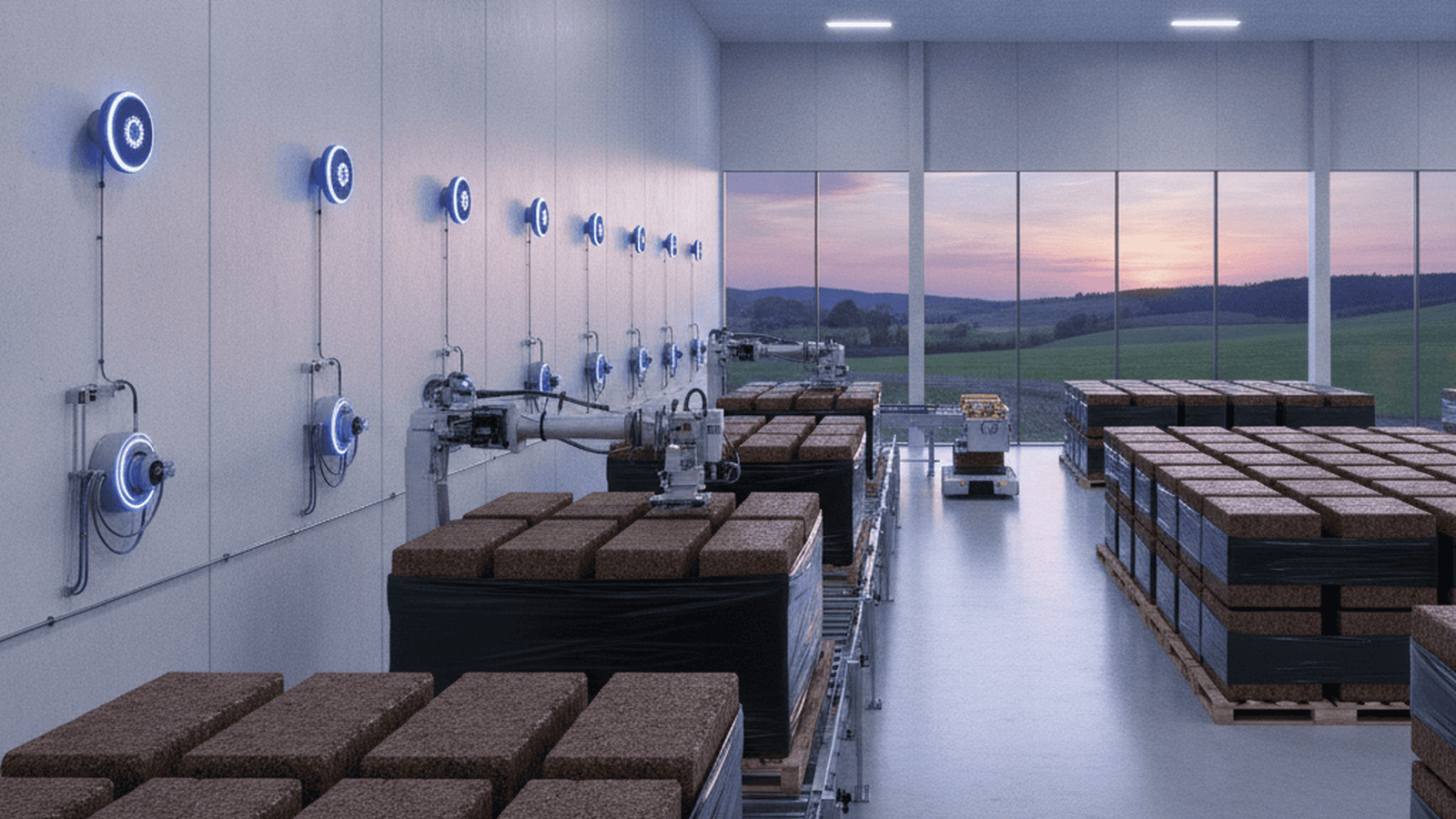
Graphyte has inaugurated its first industrial-scale carbon removal facility in Arkansas, utilizing a process called carbon casting. By drying and sealing waste biomass in airtight blocks, the company prevents decomposition and traps carbon underground for centuries.
TLDR: Arkansas-based startup Graphyte has launched a commercial facility that turns agricultural waste into dense, polymer-wrapped blocks for permanent underground storage. This carbon casting technique leverages natural photosynthesis to remove CO2 from the atmosphere at a fraction of the cost of traditional mechanical carbon capture technologies.
The startup Graphyte, headquartered in Memphis and operating in Arkansas, has transitioned its carbon casting technology from the laboratory to industrial-scale operations. The company’s first commercial facility, known as Lignite, recently began processing agricultural and timber waste into stable carbon storage blocks. This development represents a significant milestone in the field of Biomass Carbon Removal and Storage, a sector that climate scientists identify as essential for achieving global temperature targets. Unlike mechanical capture methods, this approach utilizes existing biological processes to address atmospheric greenhouse gas concentrations.
The fundamental principle of carbon casting relies on the natural efficiency of photosynthesis. Trees and plants absorb billions of tons of carbon dioxide from the atmosphere annually, but this carbon is typically released back into the environment when the organic matter decomposes or burns. Graphyte’s process interrupts this natural cycle by stabilizing the biomass before decay can occur. By utilizing waste products like sawdust and rice hulls, the company avoids the land-use conflicts associated with dedicated energy crops or reforestation efforts.
At the Lignite facility, the process begins with the rigorous drying of raw biomass. Reducing the moisture content is a critical step, as it creates an environment where microbes and fungi—the primary drivers of decomposition—cannot survive. Once dried, the material is subjected to high-pressure compression, transforming loose waste into dense, uniform blocks. This mechanical stabilization ensures that the carbon remains concentrated and manageable for long-term handling and storage.
To ensure the permanence of the sequestration, each block is encased in a specialized, multi-layered polymer barrier. This coating is engineered to be impermeable to water and oxygen, further insulating the organic material from the elements that would otherwise trigger breakdown. These sealed blocks are then transported to dedicated underground storage sites. These sites are equipped with advanced sensors to monitor for any signs of gas leakage or structural compromise, providing a verifiable record of the stored carbon for auditors.
One of the most compelling aspects of carbon casting is its economic profile. Traditional Direct Air Capture technologies, which use massive fans and chemical sorbents to pull CO2 from the sky, often face high capital and energy costs. In contrast, Graphyte’s method requires significantly less energy because the capture has already been performed by the plants. The company aims to offer carbon removal credits at a price point below $100 per ton, a figure widely considered the threshold for making carbon removal commercially viable for a broad range of industries.
The launch of the Arkansas facility comes at a time of increasing scrutiny regarding the integrity of carbon offsets. Unlike traditional forest conservation projects, which can be vulnerable to wildfires or illegal logging, carbon casting provides a highly durable and easily measurable form of removal. The blocks are designed to remain stable for over a thousand years, offering a level of permanence that matches the long-term impact of fossil fuel emissions. This industrial application provides a tangible pathway for corporations to meet net-zero commitments through verifiable sequestration.
As the Lignite plant ramps up to its full capacity of 50,000 tons of CO2 per year, the company is already looking toward expansion. Future research will investigate the use of different types of waste streams, including municipal green waste and aquatic biomass. Engineers are also working to refine the polymer coatings to further extend their lifespan and reduce the environmental footprint of the packaging itself. The success of this industrial-scale pilot will likely determine the feasibility of deploying similar facilities across global agricultural hubs.

Mark Davis serves as the Senior Correspondent for Energy, Climate, and Resource Economics at Just Right News. In an era where the conversation around the environment is often dominated by alarmism and top-down mandates, Mark provides a vital, market-oriented perspective on the complex forces shaping our world. As the lead voice behind the acclaimed feature series “Power and the Planet,” he explores the intersection of environmental policy, global energy markets, and the fundamental economic principles that sustain modern civilization.
Mark’s pragmatic approach to resource management was forged in the high desert of his hometown, Albuquerque, New Mexico. Growing up in a region defined by both its breathtaking natural beauty and its rugged, resource-dependent landscape, he developed an early appreciation for the delicate balance between conservation and utilization. New Mexico’s unique position as a hub for both traditional energy production and cutting-edge scientific research provided Mark with a front-row seat to the evolution of the American energy sector. This upbringing instilled in him a deep-seated belief that true environmental stewardship is inseparable from economic prosperity and technological innovation.
Now based in Boulder, Colorado, Mark operates from the heart of the nation’s climate research community. While Boulder is often seen as a bastion of environmental idealism, Mark utilizes his post to provide a necessary counterweight, grounded in the realities of resource economics. He understands that energy policy does not exist in a vacuum; it has tangible consequences for the American taxpayer, the stability of the national power grid, and the strength of the domestic manufacturing sector. By reporting from the front lines of the climate debate, he is able to challenge prevailing narratives with hard data and a commitment to the principles of the free market.
Throughout his tenure at Just Right News, Mark has distinguished himself by focusing on the “Resource Economics” aspect of his beat. He frequently highlights the hidden costs of rapid energy transitions and advocates for an “all-of-the-above” energy strategy that prioritizes American energy independence. His work often shines a light on the geopolitical implications of resource scarcity, arguing that a secure nation must first be an energy-secure nation. Whether he is analyzing the impact of federal land-use regulations or investigating the supply chains required for new technologies, Mark remains focused on how policy decisions affect the lives and livelihoods of everyday citizens.
In “Power and the Planet,” Mark continues to bridge the gap between complex scientific concepts and the economic realities facing the country. He rejects the false choice between a healthy environment and a thriving economy, instead seeking out solutions that leverage American ingenuity and private-sector competition. For Mark, reporting on the climate is not about following the latest trends, but about ensuring that the conversation remains tethered to the foundational values of liberty, property rights, and fiscal responsibility. His contributions ensure that Just Right News readers receive a comprehensive, clear-eyed view of the challenges and opportunities defining the future of our planet.