

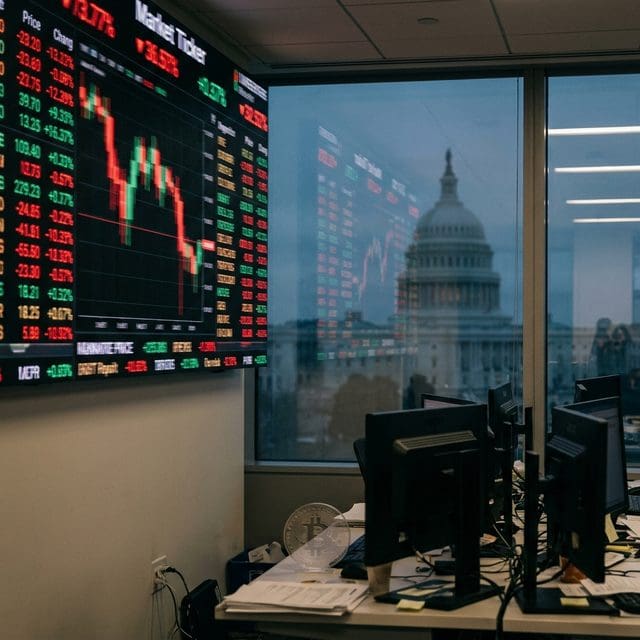
Bitcoin traded near $60,566, but record November ETF withdrawals and a narrow path for a federal reserve bill leave the rebound without clear confirmation from institutional demand.
Bitcoin was near $60,566 on Thursday, up 0.3% from the prior daily close, after a volatile stretch in which it fell to about $57,300 before recovering. The move came as equity markets rebounded, but it has not yet been matched by evidence of renewed institutional buying. U.S. spot Bitcoin exchange-traded funds continued to see large withdrawals, and a federal bill that could shape government holdings faces a narrow window for action.
The Block reported that U.S. spot Bitcoin ETFs recorded $453.1 million in net outflows on Wednesday, extending their negative streak to seven consecutive sessions. November withdrawals reached about $5.39 billion, the largest monthly total on record, with several trading days still remaining. BlackRock’s IBIT led Wednesday’s outflows at $329.7 million, followed by funds from Grayscale and Bitwise.
The figures offer a counterweight to the price rebound. Bitcoin’s recovery from its Wednesday low followed a broader equity-market bounce, according to Investing.com, but ETF withdrawals suggest that some investors have continued to reduce exposure. The Block quoted Zeus Research analyst Dominick John warning that persistent outflows weaken spot demand and can limit the durability of rallies. That does not establish what caused each withdrawal or where investors put their money; it does show that recent price strength has not coincided with positive aggregate ETF flows.
Ethereum spot ETFs also recorded outflows, with $68.5 million withdrawn Wednesday and November withdrawals reaching about $1.3 billion, The Block reported. The parallel weakness points to a broader pullback in crypto investment products rather than a Bitcoin-only development.
Policy supplied a more consequential long-term story. H.R. 8957, the American Reserve Modernization Act of 2026, is eligible for a House vote. The proposal would establish a Strategic Bitcoin Reserve and a separate stockpile for other digital assets. Its most significant constraint is an explicit prohibition on selling, swapping, auctioning, encumbering or otherwise disposing of reserve bitcoin for at least 20 years after enactment. It also calls for annual public proof-of-reserve reporting and independent third-party audits.
For long-term holders, the proposal would represent a shift from executive-branch policy to a statutory framework if it became law. A 20-year lock would limit the federal government’s ability to sell the reserve, while public reporting and outside audits would make its holdings more visible. But eligibility for a vote is not passage. The Block reported that the 119th Congress is expected to adjourn in the coming weeks, leaving limited time for action by both chambers. It cited Polymarket odds of 4% for a national Bitcoin reserve by year-end. Those odds are a market gauge, not a legislative forecast.
Macro conditions remain another source of uncertainty. Investing.com said the rebound was supported by stronger equities and the reserve bill’s progress, while hotter October PCE data, rising bets on a December Federal Reserve rate hike and expected regulatory scrutiny in 2027 weighed on sentiment. Interest-rate expectations can affect appetite for riskier assets, while policy uncertainty can complicate decisions by investors and firms considering crypto exposure.
The near-term watch is therefore not just the price. ETF flow data will indicate whether institutional demand stabilizes, while congressional action will determine whether the reserve proposal advances beyond eligibility. For now, Bitcoin’s modest gain sits alongside record monthly fund withdrawals and unresolved policy and macroeconomic pressures—a mixed picture, rather than a clear signal of a lasting change in direction.

Jordan Lee serves as the Senior Correspondent for Wall Street, Finance, and Monetary Systems at Just Right News. Based in the heart of the world’s financial capital, New York City, Lee brings a sharp, principled eye to the complex mechanisms that drive the global economy. His reporting is defined by a commitment to fiscal responsibility, the defense of the free market, and a deep-seated belief that a transparent monetary system is the bedrock of a free society.
Raised in Portland, Oregon, Lee’s perspective was forged in a city that has undergone significant cultural and economic shifts. His upbringing in the Pacific Northwest instilled in him a profound appreciation for the industriousness of small business owners and the importance of local economic stability. Watching the evolution of his hometown’s landscape sparked an early interest in how federal fiscal policy and large-scale financial trends eventually trickle down to the average citizen. This background provides him with a unique vantage point; he understands the growing disconnect between the policy-making elite and the reality of Main Street, a theme that frequently resonates throughout his work.
Now operating from his base in New York City, Lee bridges the gap between the high-stakes trading floors of Manhattan and the households of everyday Americans. He views the financial sector not merely as a collection of numbers and tickers, but as a vital engine of American prosperity that requires constant vigilance and accountability. His reporting often highlights the dangers of centralized financial control and the necessity of maintaining a system that rewards merit, risk-taking, and innovation.
As the creator and lead of the featured series, “The Invisible Economy,” Lee pulls back the curtain on the often-opaque world of monetary systems. He specializes in translating the dense jargon of central banking and international finance into actionable insights for the Just Right News audience. His work explores the “invisible” forces—such as inflationary pressures, regulatory creep, and the expansion of the administrative state—that erode the purchasing power of American families. By focusing on these systemic issues, Lee empowers readers to understand the hidden forces shaping their financial independence.
Lee’s journalistic philosophy is rooted in a steadfast commitment to traditional American values. As an Asian American professional who has navigated the competitive corridors of the financial world, he is a vocal advocate for meritocracy and the preservation of the American Dream. He believes that a stable currency and a predictable regulatory environment are essential for national sovereignty and individual liberty. His reporting frequently warns against the risks of government overreach in the private sector, arguing that the most effective solutions to economic challenges arise from competition and individual enterprise rather than bureaucratic mandates.
At Just Right News, Jordan Lee remains dedicated to providing a clear-eyed defense of the taxpayer. Whether he is analyzing market volatility or investigating the long-term implications of national debt, his mission is to provide the truth about where the money is going and what it means for the future of the country. Through his rigorous analysis and principled stance, Lee has become a trusted voice for those who value a strong, sovereign, and fiscally sound America.