

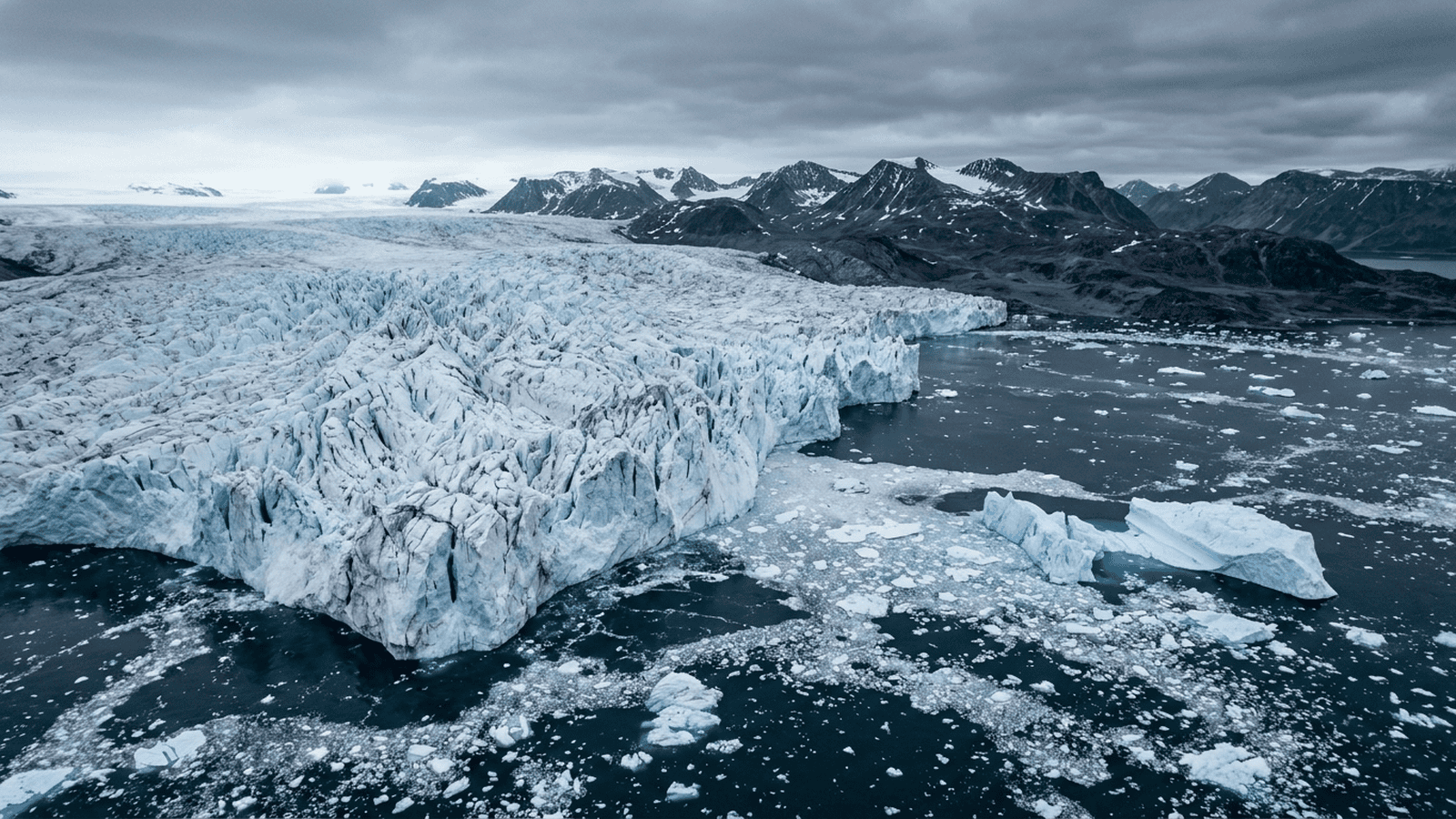
An international research team’s 2023 Global Tipping Points Report assessed 26 Earth systems and found five at risk of being triggered at current warming levels. The report emphasizes that thresholds remain uncertain, while calling for emissions cuts, stronger monitoring and improved research into how these systems interact.
TLDR: An international report assessed 26 potential climate tipping elements and found five—including coral reefs, major ice sheets and parts of the North Atlantic circulation—at risk at today’s warming level. The thresholds remain uncertain, but researchers say rapid emissions cuts and better monitoring can help reduce risks and improve understanding.
An international team of researchers has warned that several major parts of Earth’s climate system could cross dangerous thresholds at current levels of warming. The 2023 Global Tipping Points Report assessed 26 potential tipping elements, including ice sheets, ocean currents, forests and coral reefs. It concluded that five are already at risk of being triggered at today’s global warming level, around 1.2 degrees Celsius above the preindustrial average. The report does not predict that all five will collapse imminently. Instead, it highlights evidence that some systems may change sharply once warming passes a critical threshold, with consequences that can persist for centuries or longer.
Tipping points differ from gradual changes. A glacier can lose ice year by year, for example, but beyond a threshold, feedbacks may drive further melting even if temperatures later stabilize. The report examined how such processes could interact, potentially making climate impacts more severe or harder to reverse. The five systems identified as at risk are the Greenland and West Antarctic ice sheets, low-latitude coral reefs, parts of the North Atlantic circulation, and boreal permafrost. Researchers stress that the precise thresholds remain uncertain and may vary with local conditions.
The report brought together more than 200 researchers from around the world and drew on evidence across climate science, ecology, economics and social science. Its authors assessed both the likelihood of thresholds being crossed and the scale of their potential effects. Low-latitude coral reefs, for instance, face severe danger as ocean heat stress intensifies. The report noted that the world has already experienced widespread coral bleaching, while continued warming could make reef ecosystems increasingly unable to recover between heatwaves. Reefs support marine life, coastal livelihoods and food security for many communities.
The possible consequences extend far beyond individual ecosystems. A substantial loss of Greenland’s ice sheet would raise sea levels over the long term, while changes to the West Antarctic ice sheet could add to the risks facing coastal communities. Disruption of the Atlantic Meridional Overturning Circulation, a system of currents that moves heat through the Atlantic, could alter rainfall and temperatures across multiple regions. Thawing boreal permafrost could release additional greenhouse gases, although the timing and amount of those emissions remain difficult to establish. These systems are connected to a climate that is already warming rapidly.
The authors distinguish a warning about risk from a claim that a tipping point has already been crossed. Some thresholds could be reached at warming levels between 1.5 and 2 degrees Celsius, according to the report’s assessment, but scientists cannot yet pinpoint an exact temperature for every system. Natural variability, incomplete observations and differences among climate models complicate the estimates. That uncertainty does not mean the danger is negligible: it means researchers need better monitoring and more reliable projections to understand how close particular systems may be to thresholds.
The report also argues that tipping points deserve attention in climate policy because their effects could be abrupt, long-lasting and difficult to manage. Rapidly cutting greenhouse-gas emissions would reduce the chance of crossing thresholds, while adaptation can help communities prepare for impacts that are already unavoidable. The researchers call for expanded observation networks, improved models and further study of interactions between systems. The work offers a framework for assessing those risks, not a precise timetable. Future research will need to sharpen threshold estimates and determine how quickly decisive emissions reductions can lower the likelihood of irreversible change.

Mark Davis serves as the Senior Correspondent for Energy, Climate, and Resource Economics at Just Right News. In an era where the conversation around the environment is often dominated by alarmism and top-down mandates, Mark provides a vital, market-oriented perspective on the complex forces shaping our world. As the lead voice behind the acclaimed feature series “Power and the Planet,” he explores the intersection of environmental policy, global energy markets, and the fundamental economic principles that sustain modern civilization.
Mark’s pragmatic approach to resource management was forged in the high desert of his hometown, Albuquerque, New Mexico. Growing up in a region defined by both its breathtaking natural beauty and its rugged, resource-dependent landscape, he developed an early appreciation for the delicate balance between conservation and utilization. New Mexico’s unique position as a hub for both traditional energy production and cutting-edge scientific research provided Mark with a front-row seat to the evolution of the American energy sector. This upbringing instilled in him a deep-seated belief that true environmental stewardship is inseparable from economic prosperity and technological innovation.
Now based in Boulder, Colorado, Mark operates from the heart of the nation’s climate research community. While Boulder is often seen as a bastion of environmental idealism, Mark utilizes his post to provide a necessary counterweight, grounded in the realities of resource economics. He understands that energy policy does not exist in a vacuum; it has tangible consequences for the American taxpayer, the stability of the national power grid, and the strength of the domestic manufacturing sector. By reporting from the front lines of the climate debate, he is able to challenge prevailing narratives with hard data and a commitment to the principles of the free market.
Throughout his tenure at Just Right News, Mark has distinguished himself by focusing on the “Resource Economics” aspect of his beat. He frequently highlights the hidden costs of rapid energy transitions and advocates for an “all-of-the-above” energy strategy that prioritizes American energy independence. His work often shines a light on the geopolitical implications of resource scarcity, arguing that a secure nation must first be an energy-secure nation. Whether he is analyzing the impact of federal land-use regulations or investigating the supply chains required for new technologies, Mark remains focused on how policy decisions affect the lives and livelihoods of everyday citizens.
In “Power and the Planet,” Mark continues to bridge the gap between complex scientific concepts and the economic realities facing the country. He rejects the false choice between a healthy environment and a thriving economy, instead seeking out solutions that leverage American ingenuity and private-sector competition. For Mark, reporting on the climate is not about following the latest trends, but about ensuring that the conversation remains tethered to the foundational values of liberty, property rights, and fiscal responsibility. His contributions ensure that Just Right News readers receive a comprehensive, clear-eyed view of the challenges and opportunities defining the future of our planet.